
What to Wear for Professional Headshots: A Stylist's Guide

This article is part of our Professional Headshots collection.
Your headshot outfit matters more than you think. The right professional look for a career-ready resume portrait can make your eyes pop, your jawline look sharper, and your whole vibe say "I know what I'm doing." The wrong outfit can wash you out, date you, or distract from your face entirely.
The short version: for a professional headshot, stick with solid colors in jewel tones or muted neutrals, simple necklines, and minimal accessories. Everything else is details -- and we'll cover all of them below.
The guide starts with universal principles, followed by women's guidance, men's guidance, and then camera and reference material.
Why Your Headshot Outfit Is A Branding Decision
What People Actually Judge From A Photo
Research in psychological science shows that people form impressions of traits like competence and trustworthiness from a face in about 100 milliseconds — one tenth of a second. Longer viewing mostly makes them more confident in the first impression, not different in their judgment. (Source: Willis & Todorov – Psychological Science (PubMed))
From a single face photo, people rapidly infer whether someone seems:
- Competent
- Trustworthy
- Warm
- Dominant
These first impressions feel automatic and are difficult to reverse later. Clothing and styling directly influence those snap judgments:
- Confidence — Structured jackets and intentional color choices suggest direction.
- Competence — Dressing within industry norms signals awareness of context.
- Trust — Calm, cohesive colors reduce cognitive noise and keep focus on your face.
Your outfit functions as a uniform for your personal brand. The goal is not to look fashionable. The goal is to look aligned.
How To Choose Your Headshot Outfit Step By Step
Use the steps below to choose an outfit that fits your goals.
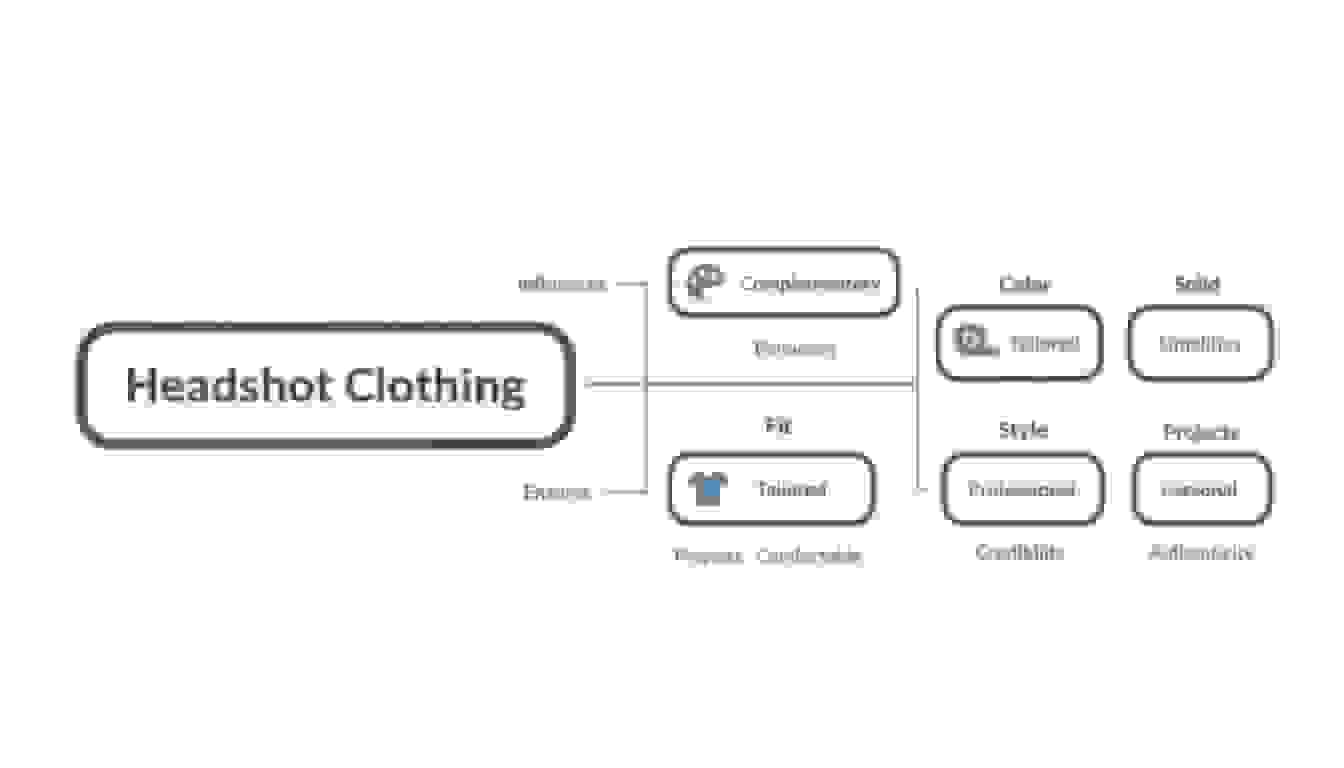
Step 1 — Decide Where The Headshot Has To Perform
List where this headshot will appear over the next 12–24 months:
- LinkedIn profile
- Company bio page
- Press or podcast features
- Sales decks or proposals
- Personal website
- Resume (if culturally appropriate)
In the United States, many career experts advise against including a photo on a resume due to bias and screening risks. However, a strong LinkedIn headshot is widely recommended. (See: Photo On CV Guide – BetterPic)
Clarifying use cases determines how formal and how evergreen your attire should be.
Step 2 — Choose The Right Formality For Your Industry
A simple rule:
Dress one level more polished than your daily workwear — within your industry's norms.
- Finance / Law / Corporate: Classic business formal
- Tech / Startups: Structured smart casual
- Creative / Media: Polished with controlled personality
Make this decision first. Every other styling choice should align with this level.
Step 3 — Pick Colors That Support Your Brand Story
Color is processed almost instantly by the human brain.
Blues and deep cool tones are widely associated with trust and stability, which is why financial institutions, tech firms, and healthcare brands use them heavily. (Source: Stackari – Color Psychology For Business)
To apply color strategically:
- Choose mid-tone solid colors near your face
- Limit to one dominant color + one neutral
- Avoid neon or high-saturation tones
- Avoid overly bright colors that clip on digital screens
The safest palette for most professionals:
- Navy
- Charcoal
- Deep green
- Burgundy
These colors frame your face without competing with it.
If you are unsure how different colors read on camera, AI headshots allow you to test structured, smart-casual, and formal looks side-by-side before publishing your final profile image. Explore: BetterPic
Step 4 — Get Fit And Neckline Right
Why Fit Matters So Much On Camera
A well-fitted outfit is the single fastest way to look more polished in any photo, period. The camera picks up every wrinkle, pull, and sag that your eye skips over in person. Fabric bunching at the waist, a collar that gaps, or sleeves that run too long — all of it shows.
Jackets and Blazers
The quality of the blazer matters more than the brand. A $120 blazer in a wool blend that fits your shoulders perfectly will outperform a $600 designer piece that's a size too big. Look for:
- Natural or natural-blend fabrics (wool, cotton-wool) that drape well and don't shine.
- A structured lining that helps the blazer hold its shape through a long session.
- Clean stitching and buttons that sit flat.
- Shoulder seams should sit right at the edge of your shoulders, not drooping down your arm or riding up toward your neck
- Blazer buttons should close without pulling or creating an "X" shape across your chest
- Sleeve cuffs should end at your wrist bone
- You should be able to sit, stand, and move your arms without the fabric fighting you
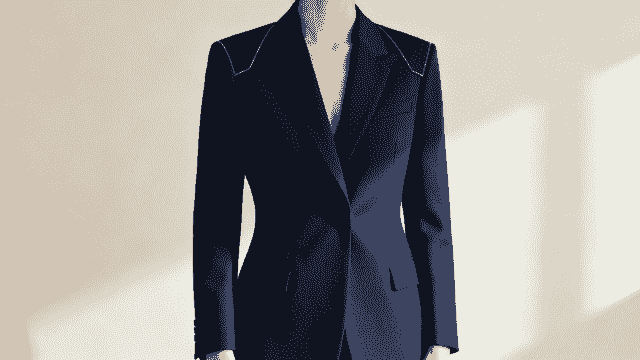
If something fits well off the rack, great. If it doesn't, a tailor can usually fix the most common issues — taking in a waist, shortening sleeves, or adjusting a collar — for $15-40. Get your outfit to the tailor at least two weeks before your shoot so there's time for alterations.
The real payoff is confidence. When your clothes fit right, you stop tugging and adjusting. You stand straighter. That ease shows through in the photo, and it's something no amount of retouching can fake.
Shirts, Tops, and Dresses
- Avoid fabric that strains at buttons or seams
- Avoid very low necklines that fall awkwardly in tight crops
- Choose clean shapes that frame the jaw and neck
Strong neckline choices:
- Collared shirts (classic authority)
- V-necks (elongate the neck and slim the face)
- Crew necks (modern, minimal look)
Headshots are typically cropped chest-up. Your neckline should feel balanced within that frame.
Step 5 — Layer For Structure And Presence
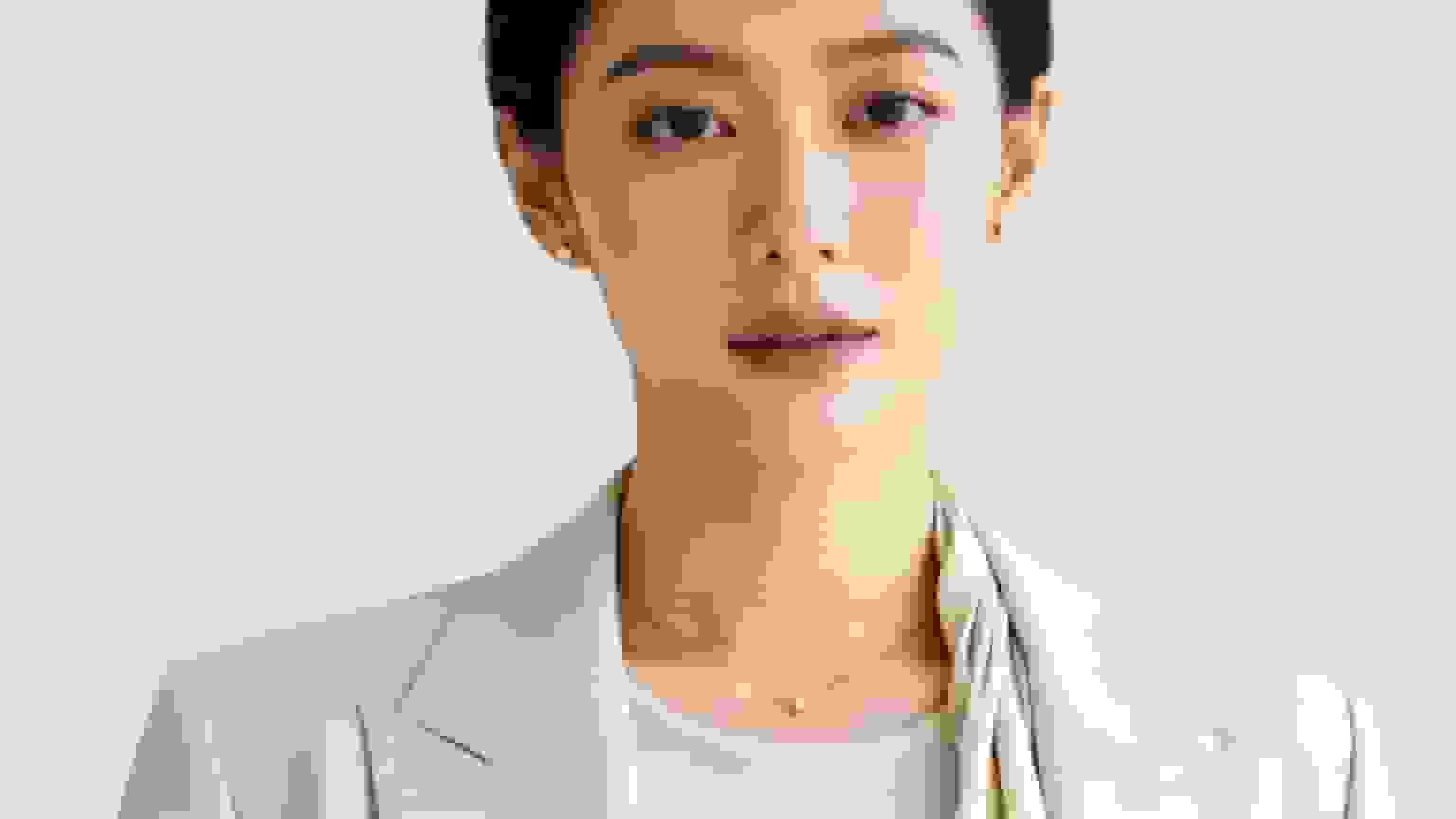
Layering increases perceived authority and visual depth.
- Structured blazer → Instant seniority signal
- Fine-gauge sweater under jacket → Adds warmth without bulk
- Smart cardigan → Softer alternative for coaching or HR roles
For tech and modern roles, a blazer over a premium T-shirt or knit communicates competence without stiffness.
Step 6 — Control Patterns, Textures, And Digital Distortion
Fine patterns can create a visual artifact called moiré — a wavy, shimmering distortion caused when tight patterns interact with a camera sensor grid. (Source: Wikipedia – Moiré Pattern)
To reduce risk:
- Avoid tight pinstripes
- Avoid tiny checks or herringbone
- Avoid high-contrast micro-patterns
- Favor solid fabrics or low-contrast large textures
- Choose matte fabrics over shiny ones
Photographers are trained to spot moiré because it is difficult to fix after capture. (Source: Light And Matter – Moiré And Photography)
If a pattern shimmers when you zoom in on your phone, choose something simpler.
Beyond the technical issue, busy patterns compete with your face. A bold paisley or loud floral can turn a headshot into a fashion photo instead of keeping attention on your expression.
That said, not all patterns are off-limits:
- Wide, low-contrast stripes such as navy and charcoal usually photograph well
- Subtle textures such as a tweed weave, a pique knit, or lightly textured cotton add visual interest without creating noise
- Tone-on-tone patterns read as almost solid on camera while giving the fabric depth
When in doubt, go solid.
Step 7 — Test On Camera Before You Commit
Before booking a shoot or generating AI headshots:
- Put on your chosen outfit
- Take chest-up test photos on your phone
- View them small (like a LinkedIn circle crop)
- Ask a trusted colleague: “What does this outfit make you expect from me professionally?”
If your clothing draws more attention than your eyes, simplify. If you use BetterPic, you can generate multiple outfit variations and compare them side-by-side before publishing.
What Fabrics Work Best in Headshot Photos?
Not all fabrics behave the same way under lights and on camera. The wrong material can add visual noise or make you look rumpled.
Which fabrics should you choose?
Go for fabrics with a matte or soft finish: cotton, wool crepe, ponte, matte silk, or structured knits. These drape cleanly, don't reflect light weirdly, and hold their shape during a session. Wool, cotton, and matte silk tend to absorb light instead of bouncing it back, which means fewer hot spots and a richer, more natural look in the final image.
Fabrics to reach for:
- A mid-weight wool or wool-blend blazer that holds its shape, resists wrinkles, and looks polished
- A matte silk or silk-blend shell that drapes well and adds subtle sheen without looking shiny
- A fine cotton button-up that looks crisp and clean when pressed
- A quality cotton-cashmere or merino knit that adds texture without a pattern
Which fabrics should you skip?
- Polyester and cheap blends: can look shiny and plasticky under studio lights.
- Shiny satin or silk charmeuse: catches light, creates hot spots, and can read as evening wear rather than professional.
- Linen: wrinkles the second you sit down -- and headshot sessions involve a lot of adjusting.
- Sequins, metallics, or heavy texture: the camera picks up every detail, and these pull focus from your face.
- Very thin jersey: can cling in unflattering ways and show every line and wrinkle underneath.
Whatever fabric you choose, steam or press your outfit the morning of the shoot. Wrinkles are far more visible in a professional photo than in real life, and they're distracting in the final image.
What to Wear for Women's Headshots
This section covers the wardrobe and styling specifics for women's headshots.
What Are the Best Colors for Women's Headshots?
Color is the single biggest outfit decision you'll make for your headshot. It sets the mood, affects how your skin reads on camera, and determines whether people look at you or at your clothes.
Which colors work for every skin tone?
Deep jewel tones -- teal, emerald, sapphire, burgundy, plum -- are universally flattering and photograph beautifully. They're rich enough to hold up on camera without overpowering your face.
Beyond jewel tones, here's what tends to work well:
- Warm skin tones (golden or olive undertones): try coral, warm red, olive green, camel, or chocolate brown.
- Cool skin tones (pink or blue undertones): go for navy, cobalt blue, berry, lavender, or cool gray.
- Neutral skin tones: you're lucky -- most colors work. Lean into soft blues, dusty rose, or classic black.
Should you wear black or white?
Black is safe but can feel a bit generic. If you go with black, break it up with a necklace or an interesting neckline, or adjust your portrait backdrop so you don't blend into a dark background.
White can wash out lighter skin tones and sometimes blows out under studio lighting. Off-white, cream, or ivory are safer bets if you want that clean, bright look.
What colors should you avoid?
Skip neon anything, head-to-toe pastels that match your skin tone, and bright orange or yellow unless you know they work on you. Prints with tiny patterns (thin stripes, small checks, houndstooth) can create a weird shimmer effect on camera called moire -- stick with solids or very large, subtle patterns.
Core Headshot Colors And What They Signal
| Color | Primary Association | Recommended Use |
|---|---|---|
| Navy / Deep Blue | Trust, stability, calm authority | Safest choice for corporate, finance, tech |
| Charcoal Gray | Sophistication, maturity | Executive, consulting, B2B |
| Deep Green / Teal | Innovation, growth | Tech, sustainability |
| Burgundy / Deep Wine | Depth, seriousness | Law, academia, senior IC roles |
Deep blues are especially associated with trust in professional branding. (Source: Stackari – Color Psychology)
What Necklines and Tops Photograph Best?
Your neckline frames your face the way a picture frame sets off a painting. Choose one that flatters your face shape and draws the eye upward.
Which necklines are most flattering on camera?
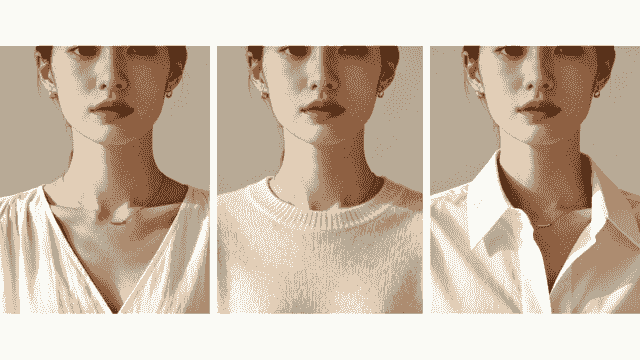
| Neckline | Best for | Watch out for |
|---|---|---|
| V-neck | Elongates the neck and slims the face; works on nearly everyone | Very deep V-necks can look too casual |
| Scoop neck | Soft, approachable, and open | — |
| Crew neck or mock neck | Clean, polished look; a good base for a blazer | A crew neck can shorten the neck on some people |
| Collared button-up | Corporate, legal, and finance settings | Make sure the collar lies flat and isn't too tight |
| Turtleneck | Stylish and modern in the right context | A high turtleneck can visually compress a shorter neck |
| Off-shoulder or wide boat neck | Adds a touch of elegance | Make sure it still reads as professional for your industry |
Steer clear of anything with a busy ruffle or oversized collar that competes with your face. Try your neckline on and check it in a mirror from roughly the distance a camera would be — about 4-6 feet. If something looks off at that distance, it will look off in the photo.
How Does Layering Give You More Options During the Shoot?
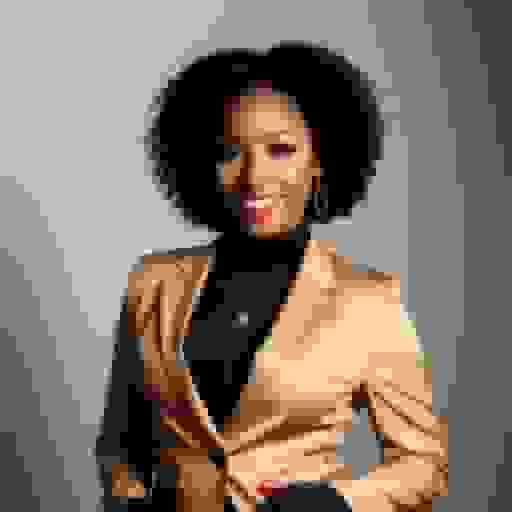
A well-fitted blazer is the workhorse of headshot wardrobes. It instantly reads "professional" and gives your shoulders structure.
One outfit plus a removable layer equals two different looks in the same session. A navy blazer over a burgundy shell can give you a formal shot with the blazer on and an approachable one with it off, without changing clothes.
Layering also adds visual depth. A single flat-colored top can look a little plain on camera. Add a contrasting jacket and suddenly there are clean lines, angles, and dimension in the frame.
A few layering guidelines:
- Stick to two pieces max in the frame: an inner layer plus an outer layer. Three layers start to look bulky in a headshot crop
- Create contrast between layers. A navy cardigan over a soft pink blouse works; the difference doesn't need to be dramatic, just visible
- Make sure the outer layer fits well when buttoned and when open. You'll likely shoot both ways
What Accessories Work for Female Headshots?
Accessories can pull a look together -- or steal the show in a bad way. The rule of thumb is simple: if someone would notice your jewelry before they notice your eyes, it's too much.
How much jewelry is too much?
Keep it to one or two small pieces. A pair of stud earrings or small hoops, a delicate necklace, or a simple watch. That's it.
Skip:
- Chandelier earrings or anything that dangles past your jawline
- Chunky statement necklaces that cover your collarbone
- Stacks of bangles or rings (they catch light and create noise)
What about glasses?
If you wear glasses every day, wear them in your headshot -- it's how people recognize you. Just make sure to:
- Clean the lenses right before shooting
- Ask the photographer to angle the lighting so there's no glare
- Avoid transition lenses (they can darken under lights)
How Should You Do Hair and Makeup for a Headshot?
Your hair and makeup should make you look like the best version of your everyday self -- not like you're heading to prom.
What makeup works best?
Stick with your regular routine, just a little more polished. Camera and lighting tend to flatten features, so you can go slightly heavier on definition (think: filled-in brows, defined lashes, a touch of blush) without looking overdone.
Practical tips:
- Use matte or satin-finish foundation -- dewy finishes can look oily on camera.
- Blot or set with powder, especially on your T-zone.
- A nude or MLBB (my-lips-but-better) lip color is always a safe call.
- Skip heavy contouring, dramatic smokey eyes, or glitter.
What about hairstyles?
- Wear your hair the way you normally do -- this isn't the day to try a completely new look.
- If your hair is long, bring a clip so you can try both down and pulled-back options.
- Tame flyaways with a light hairspray or serum.
- Avoid styles that fall across your face or cover one eye -- the camera needs to see both eyes clearly.

What Should You NOT Wear for Female Headshots?
Just as important as knowing what to wear is knowing what to leave at home. Here's the short list.
Avoid these common mistakes:
- Logos or brand names: they date the photo and distract.
- Busy prints or tiny patterns: moire effect on camera, as mentioned above.
- Sleeveless tops without a layer: can look too casual for most professional contexts (unless that's your brand).
- Anything you haven't worn before: your headshot session is not the time to test-drive a new outfit. If you're not comfortable, it shows.
- Clothing that doesn't fit well: too tight pulls and wrinkles; too loose looks sloppy. Get it tailored if needed.
- Trendy pieces that will date quickly: stick with classic cuts that will look good in three years, not just this season.
What Should Women Wear for Headshots by Industry
Your outfit should signal that you belong in the room you're trying to enter. That looks different for a lawyer than it does for a yoga instructor.
Corporate, finance, and law?
Goal: Low-risk authority.
- Tailored blazer in navy, charcoal, or black
- Structured blouse in ivory or a jewel tone
- Sheath dress with an optional blazer
Keep accessories minimal. If you need distinct variations for LinkedIn, a firm bio, and press, you can create consistent sets with AI-generated headshots.
Tech, startups, and modern corporate?
Goal: Competent and current.
- Blazer over a quality T-shirt or knit
- Open-neck shirt
- Neutral textured jacket
Fit and fabric quality matter more than strict formality. Many founders create a more formal set for LinkedIn and a relaxed set for product or community platforms. You can explore a detailed framework in our LinkedIn headshot guide.
Consultants, coaches, and solo professionals?
Goal: Trust + warmth.
- Mid-tone blazer in blue, gray, or soft green
- Soft knit or blouse
- Minimal jewelry
Avoid overly casual pieces unless your audience expects them.
Real estate and sales?
Warmth and approachability matter here. Think rich but not dark — a warm blue or soft burgundy. You want to look like someone people want to spend time with.
Creative, design, and media?
Goal: Taste without distraction.
- Solid base with one controlled personality element
- Monochrome outfits with texture
- A textured knit, interesting neckline, or bold (but solid) color
Skip the blazer if it doesn't feel like you, and keep patterns large and subtle to avoid moiré.
Healthcare and education?
Clean, approachable, and professional. A simple top in a flattering color, maybe a cardigan or soft blazer. You want to look trustworthy and warm.
Entrepreneurship and personal brand?
Dress the way your ideal client would expect to see you. If your brand is polished and high-end, dress accordingly. If it's casual and creative, let that come through.
What to Wear for Men's Headshots
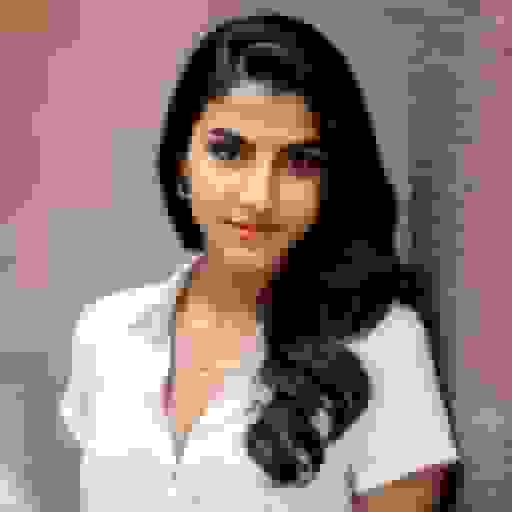
For men's headshots, use the formality of your field to choose between these two combinations.

Finance, Law, and Traditional Corporate
Goal: Low-risk authority.
- Navy or charcoal suit jacket
- Pale blue or soft gray shirt
- Solid tie in navy, burgundy, or dark green
Tech and Modern Corporate
- Navy or charcoal jacket
- Pale blue or soft gray shirt
- Optional deep green or teal accent
Pale blue and soft gray are the safer defaults. White is riskier because it can wash out lighter skin tones and sometimes blows out under studio lighting; if you want the same clean, bright look, choose off-white or cream.
Avoid overly bright colors that overpower your face in small LinkedIn thumbnails.
You can continue with our male headshots page.
Camera Psychology — How The Sensor Sees Your Outfit
Attire decisions are not just about human perception. They are also about how digital cameras and screens interpret contrast, texture, and light.
Avoid Moiré And On-Screen Distortion
Moiré occurs when fine repeating patterns interact with a camera sensor or pixel grid, producing wavy distortions. (Source: Shotkit – Moiré Effect In Photography)
Common offenders:
- Tight stripes
- Herringbone
- Birdseye weaves
- High-contrast micro-checks
These patterns may look fine in person but can shimmer or vibrate digitally.
When in doubt: Take a test photo and zoom in. If it shimmers, switch fabrics.
Manage Contrast And Exposure
Digital platforms compress images heavily.
Extreme contrast between clothing and background can cause:
- Clipping
- Loss of detail
- Harsh edges
Avoid:
- Pure white shirt on pure white background
- Pure black top on dark background
Instead: Choose mid-tone clothing over a slightly lighter or darker background to maintain separation and detail. For example, BetterPic's 4K headshots preserve texture even after LinkedIn compression and circular cropping — especially when following proper headshot sizing guidelines.
Frame For Platform Cropping
Most platforms display your photo as:
- A small circle
- A rounded square
- A compressed thumbnail
To optimize framing:
- Keep eyes in the upper third
- Leave space above hairline
- Avoid deep necklines that disappear in tight crops
Your clothing should frame your face quietly — not compete with it.
Quick-reference comparison: 9 wardrobe tips at a glance
| Tip | Effort to implement | Impact on your photos | Who benefits most |
|---|---|---|---|
| Solid colors and jewel tones | Low -- you probably own something | High -- keeps focus on your face | Everyone |
| Well-tailored fit | Medium -- may need a tailor visit | Very high -- a major upgrade | Everyone, especially executives |
| Avoid busy patterns | Low -- just pick a solid instead | High -- prevents moire and distraction | Everyone |
| Quality blazer and basics | Medium to high -- a real purchase | Very high -- instant polish | Senior professionals, repeat shooters |
| Strategic layering | Low to medium -- use what you have | Medium-high -- adds depth and variety | Anyone wanting multiple looks |
| Flattering neckline | Low -- no cost, just awareness | Medium-high -- better face framing | Everyone |
| Minimal accessories | Low -- leave extras at home | Medium -- removes distraction | Everyone |
| Industry-appropriate styling | Low -- mostly planning | Medium-high -- sends the right signal | Industry-specific professionals |
| Good fabric choices | Medium -- may mean upgrading a piece | High -- better texture, less shine | Close-up and studio shoots |
Can You Get Great Headshots Without a Photoshoot?
Yes -- and this is where things have gotten really interesting. If booking a photographer, finding a studio, coordinating hair and makeup, and blocking out half a day sounds like a lot, it's because it is.
BetterPic uses AI to generate professional headshots from regular photos you already have. You upload a few casual selfies, pick a style and background, and get back polished, studio-quality headshots -- without ever changing out of your pajamas.
It's a practical option if you:
- Need a headshot quickly (results come back in hours, not weeks)
- Want to test different outfit styles, backgrounds, or looks without multiple shoots
- Are updating headshots for a whole team and can't coordinate everyone's schedule
- Don't have the budget for a traditional photographer right now
The AI handles lighting, background, and even wardrobe adjustments, so you still get a clean, professional result. It's not a replacement for every situation, but for LinkedIn, company websites, professional profiles, and properly sized CV portraits, it does the job well.
Frequently Asked Questions
What is the best color to wear for a professional headshot?
Jewel tones like teal, emerald, sapphire, and burgundy work for almost everyone. They're rich, professional, and photograph well against most backgrounds. If jewel tones aren't your style, muted neutrals (navy, charcoal, soft gray) are equally reliable.
What should you not wear for a professional headshot?
Avoid neon colors, busy patterns, logos, shiny fabrics, and anything you're wearing for the first time. These either distract from your face or make you uncomfortable -- both of which show up on camera.
Do you have to wear a blazer for a professional headshot?
No. A blazer is a great default, but a well-fitted solid top with a flattering neckline works just as well. The goal is to look polished and intentional, not to follow a uniform.
Can an AI headshot generator provide professional suit options?
Yes.
BetterPic generates 4K professional headshots with a range of suit, blazer, and smart-casual variations in under an hour.
After generation, you can refine clothing styles, adjust colors, and request human touch-ups if needed. See the full workflow in this AI headshots guide.
Should your headshot outfit match your industry?
It should fit naturally within your industry's range. A corporate attorney in a graphic tee would feel off, just like a fitness coach in a three-piece suit. Dress one notch above how you'd show up on a normal workday.
How Should I Dress For Corporate Headshots If I Want To Look More Confident?
Confidence on camera comes from:
- Structured shoulders
- Clean neckline
- Mid-tone solid colors
- Minimal accessories
Research shows that people form dominance and competence impressions rapidly from facial presentation and styling cues. (Source: Psychological Science – First Impressions). A well-fitted blazer in navy or charcoal is one way to create that authority signal.
What Clothing Patterns Cause Digital Distortion In Headshots?
Tight pinstripes, tiny high-contrast checks, and fine herringbone are most likely to cause issues. These can produce moiré artifacts. (Source: Light And Matter – Moiré)
Choose solids or large, subtle textures instead.
Should I Match My Company's Brand Colors?
Use brand colors strategically — not literally.
Smart use:
- Navy blazer that echoes brand navy
- Subtle top or accessory in a muted brand color
Risky use: Bright brand color dominating the frame.
Research in color psychology consistently shows that calm, deep tones are associated with trust and stability more than high-saturation hues. (Source: Stackari – Color Psychology)
Your headshot's first job is credibility. Brand accents should support — not overpower — that signal.
How many outfits should you bring to a headshot session?
Bring two to three options. One structured/professional look, one that's more relaxed, and one wildcard you love. Having choices lets you and your photographer find what looks best on camera, which isn't always what you expected.
Can you wear jewelry in a headshot?
Absolutely -- just keep it minimal. Small earrings, a delicate necklace, or a simple watch add polish without competing with your face.
Sources & References
- LinkedIn Profile Photo Tips — LinkedIn
- How Your Profile Photo Impacts Your LinkedIn Presence — LinkedIn Official Blog
- Professional Headshot Photography Pricing — Thumbtack
- How Much Do Headshots Cost? — Professional Photographers of America
- First Impressions from Faces — Psychological Science

Written by
Miriam AlonsoCustomer Success Manager
Miriam manages customer relationships at BetterPic with a background in photo editing and customer success. She brings a trained eye for image quality and composition to her writing, grounded in daily interactions with professionals across industries.
- Experienced in professional photo editing and retouching
- Customer success manager overseeing enterprise accounts
- Specialist in corporate headshot brand compliance
Preferred source
Follow BetterPic on Google
Add BetterPic as a preferred source and our headshot guides are more likely to show up in your Top Stories, with a badge in AI Mode and AI Overviews.

Related what to wear for headshots resources
Keep exploring this topic with focused resources from the B2C journey.
Primary destination:Professional headshots for women
Frequently Asked Questions
What is the best color to wear for a female headshot?
- Deep jewel tones -- teal, emerald, sapphire, burgundy, and plum -- are universally flattering and photograph beautifully. For warm skin tones, try coral or olive green. For cool skin tones, go for navy or lavender. Muted neutrals like charcoal and soft gray are also reliable.
What should women avoid wearing for headshots?
- Avoid neon colors, busy prints with tiny patterns (they create a moire shimmer on camera), shiny fabrics like satin, logos or brand names, sleeveless tops without a layer, and anything you have not worn before. These either distract from your face or cause discomfort on camera.
What necklines photograph best for women?
- V-necks are the top recommendation -- they elongate the neck and slim the face. Scoop necks give a soft, approachable look. Crew necks are clean and pair well with blazers. Avoid high turtlenecks if you have a shorter neck and skip busy ruffles or oversized collars.
Should women wear a blazer for professional headshots?
- A blazer is not required but is the workhorse of headshot wardrobes. It instantly reads professional and gives shoulders structure. Bring a blazer and a simpler top to shoot both looks. Make sure it fits perfectly through the shoulders without pulling or hanging loose.
How much jewellery works in a headshot?
- One or two small pieces is the ceiling: stud earrings or small hoops, and a delicate necklace. Chandelier earrings and statement pieces pull the eye off the face, which is the one thing the frame exists to show.
How many outfits should you bring to a session?
- Two or three: one structured professional look, one more relaxed, and one wildcard you like. More than that eats session time without widening the useful range.
Related articles
View all articles
How much does a headshot cost in 2026?
What professional headshots actually cost, what drives the range, the charges that are not in the quoted price, and how to compare a session against an AI alternative.
Cheap AI Headshots: What $29 Actually Gets You vs. a $400 Photographer
A no-BS breakdown of cheap AI headshots in 2026: what they cost, how they compare to studio photography, and whether the results actually work for LinkedIn.
Professional Headshots: The Complete Guide to Getting Yours Right
Everything you need to know about professional headshots: how to get them (photographer, DIY, AI, corporate), what to wear, posing tips, lighting.
How to Get a Professional Headshot for Your Career
A complete guide to getting a professional headshot for your career—compare photographers, AI headshot generators, and DIY options by cost, quality, and speed.
8 Headshot Poses That Actually Work (And When to Use Each One)
The 8 headshot poses that actually work — with specific guidance on when to use each one, how to nail it in a studio or with AI, and which industries.
How to Prepare for Professional Headshots and Make a Great Impression
Learn how to prepare for professional headshots with practical tips on wardrobe, posing, grooming, and choosing the right photographer.
Save 87%on average on your professional photos.
Whenever, wherever you are.
Get studio-quality, 4K images in a variety of outfits & settings in less than an hour.
Get your headshots nowStart now