
Why Hospitals and Clinics Should Use AI Headshots for Staff

This article is part of our Industry Headshots collection.
Pull up any hospital's "Find a Doctor" page and you'll see the same problem almost everywhere: one physician has a crisp studio headshot, another has what looks like an ID badge photo, three have no photo at all, and someone's profile picture is clearly from 2009.
Patients notice this. They may not consciously think "these photos are inconsistent" — but when they're choosing between two cardiologists and one has a professional, trustworthy-looking headshot and the other has a blurry selfie (or nothing), that influences the decision. Research from the Journal of Medical Internet Research confirms it: patients rate physicians with professional headshots as significantly more competent and approachable.
The problem isn't that hospitals don't care about physician photography. It's that traditional photography at healthcare scale is a logistical nightmare. Doctors have unpredictable schedules. Coordinating 200+ people across multiple locations for photo sessions is brutal. And at $300-550 per physician, the budget adds up fast.
AI headshots solve this cleanly. Consistent quality, fraction of the cost, no scheduling headaches. Here's how it works for healthcare specifically.
What's actually wrong with physician photography at most hospitals?
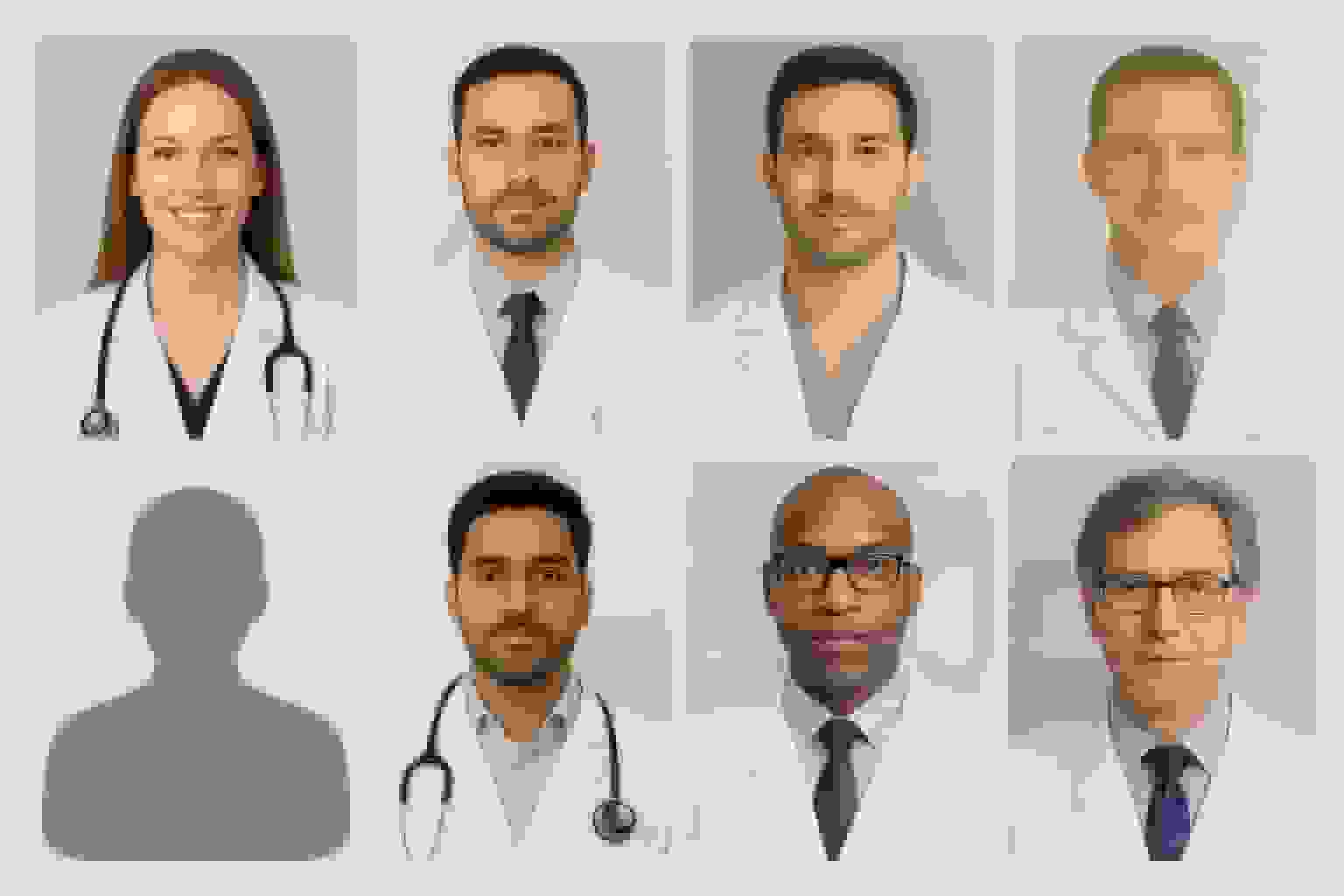
If you audit most healthcare facility websites (and we've looked at a lot of them), you'll find the same patterns:
The Typical State of Hospital Staff Photography
- Wildly inconsistent quality — Some docs have studio headshots, others are using their badge photo or a cropped group shot
- Missing photos everywhere — Placeholder silhouettes or initials where a face should be
- Photos from a different era — Headshots taken years ago that don't match how the person looks today
- Different backgrounds and lighting — Every department looks like it was photographed by a different person (because it was)
- New hire delays — It takes weeks or months to get new physicians photographed and into the system
- Multi-location chaos — Main hospital photos look different from satellite clinic photos which look different from outpatient center photos
- Budget pressure — At $300–550 per physician, the costs add up fast across a large medical staff
Here's why this matters more than it seems: patients are making trust decisions based on these photos every single day. When someone is anxious about a medical procedure and they're browsing your physician directory, the photo is the first thing they evaluate — before credentials, before reviews, before anything else.
A physician with no photo, a blurry photo, or an outdated one is at an immediate disadvantage compared to a competitor whose directory looks polished and current. In healthcare, where patients often have choices about where to receive care, this visual first impression can tip the decision.
How much does physician photography actually cost?
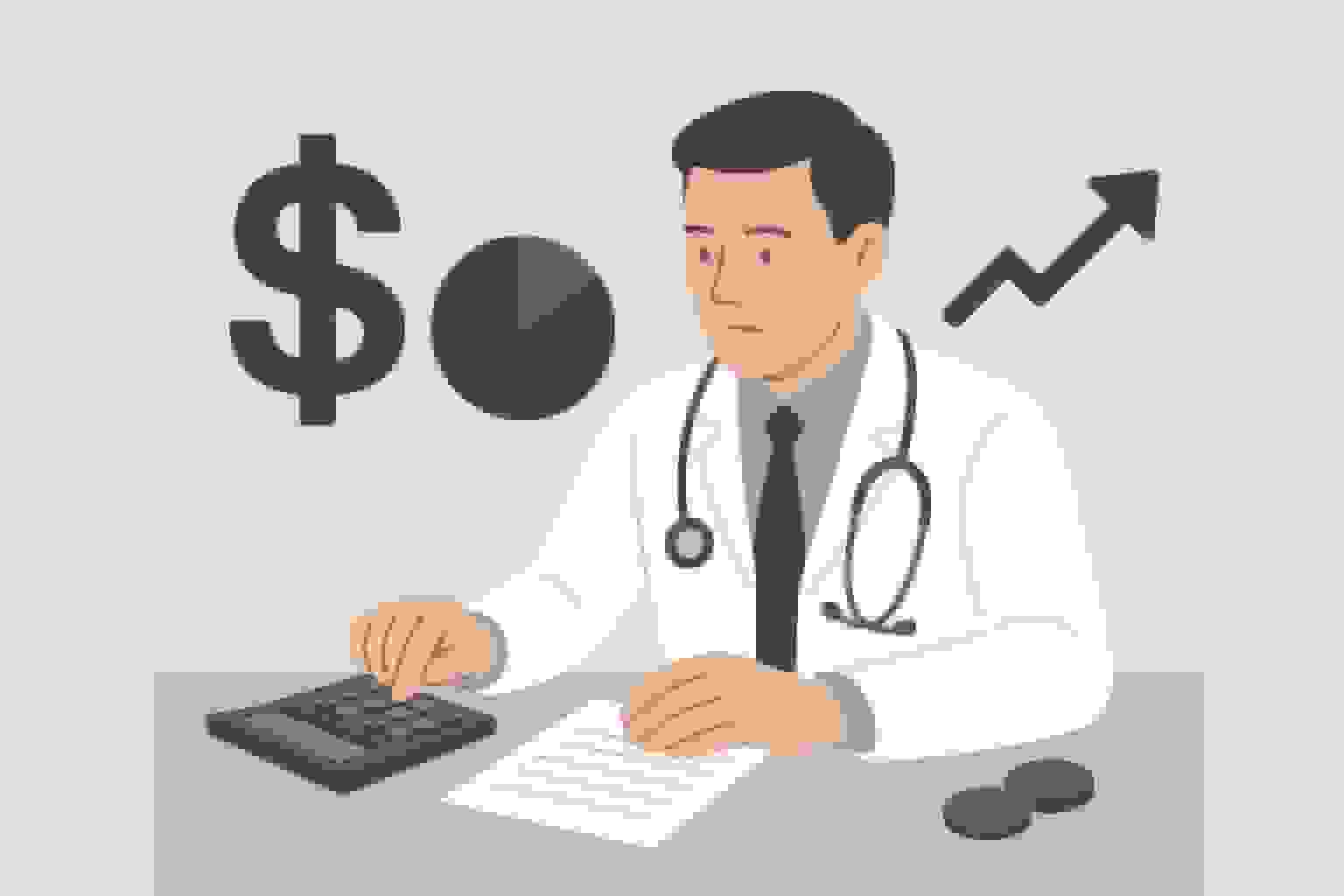
Most healthcare administrators don't realize how much they're spending (or should be spending) on staff photography. Let's look at realistic numbers for a 200-physician hospital system.
Traditional Photography Costs (200-Physician System)
Initial photography:
- Individual physician sessions: $400 avg × 200 = $80,000
- Nursing and staff leadership: 100 staff × $300 = $30,000
- Coordination and scheduling: 80 hours × $60/hr = $4,800
- Multiple photographers for consistency: $8,000
Annual ongoing costs:
- New physician recruitment (40 hires): $16,000
- Updates and retakes: $10,500
- Departmental changes: $12,000
Hidden costs people forget about:
- Physician time away from patients: $15,000
- Delayed marketing materials: $5,000
- Website and directory updates: $6,000
Total annual investment: ~$187,000
But here's the reality — most healthcare systems don't actually spend this much. They accept inconsistent quality, missing photos, and outdated imagery instead. Which means they're paying the hidden cost of looking unprofessional without even getting the benefit of good photos.
Why does professional imagery matter more in healthcare than other industries?
Healthcare is uniquely trust-dependent. Unlike buying software or hiring a consultant, medical decisions carry real physical consequences. Patients can't easily evaluate a doctor's clinical skills from a website — so they rely heavily on trust signals. Professional photography is one of the strongest.
Where do medical staff photos actually show up?
- Physician directory searches — This is the big one. Patients browse and compare doctors based on photos, bios, and specialties before booking.
- Telemedicine platforms — Virtual care requires a strong visual presence to build comfort before the appointment even starts.
- Hospital websites — "Meet Our Team" pages directly influence which facility patients choose.
- Nursing and clinical staff directories — the largest group on any hospital team page, and usually the least consistent.
- Insurance provider directories — Patients scrolling through in-network providers pick doctors who look professional and approachable.
- Referral materials — Specialists need quality headshots for referring physician communications.
- Marketing materials — Health fairs, community seminars, digital ads, social media.
- Press and media — Hospital spokespeople and department heads need professional imagery ready to go.
What Professional Physician Photography Actually Delivers
- Patient trust — Professional photos build confidence in medical expertise before the first visit
- Lower patient anxiety — Approachable headshots help nervous patients feel more comfortable booking
- Competitive edge — In markets with multiple hospital systems, presentation quality matters
- Physician morale — Doctors feel better represented when their photos look good
- Brand cohesion — Uniform appearance across all departments and locations
- Recruitment advantage — Polished marketing materials help attract top medical talent
How do AI headshots solve healthcare's specific photography challenges?
AI headshots turn a months-long logistical project into something that takes days. Here's how they address the problems that are unique to healthcare:
The scheduling problem is gone. Doctors have insane schedules — surgeries, rounds, on-call shifts, clinic hours. Coordinating a photo session around all of that is nearly impossible. With AI, physicians snap a few photos on their phone during a break and upload them. Done. No coordination needed.
New physicians get headshots immediately. New doctor starts Monday? Their professional headshot can be on the website by Tuesday. No waiting for the next scheduled photo day that may be months away.
Multi-location consistency becomes easy. Whether a physician works at the main hospital, a satellite clinic, or an outpatient center across town, their headshot comes from the same AI with the same settings. Perfect consistency regardless of location.
Every department matches. Cardiology, pediatrics, emergency medicine, oncology — everyone gets the same quality and style. No more some departments looking polished while others look neglected.
The cost math is straightforward. AI headshots run about $30-34 per physician vs. $300-550 for traditional medical photography. For a 200-physician system, that's roughly $6,800 vs. $80,000+ just for the initial round.
Telemedicine-ready output. Every photo comes in high resolution (4K with BetterPic), optimized for physician directories, telemedicine profiles, websites, and print materials.
Healthcare-Specific Benefits of AI Headshots
- Medical-appropriate styling — Photos that convey authority and warmth, the exact balance healthcare needs
- Secure photo processing — Enterprise-grade security with GDPR and CCPA compliance for handling staff data
- Multiple format output — High-res for print, web-optimized for directories, social-media-ready sizes
- Brand-consistent results — Every photo matches your health system's visual identity
- Specialty-appropriate looks — Slightly different styling for pediatrics vs. surgery vs. executive leadership
- Instant updates — Physician changes roles, departments, or appearance? New headshot in minutes
Which types of medical facilities benefit most?

AI headshots help any healthcare organization with staff photos, but some see outsized benefits:
Large hospital systems
Academic medical centers need professional physician imagery for research profiles, clinical directories, academic publications, grant applications, and conference bios. Coordinating photos for hundreds of faculty across clinical, research, and teaching schedules is basically impossible the traditional way. AI handles the scale without breaking a sweat.
Multi-campus health systems face the hardest consistency challenge. Different hospitals, outpatient centers, and clinics — all needing to look like one unified brand. AI headshots with locked-in brand presets solve this completely.
Independent clinics and private practices
Specialty practices (cardiology, orthopedics, dermatology) compete directly with larger systems for patients. Professional headshots level the playing field — a 5-physician practice can present just as polished an image as the hospital down the road.
Primary care groups rely on long-term patient relationships. Approachable, professional headshots build the personal connection that drives loyalty and referrals.
Specialized facilities
Pediatric hospitals need a specific tone — professional but warm, authoritative but not intimidating. Kids (and their parents) respond differently to imagery than adult patients. AI tools can dial in that approachable style consistently.
Mental health centers benefit enormously from professional, friendly imagery. Patients considering therapy or psychiatric care are already overcoming stigma barriers — a welcoming photo helps.
Urgent care networks have rotating physicians across multiple locations. Staff changes constantly. AI headshots keep the directory current without recurring photo sessions every time the roster shifts.
Market-Specific Advantages
- Urban hospitals — Stand out in competitive markets where patients have many options
- Suburban practices — Build community trust and familiarity that drives patient loyalty
- Rural healthcare — Access professional-quality medical photography without needing a nearby photographer
- Diverse patient populations — AI trained on diverse datasets produces equally good results across all demographics
What's the actual ROI for a healthcare system?
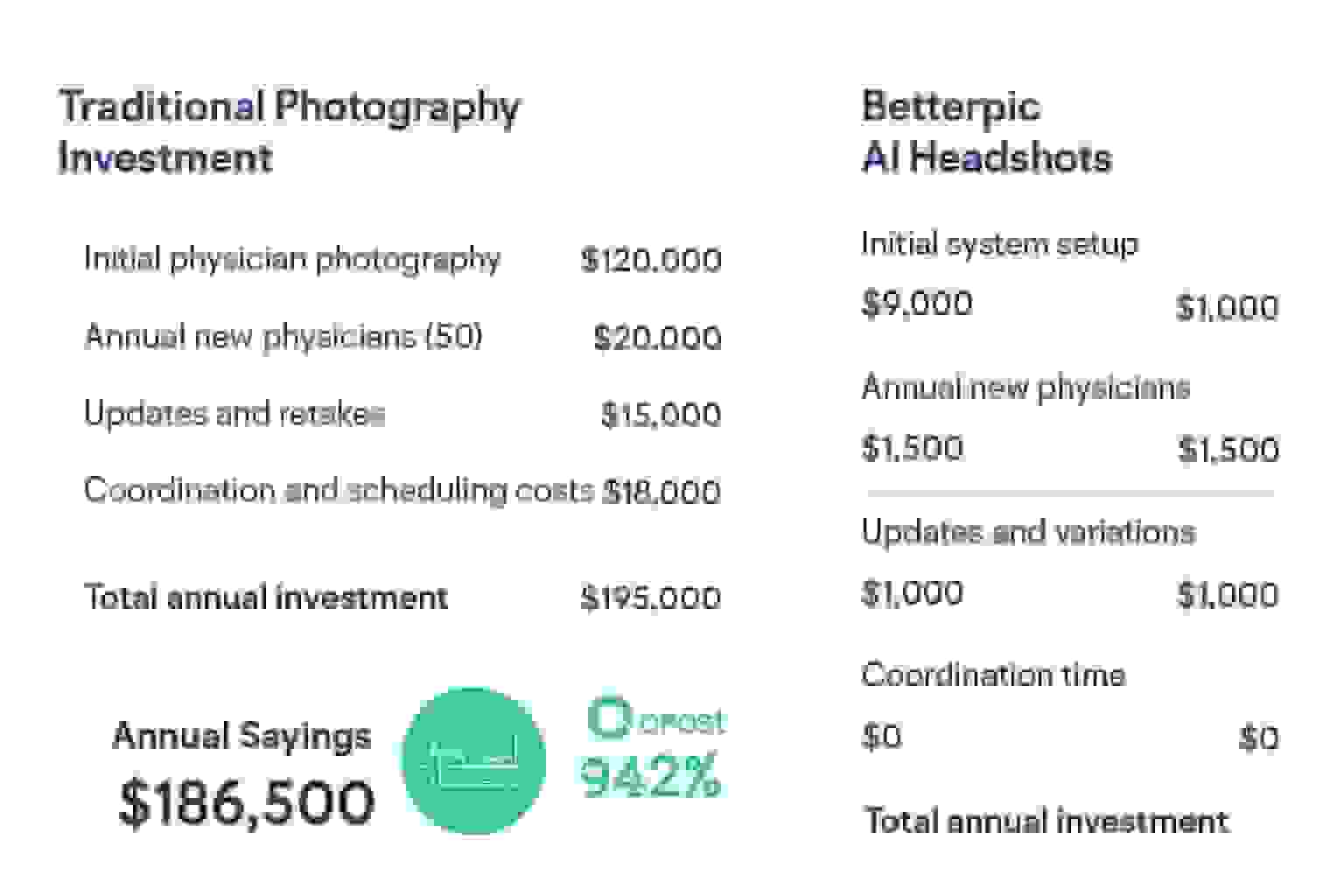
Let's run the numbers for a 300-physician health system.
Cost Comparison: 300-Physician Health System
Traditional photography:
- Initial physician photography: $120,000
- Annual new physicians (50): $20,000
- Updates and retakes: $15,000
- Coordination and scheduling costs: $18,000
- Lost physician productivity: $25,000
- Total annual cost: $198,000
AI headshots (BetterPic):
- Initial system setup (300 physicians): $9,000
- Annual new physicians (50): $1,500
- Updates and variations: $1,000
- Coordination time: $0
- Physician time impact: Minimal
- Total annual cost: $11,500
Annual savings: $186,500 (94% cost reduction)
But the savings are only part of the story. The bigger ROI comes from what professional photography does for patient acquisition.
Patient Revenue Impact (Conservative Estimate)
If professional physician imagery helps attract just 2 additional patients per physician per year across your 300-physician system, at an average patient value of $2,500:
Additional annual revenue: $1.5 million
That's a 130x return on your AI headshot investment.
Even if the patient impact is a fraction of that estimate, the cost savings alone make this a no-brainer. When you add in physician satisfaction, faster onboarding, recruitment advantages, and better community perception — it's hard to argue against it.
How should a healthcare organization get started?
The rollout for a hospital isn't that different from any other company, but there are a few healthcare-specific considerations:
1. Get buy-in from department heads first. Physicians are busy and change-resistant (understandably). Having their department chief endorse the program makes adoption much smoother than a top-down mandate from administration.
2. Start with one department as a pilot. Pick a department that's already complaining about their directory photos. Generate their headshots, put them on the website, and use the results to build momentum with other departments.
3. Keep the physician ask minimal. Doctors will not block time for a photo project. Make it dead simple: "Take 3-4 photos on your phone, upload them here, get your headshot back tomorrow." Five minutes of physician time, max.
4. Define the style once. Marketing picks the background, lighting, and overall look. Physicians don't make style choices — that's how you get consistency across 300 people.
5. Build it into credentialing and onboarding. Every new physician gets their headshot generated during their first week. It's on the onboarding checklist right after badge photo and EMR access.
6. Work with your compliance team on data handling. Make sure your AI headshot provider meets your organization's data security requirements. BetterPic is GDPR and CCPA compliant with enterprise-grade encryption — but your compliance team will want to verify this themselves.
The Bottom Line for Healthcare Leaders
Your physicians are among the most capable, dedicated professionals in any industry. They deserve to be represented that way online.
Inconsistent or missing photos on your physician directory aren't just a branding problem — they're a patient trust problem. Every placeholder silhouette and every blurry badge photo is a missed opportunity to build confidence with someone who's deciding where to get their healthcare.
AI headshots make it practical to fix this at scale. The cost is a fraction of traditional photography. The quality is indistinguishable. The logistics are simple enough that even the busiest surgeon can participate.
94% cost savings. Consistent professional quality. No scheduling headaches. That's what your marketing team and your physicians both want to hear.
Ready to give your medical staff the professional imagery they deserve? Visit BetterPic to see how AI headshots work for healthcare organizations of any size.
Sources & References
- AI Image Generation Market Report — Grand View Research
- How AI Is Changing Photography — Forbes
- Professional Headshot Photography Pricing — Thumbtack
- How Much Do Headshots Cost? — Professional Photographers of America
- First Impressions from Faces — Psychological Science

Written by
Hertok KawangCustomer Success Specialist
Hertok works directly with BetterPic customers every day, giving him first-hand insight into what professionals need from their headshots. With 6+ years in customer support, he writes from real user experience and common questions he encounters daily.
- 6+ years in customer success and support
- Handled 10,000+ customer headshot consultations
- Expert in AI headshot quality assessment
Preferred source
Follow BetterPic on Google
Add BetterPic as a preferred source and our headshot guides are more likely to show up in your Top Stories, with a badge in AI Mode and AI Overviews.

Related healthcare headshots resources
Keep exploring this topic with focused resources from the B2B journey.
Primary destination:BetterPic Teams for company and employee headshots
Frequently Asked Questions
How much do AI headshots cost for hospitals compared to traditional photography?
- AI headshots cost approximately $30-34 per physician versus $300-550 for traditional medical photography. For a 300-physician health system, that is roughly $11,500 versus $198,000 annually, a 94% cost reduction. The savings come from eliminating scheduling coordination, photographer fees, and physician downtime.
Does a professional photo affect patient trust?
- Research in the Journal of Medical Internet Research found patients rate physicians with professional headshots as significantly more competent and trustworthy. The photo does that work before anyone reads a bio or a qualification.
How do multi-site directories stay consistent?
- Consistency breaks when each site photographs its own staff, which is why a multi-location directory usually reads as several different organisations. Locking one brand preset produces identical style, lighting and background regardless of which hospital or clinic a physician works from.
How quickly can a new physician get a directory photo?
- A new clinician can be on the hospital website within a day of starting, taking a few phone photos rather than waiting for the next scheduled shoot. The delay in most directories is scheduling, not production.
Are AI headshot tools compliant for healthcare use?
- Portraits of identifiable clinicians are personal data, so encryption in transit and at rest, a defined retention period and deletion on request are the three things to verify. Enterprise platforms including BetterPic meet GDPR and CCPA on all three.
Related articles
View all articles
Real Estate Agent and Realtor Headshots That Build Trust
Learn how real estate agent and realtor headshots build trust, with practical advice on branding, poses, preparation, backgrounds, costs, and AI.
Your Guide to Modern Doctor Headshots That Build Trust
A practical guide to modern doctor headshots that build trust with patients. Learn how to plan, pose, and use AI to create professional medical headshots.
The Ultimate Healthcare Headshot Guide
A complete guide to healthcare headshots—covering wardrobe, posing, lighting, and AI options to help medical professionals build trust and credibility online.

A Modern Guide to Female Lawyer Headshots
A modern, practical guide to female lawyer headshots—covering wardrobe, posing, lighting, and branding to build trust and authority.

Best Lawyer Headshots — What Top Firms Get Right (And How to Do It Yourself)
What makes the best lawyer headshots work — covering branding, wardrobe, lighting, poses, camera settings, and ROI. With practical tips from real.
6 Reasons Baseball Leagues Need AI Headshots to Boost Sponsorship
AI headshots help baseball leagues present players professionally, attract more sponsors, and increase sponsorship revenue with high-quality team images.
Save 87%on average on your professional photos.
Whenever, wherever you are.
Get studio-quality, 4K images in a variety of outfits & settings in less than an hour.
Get your headshots nowStart now