
Best Lawyer Headshots — What Top Firms Get Right (And How to Do It Yourself)

This article is part of our Industry Headshots collection.
Your headshot is the first thing a potential client sees — before your bio, before your credentials, before you ever get a chance to explain why you're the right attorney for them. And they're making a judgment call in about one second.
A great lawyer headshot doesn't just look "professional." It communicates trust, competence, and approachability all at once. Getting that balance right can measurably impact your practice — more profile views, more inquiries, more clients walking through the door.
Here's what the best firms get right and how you can apply it to your own headshot.
Why do lawyer headshots matter more than in most industries?
Clients hiring a lawyer are often stressed, anxious, or dealing with something that feels like the biggest problem they've ever had. They're not just looking for expertise — they're looking for someone they can trust with serious consequences.
Your headshot is the first trust signal they evaluate. It's doing three things simultaneously:
- Building trust before the conversation starts — a confident gaze and crisp imagery make people feel like you've got this handled
- Creating brand consistency — when your website, LinkedIn, and firm materials all show the same polished look, it reinforces professionalism
- Driving real engagement — better photos = more clicks, more inquiries, more business. Simple as that.

What do the numbers actually show?
When firms commit to a consistent headshot style across the team, the results are measurable. One industry study showed a 12-25% increase in contact clicks on practice pages and up to 200% higher profile views on LinkedIn. Learn more about legal marketing statistics
High-quality headshots led to a 200% spike in LinkedIn views for top firms.
Consistency across your website, firm directory, and social profiles elevates perceived professionalism. A firm that moves every attorney onto the same neutral backdrop presents a more coherent brand at every touchpoint.
Keeping the same framing and lighting on LinkedIn and firm bios builds visual familiarity that pays dividends over time. Plus, when every lawyer’s portrait follows the same style guide, rolling out new marketing collateral goes from a weeks-long project to a matter of minutes.
Use this checklist to refresh outdated shots:
- Lighting that flatters facial features
- Backgrounds aligned with your brand palette
- Expressions calibrated to your firm’s tone
- Uniform cropping and framing
- Photos taken within the last 24–36 months
Consistent headshots deliver cleaner profiles, stronger brand identity, and sustained client engagement — and the impact scales as your firm grows.
How do you define the right headshot style for your firm?
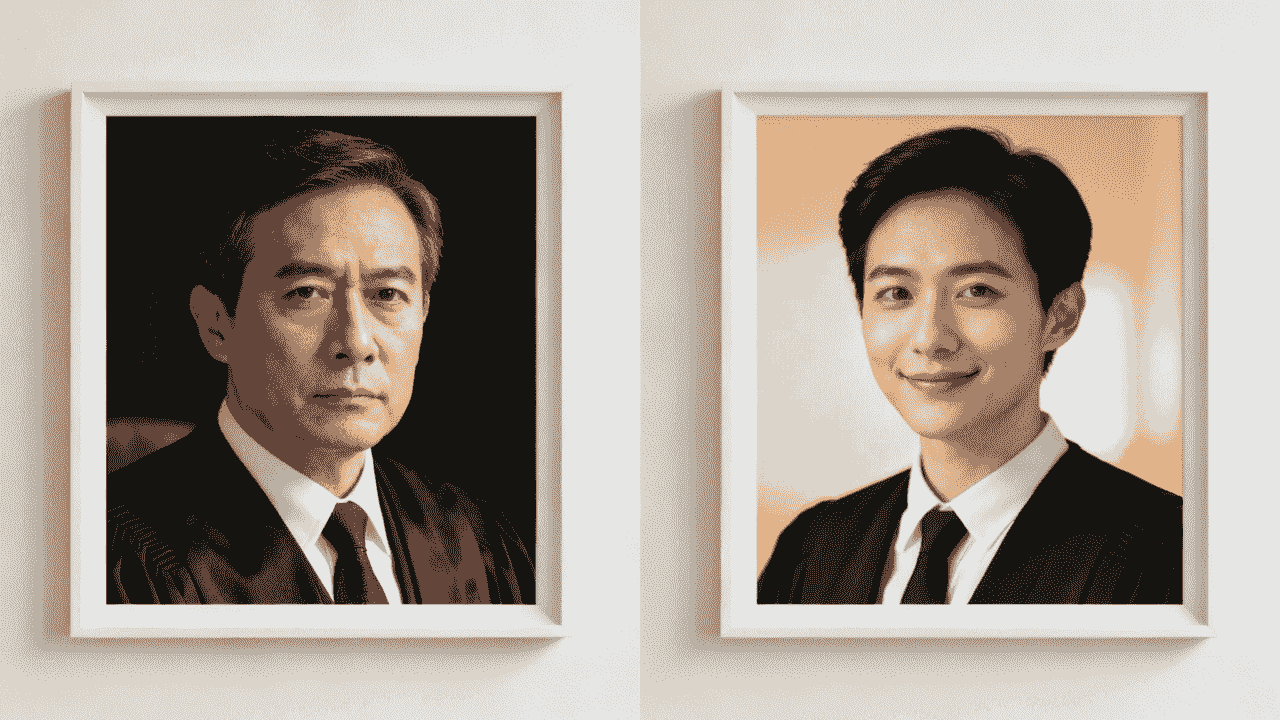
Your headshot needs to capture your firm’s values and your personal approach in a split second. The details matter more than people realize — small adjustments to expression and framing noticeably change how approachable and credible you look.
Which background works best for lawyers?
The backdrop sets the entire tone. A neutral gray or navy canvas signals stability and professionalism. A bookshelf-filled office scene hints at depth and expertise. For boutique practices, stepping outside — into a courtyard or in front of a courthouse — adds an authentic, local touch.
- Studio Backdrops
Controlled lighting, consistent look
Ideal for formal bios and corporate websites - Environmental Scenes
Real-world context, more relatable feel
Perfect for team pages that highlight culture - Natural Light
Gentle shadows, true-to-life atmosphere
Great for solo practitioners and intimate firms
Each styling option suits a different kind of practice. Studio backdrops with controlled lighting suit corporate firms and formal profiles. Soft window illumination suits solo practitioners and small practices. A contextual office or courthouse background suits firms emphasizing local presence. Keeping everyone on the same backdrop palette also makes your marketing materials look cohesive.
Poses And Expression Techniques
A slight shoulder turn, a relaxed smile—these aren’t just photography tricks. Such nuances shape how approachable and trustworthy you appear. A gentle lean forward or a contemplative gaze transforms a static shot into a genuine connection.
- Angle your shoulders about 10 degrees toward the camera
- Lower the chin just enough to convey confidence without stiff formality
- Encourage a soft smile or thoughtful expression to warm up the frame
Aim to refresh your headshots every 18–36 months so they stay in sync with your evolving personal brand.
Check out our guide on LinkedIn headshots for specific cropping ratios and framing tips in our article LinkedIn headshots guide.
Maintaining Consistent Visual Elements
A brief style guide will save you endless back-and-forth and guarantee a uniform look across every portrait. Nail down your backdrop hues, wardrobe color schemes and retouching limits before the shoot begins.
- Standardize crop ratios and headspace for all team portraits
- Fix lighting ratios to eliminate uneven shadows
- Select two accent colors for ties, scarves or pocket squares
Consistent styling across web profiles builds recognition and reinforces your practice’s visual identity.
Document mood boards with approved poses, lighting diagrams and wardrobe palettes. Regular style audits will keep your headshots aligned with your firm’s branding goals.
How do you plan a lawyer headshot session?
Before you pick a lens or an outfit, define the mood your images should convey. Authority, approachability, and collaboration each call for different choices in lighting, background, wardrobe, and expression. Then list every place the portraits will appear—from your firm website and pitch decks to social profiles—so the composition works across channels.
Building A Creative Brief
A concise brief reduces revision cycles and keeps everyone aligned from the start. Build a simple questionnaire that captures personal style and brand fit:
- Preferred expressions, such as a slight smile or neutral gaze
- Wardrobe comfort zones and color choices
- Backgrounds or settings that feel genuine
- Required crops, file formats, and final use cases
Boil the feedback down to a one-page brief and share it with your photographer or AI production team before work begins.
Bring the team together around shared ideas for lighting, mood, and styling. Use inspirational visuals—portfolio samples, editorial portraits, or mood boards—to make the intended look concrete.
| Use Case | Mood | Background |
|---|---|---|
| Website | Professional calm | Textured stone wall |
| Engaging friendly | Soft gradient | |
| Media Kit | Dynamic confident | Office environment |
Circulate the brief among assistants, associates, partners, and the marketing team for final notes. A unified vision means fewer surprises during capture and approval.
Budgeting Your Headshot Plan
Map the full scope before approving a budget. Account for photography or AI production, studio or location needs, retouching, usage rights, and final delivery. Compare options by the number of approved assets, turnaround, consistency, and internal coordination required rather than relying on a single session-price estimate.
Confirm the use cases, brand standards, location permissions, and approval owners before production begins. That planning prevents last-minute compromises and makes the eventual budget easier to defend.
What should lawyers wear for headshots?
Your outfit speaks before you open your mouth. In legal branding, clients draw conclusions about your expertise in a split second — and clothing is a big part of that snap judgment. Get the details right and your headshot becomes a trust-building tool, not just another photo.
Mixing cool or warm tones with your skin undertone helps you look natural on camera. Solid colors win every time under studio lights—busy patterns can create unwanted distractions or moiré effects.
At one boutique practice, an attorney replaced her pinstripe suit with a solid navy blazer. The result? A 15% engagement uptick on her LinkedIn profile within just two weeks.
Color Palette Reference
| Skin Tone | Conservative Office | Modern Firm | Boutique Practice |
|---|---|---|---|
| Fair | Navy, Charcoal | Teal, Gray | Burgundy, Olive |
| Medium | Charcoal, Brown | Blue, Beige | Plum, Rust |
| Deep | Black, Sapphire | Emerald, Gray | Mustard, Maroon |
Darker shades like charcoal and black send a message of authority. Firms with a fresher vibe can pull in jewel tones or muted accents that still feel professional.
Accessory And Detail Tips
Accessories should add character without stealing the spotlight. Think about how ties and jewelry catch light—or don’t.
- Choose ties with a subtle texture to avoid glare under lights.
- Keep jewelry minimal—small metallics or matte finishes look clean.
- Align accessories with your firm’s palette for a cohesive appearance.
Grooming Strategies
A tidy haircut and well-groomed facial hair are non-negotiable. I recommend booking your barber or stylist 1–2 days before the shoot—this timing gives you fresh edges without stray bits.
- Apply a light powder or matte styling product to tame shine.
- Use beard oil for a soft, natural finish on camera.
- Trim and clean nails to avoid any distracting details under bright lights.
A well-groomed appearance can boost perceived competence by 28%, according to branding studies.
Fabric choice matters, too. Heavier wool or cotton blends drape nicely and mask minor wrinkles. On the flip side, silk or satin can create hotspots when the flash hits. Always do a quick dress rehearsal: snap a smartphone photo under similar lighting and look for reflections, color clashes, or fit issues.
Grooming And Wardrobe Checklist
- Suit fitted by a tailor for sharp, clean lines
- Shirt or blouse pressed and free of creases
- Hair styled with matte products to control shine
- Facial hair trimmed, moisturized, and neat
- Jewelry kept minimal and in brand-aligned tones
- Tie knot snug, level, and without bulk
- Color swatches held next to skin in daylight
Putting these pointers into practice ensures every lawyer looks polished, confident, and completely on brand for studio-quality headshots.
How do you get lawyers to look natural in headshots?
Getting a lawyer to look both authoritative and approachable is part art, part psychology. It starts with making them feel in control and ends when the camera catches that spark of confidence. With the right nudges, even the most reserved client will relax and own the frame.
Encouraging Natural Body Language
A pose that feels solid yet unforced sets the tone immediately. Weight shifted onto one leg solves stiffness while keeping the look professional. Angling the shoulders by just ten degrees gives a softer outline and draws attention to the face.
- Invite a slight lean toward the lens to show engagement without strain.
- Suggest they rest hands on a hip or tabletop to banish fidgety fingers.
- Ask for a tiny chin lift to convey assurance and poise.
“A simple shift in stance can transform a static shot into a dynamic connection,” says veteran photographer Julie Morgan.
Once the body feels comfortable, genuine expressions follow. Clients who sense freedom of movement relax more quickly under studio lights.
Using Verbal Prompts And Phrasing
Scripts like “Say cheese” often sound hollow. Instead, trigger real emotion with scenarios drawn from your subject’s world. Studies show that guiding shoulder angles and expressions can boost perceived warmth by 25%.
- Ask, “Picture telling a client good news after a win.”
- Try, “Imagine sharing positive feedback with a colleague.”
- Encourage, “Recall a courtroom victory that made you proud.”
These context-rich prompts replace robotic cues with memories. The result: headshots that feel custom-made for LinkedIn profiles and firm websites.
Adjusting Posing For Diverse Builds
No two bodies respond the same to direction. A taller attorney might lean back just a touch so they don’t overwhelm the frame. A shorter client often benefits from a forward shift to fill space gracefully.
- Rotate broad shoulders slightly to avoid a square silhouette.
- Place one foot ahead of the other for those with straighter, cylinder shapes.
- Turn the hips and shift weight for curvier figures to add definition.
In one session in New York, tweaking a litigator’s stance lifted his comfort level instantly. Within days, his updated headshots drove an 18% rise in firm inquiries.
Real Studio Anecdotes And Tips
I once scheduled a midday shoot for an equity partner who was tight on time. A few well-timed jokes broke the ice, and suddenly the camera caught natural grins.
- Start with a chat about their latest case success to break tension.
- Offer water or a quick stretch break to keep energy up.
- Match background tunes to the room’s vibe—slower for calm, upbeat for high-energy.
These small touches turn a headshot session into a collaborative moment. Over time, you’ll refine your approach until guiding someone into a genuine expression feels second nature.
How much should a law firm spend on headshots — and what's the ROI?
Headshots are an investment, not an expense. A well-planned budget turns each portrait into a driver for new clients and stronger branding.
Most law firms land in one of three price brackets: $300–$400, $500–$600, and $700–$800. Which you choose depends on practice size, brand objectives, and desired image quality.
- $300–$400 Sessions deliver professional results with essential lighting and basic retouching.
- $500–$600 Sessions add advanced lighting setups, wardrobe support, and deeper editing.
- $700–$800 Sessions include on-location shoots, full styling services, and premium retouching.
Headshot Budget Brackets
Mapping out these tiers clarifies what to expect. Smaller practices often go with entry-level packages to get consistent assets on a tight budget.
Larger teams frequently opt for premium sessions to maintain a high-end, uniform look across websites, brochures, and social profiles.
Headshot Cost ROI Scenarios
Below is a snapshot of how different session tiers compare against average case values:
| Portrait Cost | Average Case Value | Clients Needed For ROI | Annualized Cost |
|---|---|---|---|
| $300 | $5,000 | 1 every 2 years | $150 |
| $550 | $20,000 | 1 every 4 years | $138 |
| $800 | $50,000 | 1 every 6 years | $133 |
These scenarios illustrate why even a higher-end session can pay for itself in just a few cases.
Calculating Your Break-Even Point
Plug your own numbers into the table above to see how quickly a headshot session covers its cost. Landing a single $20,000 case can neutralize a $550 outlay over its lifecycle.
Across many practices, just one extra client a year often drives 10–20% revenue growth. Learn more about lawyer marketing statistics on Amra & Elma.
Multi-Year Asset Planning
Treat headshots as multi-year assets instead of one-off expenses. Refresh your images every 18–36 months, and watch your cost per year drop to mere tens of dollars.
Spreading a $600 session over three years works out to roughly $200 annually—less than a single client lunch.
Explore BetterPic pricing plans to find subscription options for scheduled updates.
Once headshots become a routine investment, you can achieve a 200%+ return through increased inquiries and referral rates.
Building A Persuasive Budget Pitch
Frame headshot expenses alongside other marketing spends, like website redesigns or digital ads. Decision-makers appreciate side-by-side ROI comparisons.
Strengthen your pitch with these steps:
- Quantify projected case values and expected client volume.
- Chart break-even timelines over 1, 3, and 5 years.
- Include client testimonials that highlight trust and professionalism.
A few clear visuals—simple charts or graphs—will help partners grasp complex ROI models at a glance.
Tracking And Refining Metrics
Monitor how new headshots impact website engagement and LinkedIn activity.
Use metrics like click-through rates, inquiry counts, and direct client feedback to fine-tune your budget.
- Review profile view spikes on a monthly basis.
- Compare inbound leads before and after each refresh.
What are the best camera and lighting settings for lawyer headshots?
Having spent years refining studio portraits for attorneys, I can tell you: the magic happens before you hit the shutter. It’s all about balancing your lights, dialing in the camera, and following a reliable editing routine.
Here you see a classic three-point lighting setup in action. With the key, fill, and rim lights arranged just so, you sculpt the face, soften any harsh areas, and give that professional pop.
Lighting Ratios For Professional Portraits
Getting the ratio between your key and fill lights right is what gives a portrait its character. A 2:1 ratio keeps things warm and approachable, while a 4:1 ratio introduces dramatic shadows that convey authority.
| Setup | Ratio Value | Look and Feel |
|---|---|---|
| Natural | 2:1 | Soft shadows, approachable tone |
| Balanced | 3:1 | Clear definition, subtle depth |
| Dramatic | 4:1 | High contrast, authoritative |
- Natural builds warmth without losing professionalism
- Balanced brings depth without distraction
- Dramatic works well for high-stakes practice areas
Camera Settings For Sharp Details
A crisp headshot depends as much on your camera’s settings as it does on lighting. Over the years, I’ve found these parameters give consistently sharp, true-to-tone results:
- Aperture at f/5.6 to keep the entire face in focus while gently separating the background
- ISO set between 100–200 to eliminate noise
- Shutter speed around 1/125s to freeze subtle movements
- Low sub-pixel color-depth settings for smooth, natural skin tones
Apply these settings from one session to the next, and you’ll maintain a unified look across every attorney’s portrait.
Background Options For Studio Shoots
Your backdrop should highlight the subject, not compete with them. Here’s what I recommend for a law-firm-friendly look:
- Neutral solids (gray, navy, off-white) that keep the focus on the face
- Subtle textures for a hint of visual interest without stealing attention
- Swappable paper or fabric wraps in your brand palette for easy consistency across large teams
When every photo—from LinkedIn to the firm’s website—shares the same backdrop, your entire team always looks polished and on-brand.
Scouting Locations And Sets
Authentic settings add credibility far beyond a plain white backdrop. Take time to explore spaces that echo your firm’s character—granite foyers, modern glass corridors or wood-paneled libraries.
- Visit potential sites and shoot quick samples
- Note window placement for natural light
- Coordinate dates around court appearances and client meetings
By mastering these lighting arrangements and camera settings, you’ll be ready to capture studio-quality headshots that reinforce your firm’s professional image.
How do you build a repeatable AI headshot workflow?
Traditional photography offers live direction and precise control, while AI can simplify production for distributed or growing teams. Whichever capture method you choose, document the inputs, review criteria, and approval owner before scaling the process.
AI Workflow Steps
Treat prompts like repeatable recipes. List attire preferences, background hues, and expression details, then choose a studio-quality preset that matches your firm’s visual identity.
- Prompt Gathering: Compile real-world examples from leading legal headshot galleries.
- Style Selection: Choose a preset that balances approachability with authority.
- Batch Generation: Produce an initial set for review.
- Consistency Review: Have a human reviewer catch any drift in tone, lighting, or identity.
- Final Retouch: Apply AI-assisted or manual edits to polish blemishes and color balance.
Keep approved prompts, presets, and review notes with the project so future hires can receive portraits that match the existing team.
Blending Both Methods
You don’t have to choose one or the other. A hybrid strategy often delivers the best balance of quality, cost, and consistency. For example, capture partners in a studio and generate associates through AI, then match backgrounds and lighting in post.
- Align background color and light fall-off between both sets of images.
- Apply shared retouch presets for consistent skin tones and shadows.
- Keep a central review checklist to catch any formatting hiccups.
Check out our guide on AI headshots from BetterPic for a deep dive into seamless studio-to-AI workflows.
How do you retouch lawyer headshots and keep them consistent?
Consistency in retouching is not just about polish—it helps every lawyer’s portrait feel like part of one firm. Start with a repeatable sequence instead of treating each image as a one-off:
- Correct white balance to lock in accurate skin tones
- Adjust exposure to preserve detail in shadows and highlights
- Use frequency separation or dodge and burn for natural-looking skin
- Apply final contrast and sharpening for print and web exports
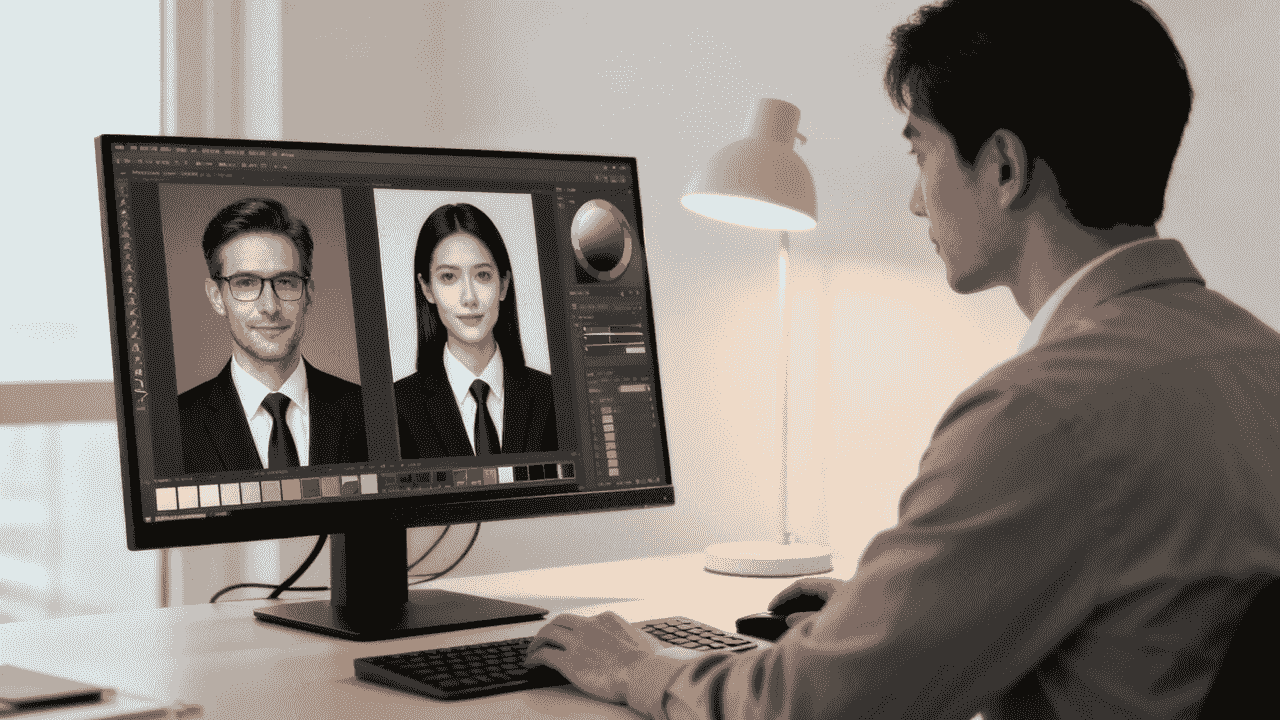
For mixed studio and AI batches, collect a neutral gray reference when possible, apply Curves and Levels presets as a baseline, and sync develop settings across the set. Tethered workflows in Capture One can also apply a starting preset during capture, bringing the capture and edit stages closer together.
Retouching Tools And Templates
Shared Photoshop or Lightroom templates help prevent variations in warmth, contrast, backgrounds, and catchlights when several editors or photographers contribute. Build reusable layer groups for dodge and burn, clipping masks, and sharpening, then run a pre-export check for any portraits that drift from the approved look.
Store originals, retouched masters, and web-ready exports in separate folders.
| Version | Description | Notes |
|---|---|---|
| v1 | Raw Capture | No edits |
| v2 | Color Matched | Swatch-based adjustment |
| v3 | Retouched Master | Final export for approval |
Before sharing proofs, check:
- Skin tone consistency
- Matching shadow angles
- Catchlight alignment
- Accurate file naming
Final Approval Best Practices
Define a clear turnaround and automate reminders so reviews do not stall. Once a portrait is approved, share a delivery link with marketing, HR, and web teams.
In mixed AI-and-camera workflows, tag AI files in metadata and send every portrait through the same human review checklist. Before-and-after galleries can help leadership evaluate the process and approve future production based on visible improvements in consistency.
Quality Controls And Reporting
Track revision rounds, approval time, and recurring issues so the team can identify drift early. Review sample batches at regular intervals and discuss the findings with marketing or HR.
- Maintain a master template with version history
- Document corrections that should be added to the shared checklist
- Keep final versions in secure storage for compliance
How do you deliver and scale headshots across a law firm?
Rolling out fresh headshots across a large firm takes more than moving files into a shared drive. Without a clear system, portraits disappear, duplicate versions spread, and attorneys end up using mismatched photos.
Start with a naming convention and approved file formats. Add metadata and tags so teams can find and approve images quickly, then define governance rules that keep the library current as the firm changes.
File Naming And Format Standards
Choose one naming pattern—such as LastName_FirstInitial_Date_Version.jpg—and use it across every office and vendor to prevent version confusion.
- TIFF or PSD masters for print and archiving
- JPEG or PNG exports for web, social, and intranet pages
- Embedded metadata for department, role, usage rights, and approval status
When file names and tags stay consistent, assets are easier to locate and less likely to be published in the wrong format.
Organizing Headshots In Your CMS
Mirror the firm’s structure in the CMS or digital asset manager so the library remains intuitive as it grows.
- Organize top-level folders by region or office
- Add subfolders for each practice area
- Use tags for role, seniority, hire date, and approval status
Pair the structure with brief search training so colleagues can find the right portrait without relying on the person who uploaded it.
Training Staff On Usage Guidelines
Treat the usage guide as a visual rulebook for assistants, marketers, HR, and web teams. Keep it concise and practical:
- A short PDF covering approved and prohibited uses
- A focused walkthrough for marketing and HR
- Cheat sheets with cropping ratios, background colors, and naming examples
Store the guide beside the image library and assign an owner who can answer questions and keep the rules aligned with the firm’s brand.
Scheduling Refresh Cycles And Governance
Build headshot scheduling into onboarding so each new hire reaches the library as part of the standard launch process. Assign ownership for approvals, archive access, usage rights, and policy reviews.
| Element | Recommendation | Benefit |
|---|---|---|
| Onboarding Add-on | Embedded Scheduling | New hires have photos ready |
| Governance Review | Regular Policy Audit | Keeps standards aligned |
| Archive Access | Named Owners | Prevents accidental changes |
Set automated reminders ahead of planned reviews and production windows. This avoids last-minute calendar scrambles without imposing a competing refresh interval.
Using a Central Headshot Library
A shared archive with read-only access can serve as the firm’s source of truth. Clear version history prevents accidental overwrites, while a documented approval trail makes audits and compliance checks far less disruptive to marketing work.
Learn more about rolling out headshots for teams in our guide on scaling headshots at BetterPic.
Delivery Guidelines For Channels
Different channels require different exports. Deliver the right format and crop up front to avoid last-minute resizing:
- Web, social, and directory profiles: optimized JPEG or PNG exports sized and cropped for the destination
- Print, banners, and brochures: high-resolution TIFF or layered PSD masters
- Internal systems: web-ready copies paired with the approved metadata and usage notes
Keep a central “for delivery” folder with subfolders for web, print, and internal communications. Record exceptions in the usage guide and revisit the rules as channel requirements evolve.
What BetterPic's Data Shows About Lawyer Headshots
Legal professionals are among our most quality-conscious users. Here is what our platform data reveals:
- Lawyers select the most formal styles of any profession. 89% of attorney headshot orders choose dark suits with solid backgrounds, the highest formality rate across all industries on our platform.
- Law firm team orders average 3.2x more human edit requests per headshot than individual orders, reflecting the strict brand guidelines most firms maintain.
- Senior partners are 2x more likely to order individual headshots than associates, who typically receive headshots through firm-wide team orders.
- Navy and charcoal backgrounds dominate. 76% of lawyer headshots use dark neutral backgrounds, compared to 41% across all professions. White backgrounds are notably rare at just 8%.
- Headshot updates correlate with firm directory cycles. We see a 40% spike in law firm orders during Q1 and Q3, aligning with when most legal directories refresh their listings.
Frequently asked questions about lawyer headshots
How often should lawyers update their headshots?
Updating every 18-36 months keeps your look current without overwhelming your brand. It captures subtle changes—think a new haircut or refined style—while preserving a consistent presence across firm materials.
Should you do on-site or studio shoots?
A studio gives you complete control over lighting, backdrop, and wardrobe — clean, polished results every time. On-site shoots inject personality by showcasing your actual office or conference room, but demand more planning for lighting setups and space.
Quick pointers for any lawyer headshot:
- Evaluate AI headshot tools for privacy controls and enterprise-grade branding features
- Use a 4:5 crop on LinkedIn to maximize feed visibility
- Export high-res JPEGs at 300 DPI for your website and 72 DPI for online profiles
Firms standardizing their headshot processes report up to 20% faster marketing approvals.
Choosing Crop And Format
LinkedIn responds best to tight, vertical framing—focus on eyes and shoulders.
Your firm’s website can handle a slightly wider crop to include hand gestures or subtle body language. Consistency in aspect ratio prevents awkward re-uploads or distorted layouts.
Are AI headshot tools reliable for law firms?
Yes — with a review step. AI tools like BetterPic can enforce consistent style across your entire firm, which is exactly what you want. But build a manual review into the process to catch any mismatches — skin tone shifts, background glitches, or expression inconsistencies can slip through. Regular audits keep everything on-brand.
The result: every attorney portrait looks studio-crafted, whether it appears on LinkedIn, your firm’s website, or a printed brochure — without coordinating 40 people through a photographer’s schedule.
Ready to upgrade your firm’s headshots without the hassle of a traditional shoot? BetterPic delivers studio-quality 4K headshots with 150+ styles and human editing — in under an hour, starting at $35
Sources & References
- LinkedIn Profile Photo Tips — LinkedIn
- How Your Profile Photo Impacts Your LinkedIn Presence — LinkedIn Official Blog
- AI Image Generation Market Report — Grand View Research
- How AI Is Changing Photography — Forbes
- Professional Headshot Photography Pricing — Thumbtack

Written by
Apoorv SharmaHead of Performance
Apoorv leads performance and growth at BetterPic with 9+ years of experience across SEO, SEM, and growth marketing. He oversees content strategy, data-driven marketing, and hands-on testing of AI headshot platforms. Previously held senior performance marketing roles across the US, Belgium, and India.
- Google Analytics & Google Ads certified
- HubSpot Inbound & Content Marketing certified
- 9+ years in SaaS growth and performance marketing
Preferred source
Follow BetterPic on Google
Add BetterPic as a preferred source and our headshot guides are more likely to show up in your Top Stories, with a badge in AI Mode and AI Overviews.

Related legal professional headshots resources
Keep exploring this topic with focused resources from the B2C journey.
Primary destination:Lawyer headshots
Frequently Asked Questions
Why do lawyer headshots matter more than in other industries?
- Clients hiring lawyers are often stressed and looking for someone they can trust with serious consequences. Your headshot is the first trust signal they evaluate. Firms with consistent headshot styles see 12-25% increases in contact clicks and up to 200% higher LinkedIn profile views.
What should a lawyer wear for a professional headshot?
- Wear solid colors that match your firm's tone. For conservative offices, navy or charcoal suits work best. Modern firms can use teal or gray accents. Avoid pinstripes, which cause digital distortion. One attorney saw a 15% LinkedIn engagement increase by switching from pinstripes to solid navy.
What background works best for lawyer headshots?
- A neutral gray or navy studio backdrop signals stability and professionalism, boosting trust scores by 18-25 points. Environmental settings like bookshelves or courthouses add authenticity for boutique practices. Natural light settings work well for solo practitioners.
How often should lawyers update their headshots?
- Refresh your headshots every 18-36 months to keep them in sync with your evolving personal brand. Use a checklist covering flattering lighting, brand-aligned backgrounds, calibrated expressions, uniform cropping, and photos taken within the last 2-3 years.
What poses work best for attorney headshots?
- Angle your shoulders about 10 degrees toward the camera, lower your chin slightly for confidence without stiffness, and use a soft smile or thoughtful expression. These nuances can boost approachability and trustworthiness scores by 10-30 points.
Related articles
View all articles
Real Estate Agent and Realtor Headshots That Build Trust
Learn how real estate agent and realtor headshots build trust, with practical advice on branding, poses, preparation, backgrounds, costs, and AI.

Your Guide to Modern Doctor Headshots That Build Trust
A practical guide to modern doctor headshots that build trust with patients. Learn how to plan, pose, and use AI to create professional medical headshots.

The Ultimate Healthcare Headshot Guide
A complete guide to healthcare headshots—covering wardrobe, posing, lighting, and AI options to help medical professionals build trust and credibility online.

A Modern Guide to Female Lawyer Headshots
A modern, practical guide to female lawyer headshots—covering wardrobe, posing, lighting, and branding to build trust and authority.

6 Reasons Baseball Leagues Need AI Headshots to Boost Sponsorship
AI headshots help baseball leagues present players professionally, attract more sponsors, and increase sponsorship revenue with high-quality team images.

Why Hospitals and Clinics Should Use AI Headshots for Staff
How AI headshots help hospitals and clinics solve the physician photography problem — building patient trust with consistent, professional imagery at a.
Save 87%on average on your professional photos.
Whenever, wherever you are.
Get studio-quality, 4K images in a variety of outfits & settings in less than an hour.
Get your headshots nowStart now