
The Ultimate Healthcare Headshot Guide
This article is part of our Industry Headshots collection.
If you are a nurse, nurse practitioner or clinical staff, our nurse and medical headshots page shows what the finished results look like.
In healthcare, a professional headshot does more than just put a face to a name. It’s a vital tool for building patient trust and establishing your credibility from the very first click. Think of it as your digital first impression on hospital directories, professional networks like LinkedIn, and practice websites—it conveys warmth and competence long before you ever meet in person.
This isn't about vanity; it's a strategic part of your professional brand.
Why does your healthcare headshot matter so much?

Before a patient ever reads your bio or a colleague hears you present, they see your photo. That single image is often their first point of contact, and it immediately shapes how they perceive you. A polished, professional portrait instantly communicates competence, empathy, and approachability.
On the flip side, a casual selfie or an outdated, poorly lit photo can send the wrong message. It might suggest a lack of attention to detail or a disconnect from professional standards—qualities that can quickly erode the trust so essential to the patient-provider relationship.
Building Trust at a Glance
In a field built entirely on human connection and confidence, your headshot is a non-verbal promise of your professionalism. A warm, confident expression can make a nervous patient feel more comfortable reaching out, while a professional appearance reassures them they're in capable hands. This is especially true on platforms where first impressions are made in seconds. For a deeper dive, our complete guide on LinkedIn headshots shows just how much impact a great photo can have.
Your headshot isn’t just for your profile; it sets the tone for every digital interaction. It’s the visual anchor of your personal brand, reinforcing the expertise and care you provide.
How does a headshot help in a competitive healthcare market?
It's no secret the healthcare sector is facing some big challenges. The World Health Organization projects a staggering global shortfall of 10 million healthcare workers by 2030, which only intensifies the competition for both talent and patient trust.
In this kind of environment, every little piece of your professional branding matters. A high-quality headshot helps you and your institution stand out, establishing immediate credibility in a crowded space.
What should healthcare professionals wear for headshots?

Before a patient ever steps into your office, they've likely already formed an impression of you online. What you wear in your professional headshot is one of the most powerful, immediate signals you can send. It's a silent conversation that can either build trust or create a barrier before you've even had a chance to speak.
Think of your wardrobe as a critical part of your professional non-verbal communication. The right attire speaks volumes, conveying expertise, approachability, and authority. The wrong outfit? It can project an image that just doesn't align with the high level of care you provide.
Wardrobe Guidance for Different Healthcare Roles
A one-size-fits-all approach simply doesn't cut it in healthcare. A surgeon’s portrait needs to communicate meticulous precision, while a pediatrician’s should radiate warmth and compassion.
- Surgeons and Specialists: Clean, well-fitting scrubs are incredibly effective. They immediately reinforce your hands-on expertise and role. For a different vibe, formal business attire can project a sense of serious authority and deep commitment to your field.
- General Practitioners and Pediatricians: Your goal is approachability. Business casual is often the perfect choice here—think a crisp collared shirt or a professional blouse. Layering with a sweater or blazer can add a touch of warmth and create a look that feels both friendly and competent.
- Healthcare Executives and Administrators: You need to convey leadership and strategic vision. A sharp business suit or a well-tailored dress remains the gold standard for projecting the confidence and authority expected in your role.
- Mental Health Professionals: Creating a sense of safety is paramount. Opting for soft, solid colors and business-casual attire helps you appear more open and less intimidating, which is key for fostering trust with potential clients.
The core question isn't "What looks best?" It's "What does my ideal patient or colleague need to see to feel confident in my care?" Your clothing should be the visual answer to that question.
The Psychology of Color and Simplicity
Color theory isn't just for artists; it plays a huge role in perception. It’s no accident that blues and greens are classics in healthcare—they are psychologically linked to calm, stability, and health. These tones can have a genuinely soothing effect, which is exactly the feeling you want to inspire.
Keep it simple. Loud patterns, distracting brand logos, or flashy jewelry pull focus away from what truly matters: you. The star of a great healthcare headshot should always be your face and your expression of empathy and confidence. Solid colors ensure nothing competes for the viewer's attention.
Finally, don't overlook the fit. Your clothes must be well-tailored, clean, and wrinkle-free. A lab coat that's too big or a shirt that’s crumpled can subtly undermine the professional, polished image you’re working so hard to create.
Healthcare Headshot Wardrobe Guide By Profession
To make things even easier, here's a quick-reference table to help you nail down the perfect attire for your role. Think of it as a cheat sheet for projecting professionalism and trust.
| Healthcare Role | Primary Wardrobe | Secondary Option | Key Considerations |
|---|---|---|---|
| Surgeon | Clean, well-fitting scrubs | Formal business suit | Precision, seriousness |
| General Practitioner | Business casual (e.g., button-down shirt) | Lab coat over business casual | Approachability, warmth |
| Healthcare Executive | Tailored business suit | Professional dress | Leadership, authority |
| Therapist/Counselor | Soft-colored blouse or sweater | Business casual blazer | Openness, safety |
Ultimately, dressing for your headshot is about being intentional. By aligning your wardrobe with your professional role and the emotional needs of your audience, you create a powerful first impression that resonates long before the first handshake.
How should you pose and what expression works for healthcare headshots?
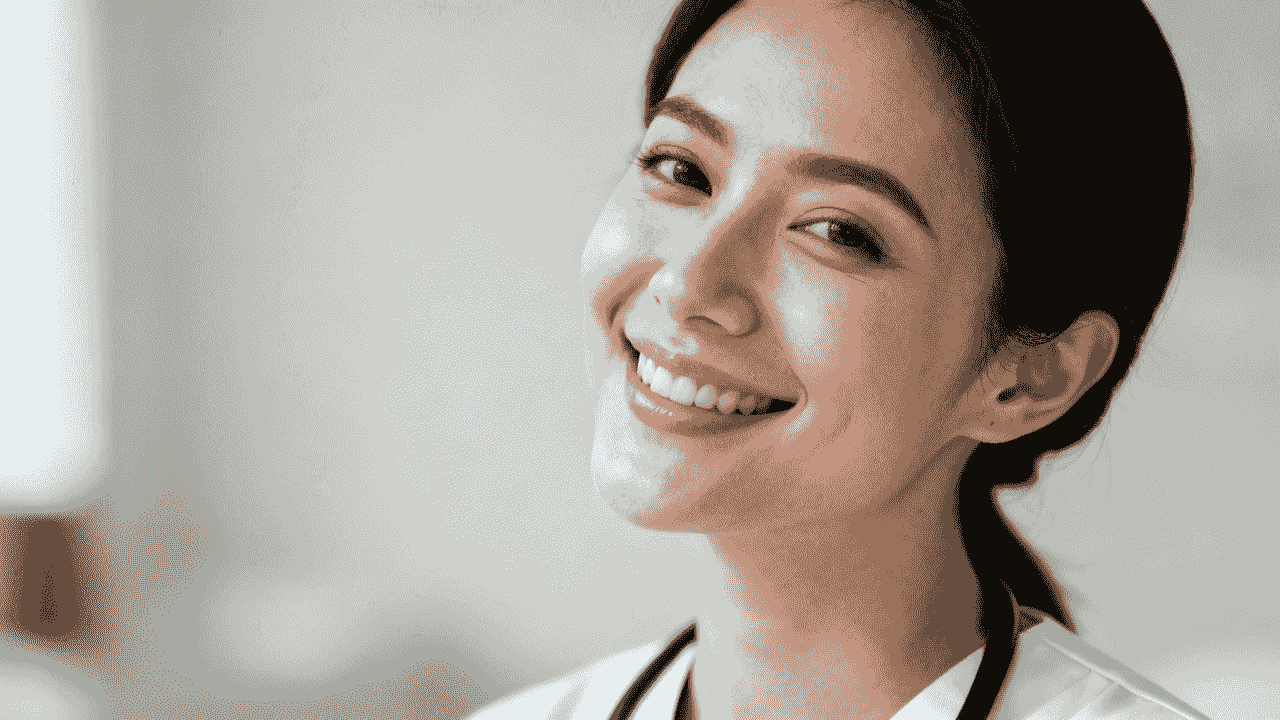
A technically flawless photo can completely miss the mark if the expression looks stiff or the pose feels awkward. For a healthcare headshot, the mission is bigger than just looking professional—it’s about looking like someone a patient would trust with their health. It's a delicate dance between confidence and empathy, and it all comes through in subtle, authentic cues.
Forget the old "say cheese" smiles. Real connection comes from being relaxed. If you're tense, I guarantee it will show up on camera. Before you even try to smile, just take a deep breath, roll your shoulders back, and let go of any tension you're holding in your jaw.
Crafting an Approachable Posture
Your body language is speaking long before you do. A few small tweaks can take your posture from guarded to open and inviting, which is everything when a potential patient is sizing up your profile.
- Angle Your Body Slightly: Standing straight-on to the camera can come across as a bit confrontational. Try turning your body about 45 degrees from the lens, then bring your head back to face the camera. It’s a classic photographer’s trick for a reason—it’s more dynamic and flattering.
- Lean In (Just a Touch): A subtle lean toward the camera instantly creates a feeling of engagement. It’s a non-verbal way of saying, "I'm present, and I'm listening," which is an incredibly powerful message for a healthcare provider to send.
- Watch Your Hands: If your hands make it into the frame (common in a three-quarter length shot), don’t clench them into fists. Keep them relaxed. For a standard head-and-shoulders shot, just let them rest comfortably at your sides.
The most effective poses don't feel like poses at all. They are natural stances that project quiet confidence. The key is to avoid anything that feels stiff or unnatural for you, as that discomfort will translate directly through the lens.
Eliciting a Genuine Expression
This is the hardest part for most people: getting a natural smile that actually reaches the eyes. A forced smile can look insincere, completely undermining the trust you're trying to build. The secret isn't to try to smile; it's to think of something that genuinely makes you happy.
Here's a prompt I give all my healthcare clients: think back to a specific, positive patient interaction. Remember a time you made a real difference—the look of gratitude in someone’s eyes or the wave of relief from a family member. Tapping into that memory will bring a real, warm smile to your face that is simply impossible to fake.
And one final tip: try a slight head tilt. Tilting your head just a little to one side is a universal sign of listening and engagement. It softens your entire look, making you appear more approachable and empathetic. It’s a small adjustment that can turn a standard portrait into a much more personal connection.
What are the technical requirements for a great healthcare headshot?
What separates an amateur snapshot from a truly professional healthcare headshot? It usually boils down to three key elements: lighting, background, and composition. You don't need to be a seasoned photographer to understand the basics, but knowing a little bit about them is what turns a simple picture into a powerful tool for building patient trust.
Good lighting is everything. Harsh, direct light creates deep, unflattering shadows, while soft, diffused light gives you a warm, approachable look by smoothing out features. If you're going the DIY route, natural light from a window is your best friend. Just make sure to face the window so the light falls evenly across your face. Avoid direct, blinding sun at all costs.
If you've hired a professional, they'll handle all of this. But if you’re setting it up yourself, just remember one simple rule: soft light, from the front, is always the way to go.
Mastering Your Background and Composition
Your background is there to support you, not compete with you. A cluttered, busy environment just pulls the viewer's focus away from what matters—your expression. The best and safest choices are always simple and clean.
- Solid Neutral Colors: You can’t go wrong with a plain wall in a soft gray, cream, or light blue. It’s timeless and keeps the focus entirely on you.
- Softly Blurred Office: An out-of-focus office setting can add a touch of context and professionalism without being a distraction. This effect, known as bokeh, is easiest to achieve with a professional camera, but you can mimic it by creating as much distance as possible between yourself and the background.
With your lighting and background sorted, framing the shot is the final piece of the puzzle. Photographers often lean on the rule of thirds—a simple guideline where you imagine a tic-tac-toe grid over your image. By positioning your eyes along the top horizontal line, you create a far more balanced and engaging photo than if you were just plopped right in the center.
A clean background and thoughtful composition work together to guide the viewer’s attention exactly where it should be: on your confident, empathetic expression. These details subconsciously signal professionalism and a meticulous approach to your work.
In an era of rising healthcare costs, building trust with patients from the very first click is more critical than ever. Employers in the U.S. are bracing for a projected 8% increase in healthcare spending, largely driven by chronic conditions. This puts a huge emphasis on proactive care and strong patient relationships. A headshot that radiates credibility and warmth is a foundational piece in establishing that trust online. For more on this, a recent Cigna report offers some great insights into upcoming healthcare trends.
Ultimately, getting these technical details right ensures your headshot is working as hard as you do, creating a first impression that feels both professional and profoundly human.
Should you use retouching or AI for your healthcare headshot?
Once the camera clicks, the work isn't quite done. The final polish is what takes a good photo and makes it great. Today, we have more powerful tools than ever, from the subtle hand of a professional retoucher to the incredible speed of AI. Each route has its place, depending on your needs, timeline, and budget.
Professional retouching is all about enhancement, not fabrication. The goal is simple: present the best, most authentic version of yourself. When it's done right, you shouldn't even notice it. The focus is on tiny corrections that create a clean, professional final image.
Professional Retouching Best Practices
The absolute key here is to maintain authenticity. I've seen headshots so over-edited they look artificial, which completely undermines the trust you're trying to build with patients and colleagues. A good editor makes you look like you’re having a fantastic day, not like an entirely different person.
Common, totally acceptable enhancements include things like:
- Blemish Removal: Softening temporary skin issues like a pimple or razor burn.
- Color Correction: Fine-tuning the white balance and tones so your skin looks natural and healthy.
- Stray Hair Removal: Cleaning up those distracting flyaway hairs that seem to have a mind of their own.
- Teeth Whitening: Just a touch of brightening for a clean, confident smile. Nothing over the top.
A great healthcare headshot is grounded in reality. The objective of retouching isn't to create a flawless image, but to remove minor distractions so your professional warmth and confidence can shine through clearly.
The Rise of AI Headshot Generators
What if you need a high-quality healthcare headshot fast, without the logistical headache of a photoshoot? This is where AI headshot generators are changing the game. These services use algorithms to create professional-grade portraits from a handful of your existing photos.
The convenience is a massive win. Instead of blocking out time for a photographer, you can get a whole gallery of studio-quality options—in different outfits and against various backgrounds—in just a few hours. For busy healthcare professionals, this kind of efficiency is invaluable. If you're curious how it all works, you can explore the process behind AI-generated professional headshots and decide if it's the right solution for you.
To get the best results, you need to give the AI good source material. Upload 10-15 high-quality photos of yourself from different angles, with a range of expressions, and in varied lighting. Ditch any photos with sunglasses, hats, or other people. The more varied and clear your input photos are, the more accurate and realistic the final headshots will be.
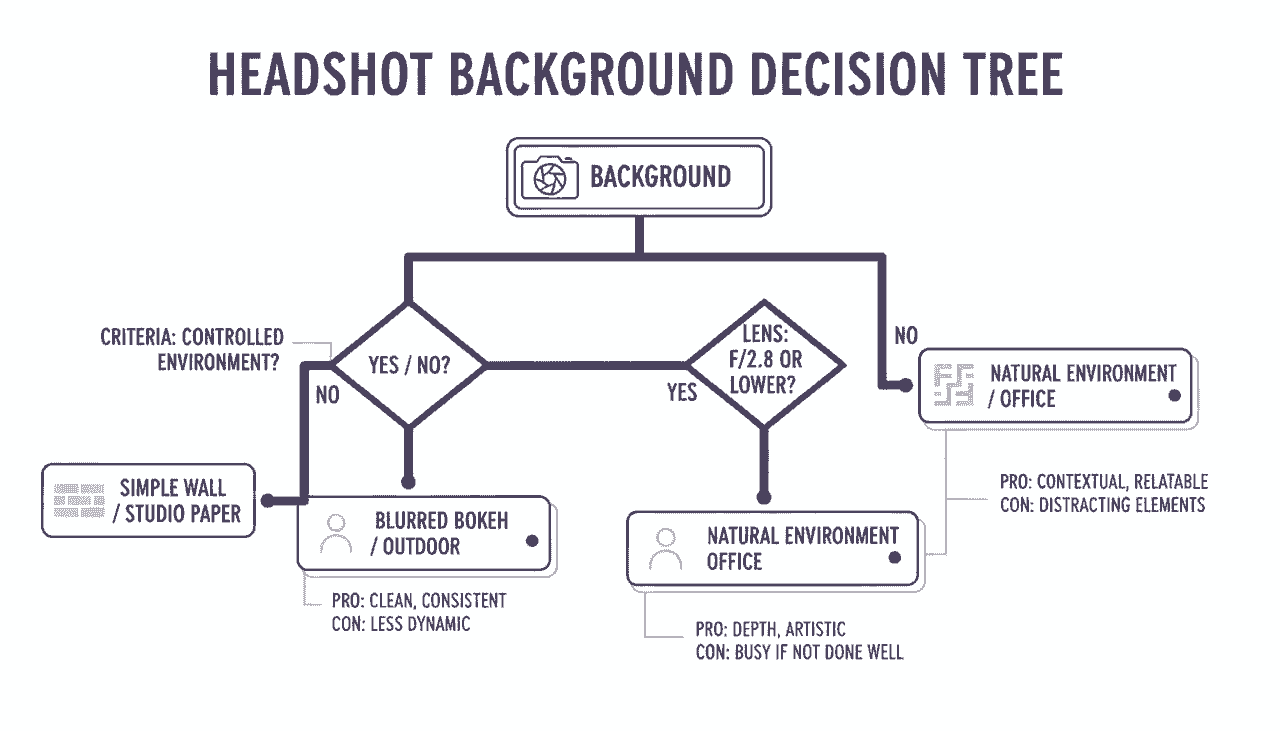
Whether you're in a studio or using an AI tool, this decision tree can help you nail down the right background. It shows how your environment and equipment—or in the case of AI, your style selections—can guide you toward a simple, blurred, or in-situ background for a perfectly polished look.
Where should you use your healthcare headshot?
A great headshot doesn't do you any good sitting in a folder on your desktop. Now that you have a portrait that projects the right mix of competence and approachability, it's time to put it to work. The key is deploying it everywhere to build a consistent, recognizable professional brand.
Start with your most visible online real estate. Your LinkedIn profile is almost always the top result when someone searches your name, so that's priority number one. From there, move to industry-specific networks like Doximity and any hospital or clinic directories where you’re listed. When patients and colleagues see the same professional image across the board, it reinforces a sense of stability and credibility.
Optimizing Your Image for Every Platform
You can’t just upload the original massive file and hope for the best. Different platforms have their own quirks and will automatically compress large images, often resulting in a blurry, unprofessional mess. To keep your headshot looking sharp, you'll want to resize it for each specific use case.
- LinkedIn Profile Picture: The sweet spot here is 400x400 pixels. Uploading a perfect square prevents the platform from awkwardly cropping your face.
- Website Bios: For your practice's website or a corporate "About Us" page, a slightly larger file like 800x880 pixels usually looks best. Save it as a high-quality JPG.
- Internal Directories: These systems are notorious for having tight file size limits. A compressed JPG under 200KB is a safe bet to avoid upload errors.
A consistent healthcare headshot is more than just a photo; it’s a strategic asset. It signals stability and expertise, which is especially important amid a challenging M&A landscape in health industries where a strong brand can attract partnerships. You can read more about current health industry trends on PWC.com.
Unifying Your Team's Professional Image
This idea of consistency becomes incredibly powerful when you scale it across an entire organization. Imagine a patient visiting your clinic's website and seeing a cohesive set of headshots for every single provider. It immediately strengthens the brand's perception, presenting a unified, expert front.
For organizations looking to roll this out, managing a traditional photoshoot for dozens or hundreds of employees can be a logistical nightmare. This is where services that provide professional headshots for teams can streamline everything, ensuring a high standard of quality across the board. By taking these final steps, your new headshot stops being just a static image and becomes a dynamic tool that actively builds trust at every digital touchpoint.
Common questions about healthcare headshots
When you're finalizing the details for your healthcare headshot, a few common questions always seem to pop up. Getting these sorted out is key to making sure your final photo hits the mark and sends the right message to both patients and your peers.
Should I Wear My White Coat and Stethoscope?
This really comes down to your specific role and specialty. For a lot of patient-facing clinicians, that white coat is an instant symbol of authority and expertise—it's what patients expect to see. On the other hand, if you're a mental health professional or a healthcare executive, traditional business attire can feel more approachable and less intimidatingly clinical.
And the stethoscope? It can sometimes look a bit staged or forced. My advice is to only include it if it's genuinely part of your everyday professional look. A smart move is to take shots both with and without these props. That way, you have a versatile set of images you can use for different situations and platforms.
How Often Do I Need a New Headshot?
A good rule of thumb is to update your headshot every 3-5 years. You’ll also want to get a new one sooner if your appearance changes in a major way—think a new hairstyle, a different hair color, or if you start wearing glasses. The goal is simple: your photo needs to be a current, recognizable picture of you.
Your headshot's main job is to build trust. An outdated photo creates a subtle disconnect when someone meets you for the first time, and that can chip away at the confidence you're trying to build.
Ready to get a professional headshot that builds trust and strengthens your brand — without the hassle of a photo shoot? BetterPic uses advanced AI to generate photorealistic, studio-quality headshots in less than an hour. Get your perfect healthcare headshot today.
Sources & References
- LinkedIn Profile Photo Tips — LinkedIn
- How Your Profile Photo Impacts Your LinkedIn Presence — LinkedIn Official Blog
- AI Image Generation Market Report — Grand View Research
- How AI Is Changing Photography — Forbes
- Professional Headshot Photography Pricing — Thumbtack

Written by
Apoorv SharmaHead of Performance
Apoorv leads performance and growth at BetterPic with 9+ years of experience across SEO, SEM, and growth marketing. He oversees content strategy, data-driven marketing, and hands-on testing of AI headshot platforms. Previously held senior performance marketing roles across the US, Belgium, and India.
- Google Analytics & Google Ads certified
- HubSpot Inbound & Content Marketing certified
- 9+ years in SaaS growth and performance marketing
Preferred source
Follow BetterPic on Google
Add BetterPic as a preferred source and our headshot guides are more likely to show up in your Top Stories, with a badge in AI Mode and AI Overviews.

Related healthcare headshots resources
Keep exploring this topic with focused resources from the B2C journey.
Primary destination:Healthcare professional headshots
Frequently Asked Questions
What should doctors and nurses wear for a professional headshot?
- It depends on your role. Surgeons look great in clean, well-fitting scrubs or formal attire. General practitioners should go business casual with a collared shirt or blouse. Healthcare executives need a tailored business suit. Mental health professionals benefit from soft, solid colors.
Should I wear my white coat and stethoscope in my headshot?
- It depends on your specialty. For patient-facing clinicians like internists or surgeons, the white coat reinforces expertise. For mental health professionals or executives, business attire feels more approachable. Take shots both ways so you have versatile options for different platforms.
How often should healthcare professionals update their headshot?
- Update your headshot every 3 to 5 years, or sooner if your appearance changes significantly (new hairstyle, glasses, etc.). An outdated photo creates a subtle disconnect when patients meet you in person, which can chip away at the confidence you are trying to build.
What is the best background for a healthcare headshot?
- A clean, neutral background in soft gray, cream, or light blue is the safest choice. It keeps the focus on your face and works across all platforms. A softly blurred office setting can also add professionalism without being distracting.
What colors work best for healthcare headshots?
- Blues and greens are classics in healthcare because they are psychologically linked to calm, stability, and health. Stick to solid colors and avoid loud patterns, brand logos, or flashy jewelry. The focus should always be on your face and expression of empathy.
Can AI produce healthcare headshots?
- Generators create professional-grade clinical portraits from a handful of existing photos, with lab coats and scrubs available as wardrobe options. The register that works in healthcare is approachability rather than authority.
Related articles
View all articles
Real Estate Agent and Realtor Headshots That Build Trust
Learn how real estate agent and realtor headshots build trust, with practical advice on branding, poses, preparation, backgrounds, costs, and AI.
Your Guide to Modern Doctor Headshots That Build Trust
A practical guide to modern doctor headshots that build trust with patients. Learn how to plan, pose, and use AI to create professional medical headshots.
A Modern Guide to Female Lawyer Headshots
A modern, practical guide to female lawyer headshots—covering wardrobe, posing, lighting, and branding to build trust and authority.

Best Lawyer Headshots — What Top Firms Get Right (And How to Do It Yourself)
What makes the best lawyer headshots work — covering branding, wardrobe, lighting, poses, camera settings, and ROI. With practical tips from real.
6 Reasons Baseball Leagues Need AI Headshots to Boost Sponsorship
AI headshots help baseball leagues present players professionally, attract more sponsors, and increase sponsorship revenue with high-quality team images.

Why Hospitals and Clinics Should Use AI Headshots for Staff
How AI headshots help hospitals and clinics solve the physician photography problem — building patient trust with consistent, professional imagery at a.
Save 87%on average on your professional photos.
Whenever, wherever you are.
Get studio-quality, 4K images in a variety of outfits & settings in less than an hour.
Get your headshots nowStart now