
Mastering the Lighting Setup for Headshots
If you're just starting out, a simple headshot lighting setup is surprisingly straightforward. All you really need is one key light—a strobe or an LED will do—paired with a large softbox to create that soft, flattering light everyone wants. The classic starting point is to place this main light at a 45-degree angle to your subject and just a bit above their eye level. This creates gentle shadows that define their facial features without looking harsh or dramatic.
Building Your Foundational Headshot Lighting
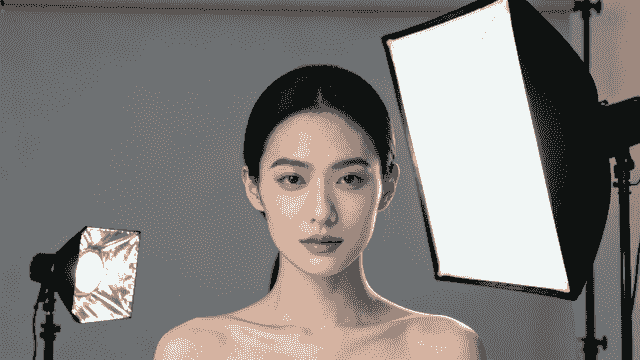
Before we get into specific diagrams and angles, it’s crucial to understand the why behind your choices. Great headshot lighting isn’t about having the most expensive gear; it’s about knowing how to control light to shape a person’s face and set a specific mood. Every professional setup is built on a few core principles that completely dictate the final look and feel of your image.
At the heart of it all is your light source. You’ve got two main players here: continuous lights (like LEDs) and strobes (or flashes). Continuous lights are always on, which makes them incredibly intuitive. What you see is exactly what you get. This makes them a fantastic choice for beginners still getting a feel for how light wraps around a subject.
Strobes, on the other hand, pack a serious punch. They deliver a powerful, instantaneous burst of light that freezes motion, giving you exceptionally sharp images. They do have a bit of a learning curve since you can't see the effect until you press the shutter, but their power and consistency make them the undisputed industry standard for studio work.
The Importance of Light Modifiers
A bare light bulb, whether it’s an LED or a strobe, creates harsh, ugly light with sharp, distracting shadows. This is where light modifiers come in. They are the tools you use to shape, soften, and control your light. Think of them as the paintbrushes for your lighting canvas.
For headshots, a few modifiers do most of the heavy lifting:
- Softboxes: These are enclosed boxes with a white diffusion panel on the front. They produce a soft, directional light that beautifully wraps around a subject’s face, and their rectangular shape often creates natural-looking catchlights in the eyes.
- Octaboxes: Similar to softboxes but with eight sides, octaboxes create a rounder, even more flattering quality of light. Their shape results in circular catchlights, which many photographers find more pleasing for portraits.
The golden rule here is simple: the larger the light source is relative to the subject, the softer the light will be. Moving a large softbox closer to your client will instantly create softer, more flattering shadows than having it several feet away.
Pro Tip: Never underestimate the power of a simple reflector. A cheap white foam board or a 5-in-1 reflector placed opposite your main light can bounce light back into the shadows. This reduces contrast and creates a more balanced, open look without you needing to buy a second light.
Understanding Hard Light vs. Soft Light
The difference between hard and soft light is probably the single most important concept in portrait lighting. It’s the difference between a harsh, high-noon sunbeam and the gentle light you get from an overcast sky.
Hard light creates sharp, well-defined shadows with a crisp edge. It adds drama, texture, and intensity. While it can be a powerful tool for certain creative portraits, it's generally too harsh for standard corporate or actor headshots because it can emphasize every single skin imperfection.
Soft light, the go-to for most headshots, creates smooth, gradual shadows with soft edges. This quality of light is universally flattering, minimizing skin texture and creating a professional, approachable feel. You get this by using large light sources and diffusers, like we just talked about.
Once you master how to create and manipulate soft light, you gain complete control over the mood and professionalism of your final image. Learning these fundamentals is the first real step toward crafting the different headshot styles your clients will be asking for.
Choosing Your Essential Headshot Lighting Gear
Putting together the right lighting kit can feel like a huge task, but it really doesn't have to be. A truly professional setup is built on just a handful of reliable, core components. Let’s walk through the practical gear choices that form the backbone of any great headshot rig, so you can invest wisely whether you're building a studio or a mobile kit.
Your main light is the most critical decision you'll make, and it sets the tone for everything else.
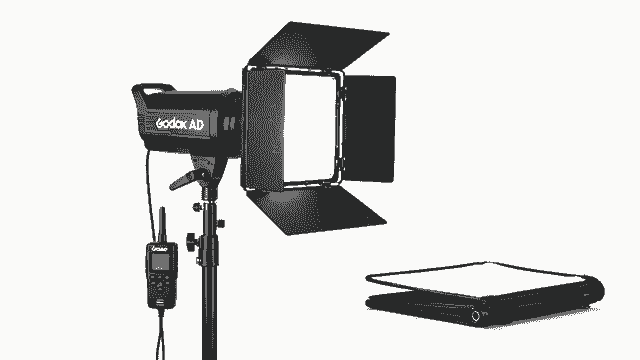
For sheer versatility, portability, and power, most pros I know have gravitated towards battery-powered strobes. Lights like the Godox AD series (the AD200, AD300, and AD400 are workhorses) have become industry favorites for a reason. They pack enough punch to overpower daylight when you need to, but their compact, wireless design makes them a dream for on-location shoots.
Industry veterans often refine their gear down to a science for maximum efficiency. Take headshot photographer John Fiore, whose popular setup uses two Godox AD-300 Pro strobes. He pairs them with double-diffused rectangular softboxes positioned just an arm's length from his subject to get that signature soft light. You can see a fantastic breakdown of John Fiore's headshot lighting setup to understand how specific gear choices create a distinct look.
Choosing Your Main Light Source
Deciding on your main light can be tough. Here’s a quick comparison to help you figure out what makes the most sense for your workflow and budget.
| Light Type | Best For | Pros | Cons |
|---|---|---|---|
| Battery-Powered Strobe | Photographers needing portability and power for both studio and location work. | High power output, portable, no cords, fast recycle times. | Higher initial cost, requires battery management. |
| AC-Powered Monolight | Studio-based photographers who need consistent, reliable power. | Unlimited power, often more affordable, very consistent output. | Tied to an outlet, less portable, cords can be a hazard. |
| Speedlight | Beginners or photographers needing an ultra-portable, on-camera or small off-camera flash. | Small, lightweight, inexpensive, versatile. | Lower power, slower recycle times, small light source creates harsh light without a modifier. |
| Continuous LED Light | Hybrid shooters who also do video, or photographers who want a WYSIWYG setup. | Great for video, what you see is what you get, no flash sync issues. | Less powerful than strobes for freezing action, can be less efficient for stills. |
Ultimately, a battery-powered strobe offers the best all-around performance for dedicated headshot work, but any of these can produce professional results with the right technique.
Selecting Your Key Light Modifier
Once you've picked your light, the next piece of the puzzle is the modifier that will shape it. While octaboxes are fantastic, the rectangular softbox is arguably the most versatile and widely used modifier for professional headshots. Its shape creates a clean, window-like catchlight in the eyes, which feels much more natural than the round catchlights from an octabox.
A softbox around 24x36 inches is an excellent starting point. It's big enough to create beautifully soft light on a single person but not so massive that it becomes a pain to manage in smaller spaces. Make sure you get one with an inner baffle (a second layer of diffusion) to guarantee the light is as soft and even as possible.
The Unsung Heroes of Your Kit
Great lighting is about more than just a powerful flash. A few supporting pieces are absolutely non-negotiable if you want a stable and efficient workflow.
- Light Stands: Please, invest in sturdy, reliable C-stands or heavy-duty light stands. A cheap, flimsy stand is just a disaster waiting to happen, especially with your valuable light and modifier perched on top. A good stand gives you stability and, more importantly, peace of mind.
- Wireless Trigger System: This is the brain of your entire operation, letting your camera talk to your off-camera strobes. For the best performance and control, stick with the native system for your lights (like a Godox X-Pro trigger for Godox lights).
- Reflectors: A simple 5-in-1 reflector is one of the most cost-effective tools you can possibly own. The white side is perfect for bouncing a little light back into the shadows to create a softer, more open look. It basically acts as a fill light without you needing to buy and set up a second strobe.
I see this all the time: photographers drop all their money on a high-end light, then stick it on a cheap, wobbly stand. Your gear is only as strong as its weakest link. A solid foundation prevents accidents and lets you position your lights with the precision and confidence you need.
Choosing the right gear boils down to your specific needs and budget, but focusing on these core components will absolutely set you up for success. A quality strobe, a versatile softbox, and reliable support gear form a powerful and adaptable kit that can grow right along with you.
Nailing Your Camera and Strobe Settings
Getting your camera and lights to sing in harmony is where the real magic happens. This isn't about crossing your fingers and hoping for the best; it's about a solid, repeatable workflow that delivers clean, sharp, and perfectly exposed headshots, every single time. Once you get these key settings locked in, you’re in complete control of the environment.
When you're working with strobes, you're essentially creating your own sun. This is great news because it means you can pretty much ignore whatever ambient light is hanging around in the room. Your camera's job becomes incredibly specific: capture the powerful burst of light from your strobes and nothing else.
First things first, switch your camera into full Manual Mode (M). This gives you total command over the exposure trifecta—aperture, shutter speed, and ISO—preventing them from unexpectedly shifting between shots. Consistency is the name of the game in a professional session.
Syncing Your Shutter Speed with Strobes
In the world of studio flash, your shutter speed has one main job: to sync up properly with your strobes. If you set it too fast, you'll get a nasty dark band across your photo, which is the shutter curtain photobombing your shot. It happens because the shutter wasn't fully open when the flash fired.
To dodge this bullet, you need to stay at or below your camera’s maximum sync speed. For most modern cameras, that sweet spot is either 1/200s or 1/250s.
I almost always start by setting my shutter speed to 1/200s. It’s a rock-solid, safe choice. It's fast enough to kill any motion blur from you or your client, but slow enough to guarantee a perfect sync with your strobes. Set it, and you can pretty much forget about it for the rest of the shoot.
Setting Aperture for Flattering Sharpness
While shutter speed is all about the sync, your aperture pulls double duty. It controls how much flash the sensor sees and, more critically for us, the depth of field. For headshots, you absolutely want the entire face—from the tip of the nose right back to the ears—to be tack sharp. A super-wide aperture like f/1.8 might look cool for artsy portraits, but it leaves you with a paper-thin plane of focus that's just not practical for professional work.
A fantastic starting point for headshot aperture is somewhere between f/5.6 and f/8. This range gives you a generous depth of field, ensuring every important feature on your subject's face is crisp and clear. This is the kind of technical precision clients are paying for.
Here's the key takeaway: in a studio, your aperture's main role flips from managing ambient light to controlling the flash exposure. A wider aperture (like f/5.6) lets in more of your strobe's power, while a narrower one (like f/11) lets in less.
Keeping Your ISO Low and Clean
Since your strobes are doing all the heavy lifting and providing plenty of light, there's absolutely no need to crank up your camera's sensitivity. A high ISO just invites digital noise (or grain) to the party, which degrades image quality and softens up all those important details.
For the cleanest, purest images possible, drop your ISO to your camera’s base level, which is usually ISO 100 or 200. Keeping it locked down here ensures the only thing influencing your photo is the beautiful, controlled light from your strobes. If you want to learn more about dialing these in, check out the best camera settings for headshots.
With these camera settings as your foundation, all that's left is to adjust your strobe's power to nail the exposure. I'll typically start with my flash power low, maybe 1/16 or 1/32, take a test shot, and then dial it up or down until the subject is perfectly lit without any clipped highlights. This methodical process takes out all the guesswork and leads to a smooth, professional session.
Of course, if you'd rather skip the technical deep dive altogether, you can always explore alternatives like our studio AI headshots for a completely different approach.
Executing Classic Headshot Lighting Patterns
The way you position your lights is everything. It's what shapes the mood and tells the story, turning a simple picture into a compelling portrait. This is the difference between a bright, approachable corporate headshot and a moody, dramatic actor portrait.
Mastering a few classic lighting patterns gives you a reliable toolbox to create any look your client wants. These aren't just random placements; they're proven techniques that deliver consistent, professional results every single time.
Over the years, photographers have developed a rich vocabulary for sculpting faces and creating depth with light. It all starts with the foundational three-point lighting system—using a key, fill, and backlight. From there, iconic styles like butterfly, Rembrandt, and loop lighting became the staples of our craft. If you want to dive deeper into the history and application of these techniques, Skylum has a great resource on essential lighting for headshots.
The Foundational Three-Point Lighting System
Three-point lighting is the bedrock of most professional studio work, and for good reason—it gives you complete control over how your subject looks. It's a versatile system that allows you to add or subtract lights for different effects, but you have to understand what each light is doing first.
- The Key Light: This is your main light source. It's the one that defines the entire lighting pattern. As the brightest light in your setup, it's responsible for creating the initial shadows that give your subject’s face its shape and dimension.
- The Fill Light: Placed opposite the key light, the fill light’s only job is to "fill in" the shadows created by the key. It should always be set to a lower power; you want to soften the shadows, not obliterate them. The power ratio between your key and fill lights is what determines the overall contrast of the image.
- The Backlight (or Hair Light): This one goes behind the subject. It creates a subtle rim of light around their hair and shoulders. We often call this a "kicker," and it's what separates them from the background, adding a sense of depth and that polished, professional finish.
My Personal Tip: When I'm first setting up, I turn on only one light at a time. I start with the key to establish my pattern, then I add the fill to control my shadow depth. Finally, I bring in the backlight to dial in the separation. This methodical approach removes all the guesswork.
The diagram below shows how camera settings work hand-in-hand with these lighting patterns.
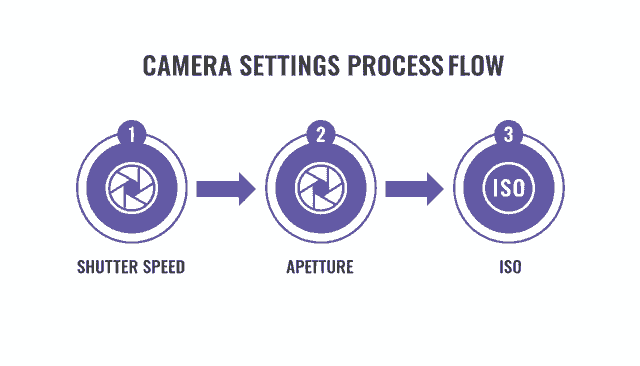
This workflow—nailing your shutter speed, aperture, and ISO—provides a stable foundation, letting you focus on perfecting whichever lighting setup you choose.
Butterfly Lighting: The Glamour Setup
Butterfly lighting is a classic for a reason—it’s incredibly flattering and a staple for beauty and glamour shots. To get this look, place your key light directly in front of and high above your subject, angling it down toward them. This creates a small, symmetrical shadow right under their nose that resembles a butterfly.
This pattern is fantastic for accentuating cheekbones and creating a clean, high-fashion vibe. Because the light comes from above, it's generally best for subjects who already have a defined bone structure.
Loop Lighting: The Versatile Go-To
Loop lighting is probably the most common pattern you'll see in corporate and professional headshots. It’s universally flattering and strikes a perfect balance between definition and soft, pleasing shadows.
To set it up, position your key light about 45 degrees to the side of your subject and just a bit above their eye level. This creates a small shadow, or "loop," from their nose that points down toward the corner of their mouth. It's less dramatic than other patterns, making it a safe and highly effective choice for almost any face shape.
Rembrandt Lighting: For Dramatic Depth
Named after the legendary painter who mastered this style in his portraits, Rembrandt lighting is all about creating mood and drama. You'll know you've nailed it when you see a small, isolated triangle of light on the cheek of your subject’s shadow side.
You'll need to move your key light further to the side than you would for loop lighting, usually around 60-75 degrees, while keeping it angled down. The trick is to get that triangle of light just right—it shouldn’t connect with the shadow coming off the nose. This pattern adds a ton of depth and character, making it perfect for actors, authors, or anyone wanting a more cinematic and compelling portrait.
Polishing Your Look with Advanced Techniques
Once you've got the classic lighting patterns in your toolkit, it's the little refinements that really elevate your work. These are the techniques that separate a good headshot from a truly exceptional one. We're moving beyond just adding light and into the art of strategically shaping—and even subtracting—it to create images with depth, dimension, and a clean, commercial finish.
Mastering these skills gives you an incredible amount of control over the final image. It's the difference between simply documenting what someone looks like and artfully sculpting their features to create a powerful, purposeful portrait.
The Art of Feathering Your Light
Feathering is easily one of the most powerful concepts in lighting, but it's often misunderstood. Instead of blasting your subject with the center of your softbox, you angle it so only the soft edge—the "feathered" part—of the light grazes them. The light coming from the edge of a modifier is always softer and more diffuse than the harsher light from the bullseye.
This simple adjustment creates a beautiful, gradual falloff across your subject’s face. The result is a more dimensional look that feels incredibly natural and flattering, gently wrapping around their bone structure without creating shiny hotspots or abrupt shadows.
To see it in action, just aim your key light slightly in front of or just past your subject. Watch how the quality of light transforms as that soft edge sweeps across their face.
Pro-Level Insight: Feathering isn't just about softness; it's about control. By using the edge of your light, you can prevent unwanted light from spilling onto your background, which helps create natural separation between your subject and their environment.
Subtracting Light for Added Drama and Depth
Sometimes, the best thing you can add to your lighting setup is a bit of shadow. While we often use reflectors to bounce light in and soften shadows, negative fill does the exact opposite. It's all about using black surfaces, like a v-flat or a simple piece of black foam core, to absorb light and deepen the shadows.
This technique is a total game-changer for adding drama and dimension. When you place a black card opposite your key light, you're essentially killing the ambient light that would normally bounce back into the shadows. This carves out the jawline, adds a powerful, sculpted look to the face, and makes the whole image feel more intentional and professional.
Here are a few tools of the trade for subtracting light:
- Black V-Flats: Two big pieces of foam core taped together into a self-standing "V." Perfect for creating deep, full-body shadows.
- Black Foam Core: A smaller, more portable option that's great for absorbing light closer to the subject’s face.
- Flags: Opaque black fabric stretched on a frame. You mount them on a C-stand for really precise light blocking.
This kind of contrast is crucial when you're crafting professional profiles that need to convey strength and confidence. You can see more examples of what makes an image stand out in our guide to compelling LinkedIn headshots.
Lighting the Background Independently
To get that really polished, commercial look, you have to light your background separately from your subject. This is non-negotiable. It’s what gives you perfect separation and the power to create anything from a pure white high-key background to a moody, subtle gray.
The easiest way to pull this off is with a couple of dedicated background lights. I usually position a strobe on each side of the background, pointing inward to create an even wash. You can use standard reflectors or even small softboxes to spread the light. The key here is to meter your background lights on their own, separate from your main lights.
For a pure white background, you’ll want it to be about one to two stops brighter than the light hitting your subject. For a clean mid-gray, meter it to be the same as your key light. And for a dark gray or pure black, just make sure none of your main light is spilling onto it. This level of control is a true hallmark of high-end headshot photography.
Common Questions About Headshot Lighting
Once you get the fundamentals down, you'll start running into the same few lighting headaches that every photographer faces. Don't worry, it's part of the process. Think of this section as your field guide for solving those common problems on the fly.
We’ve all been there—fiddling with a light stand, trying to kill a reflection, or wondering if an umbrella is really that different from a softbox. Here are some straight, no-nonsense answers to the questions that pop up most often.
What Is the Best One-Light Setup for Headshots?
If you only have one light to work with, your best friend is a large softbox or octabox. Place it at a 45-degree angle to your subject and just a bit above their eye level. This is the sweet spot for creating classic, flattering patterns like Loop or Rembrandt lighting that look great on almost anyone.
Want to take it up a notch? Grab a simple white reflector and place it on the opposite side of your subject. It'll bounce a little light back into the shadows, softening them just enough to give you a polished, professional look without needing a second flash. This lighting setup for headshots is a lifesaver for beginners or anyone working in a tight space because it's simple, controllable, and delivers every time.
How Do I Avoid Glare on Glasses?
Ah, the classic glare-on-glasses problem. It’s a rite of passage for every portrait photographer, but thankfully, it's an easy fix. The entire game is about changing the angle of your light so it doesn't bounce off the lenses and straight back into your camera.
Start by raising your key light much higher than you normally would. Then, ask your subject to tilt their chin down just a tiny bit. Sometimes, moving the light further off to the side does the trick, too.
The goal is to break the straight line between the light, the glasses, and your lens. I’ve found that even a tiny adjustment—like having the subject lift the arms of their glasses on their ears by a millimeter—can make the glare vanish completely without changing their look.
Can I Use Natural Light for Professional Headshots?
Absolutely. In fact, some of the most beautiful headshots are made with natural light. The key is to treat a big window as if it were a giant, expensive softbox.
Position your subject facing a window, but make sure they're out of any direct, harsh sunbeams. That soft, indirect light will wrap around them beautifully. To finish the look, use a white reflector to kick some of that light back into the shadows on their face. It creates an approachable, authentic vibe that many clients absolutely love.
The only real downside to natural light is its lack of consistency. The weather can change in an instant, and the light shifts as the day goes on, so you need to be prepared to move quickly and adjust your camera settings to match.
What Is the Difference Between a Softbox and an Umbrella?
Both modifiers soften your flash, but they do it in very different ways and give you completely different levels of control. Think of it this way:
- An umbrella is like a floodlight. It throws soft light everywhere, which is great for lighting up big groups or an entire room. But that wide spread means light bounces off every wall and ceiling, filling in shadows you might have wanted to keep for dramatic effect. It’s harder to control.
- A softbox is more like a spotlight. It creates a contained, directional beam of soft light. This makes it much easier to feather and control precisely where the light falls—and where it doesn't.
For the precision needed in a great lighting setup for headshots, the softbox is almost always the better tool for the job. You get those nice, defined catchlights in the eyes and can be far more intentional with your lighting.
Ready to skip the setup and get perfect headshots in minutes? BetterPic uses advanced AI to generate photorealistic, studio-quality professional headshots from your own photos. Choose from over 150 styles and get customized results in less than an hour, all backed by a 100% money-back guarantee. Elevate your professional image today at BetterPic.
Related professional headshots for individuals resources
Keep exploring this topic with focused resources from the B2C journey.
Primary destination:BetterPic homepage
Save 87%on average on your professional photos.
Whenever, wherever you are.
Get studio-quality, 4K images in a variety of outfits & settings in less than an hour.
Get your headshots nowStart now