
8 Headshot Poses That Actually Work (And When to Use Each One)
This article is part of our Professional Headshots collection.
Most people show up for a headshot and do the same thing: face the camera straight on, freeze up, and produce an expression that falls somewhere between "driver's license photo" and "FBI wanted poster." It doesn't have to be that way.
The pose you choose sets the entire tone of your headshot. It determines whether you look confident or stiff, approachable or aloof, creative or corporate. And the right pose for a lawyer is completely different from the right pose for a startup founder or an actor.
Here are eight poses that actually produce great headshots — with specific guidance on who each one works for, how to execute it, and how to get the same look from AI headshot tools.
1. The classic head-on (direct gaze)
Face the camera straight on. Eyes directly into the lens. Shoulders squared or slightly angled.
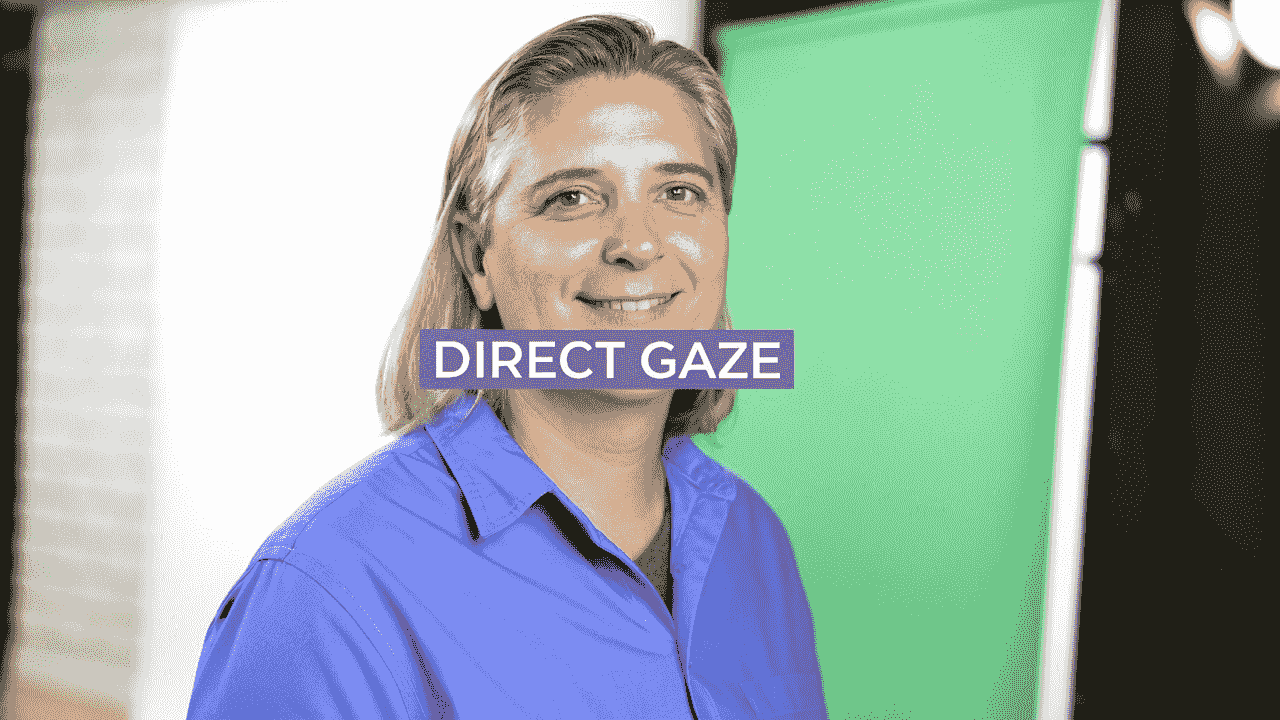
This is the most common professional headshot pose for a reason: it creates an immediate connection with whoever's looking at it, while the choice to smile in a business portrait determines how warm that connection feels. When someone sees your headshot on LinkedIn or a company page, that direct eye contact communicates confidence, openness, and "I'm someone you can trust."
Works best for: Corporate executives, LinkedIn profiles, lawyers, financial advisors, medical professionals, consultants. Basically anyone where "credible and direct" is the right signal.
How to nail it in a studio:
- Camera at eye level — not above (makes you look small) or below (looks aggressive)
- Three-point lighting (key, fill, backlight) adds dimension so you don't look like a mugshot
- Think of something genuinely positive right before the click — it puts a natural warmth in your eyes that a forced smile can never replicate
- Sit or stand up straight, shoulders relaxed and down. A subtle lean forward toward the camera adds engagement
How to get it with AI: Upload clear selfies where you're looking directly at the camera. When choosing styles in BetterPic, select "corporate," "professional," or "classic headshot" — these are tuned for this exact pose.
2. The three-quarter turn (45-degree angle)
Turn your body about 45 degrees away from the camera, then bring your face back to look at the lens.
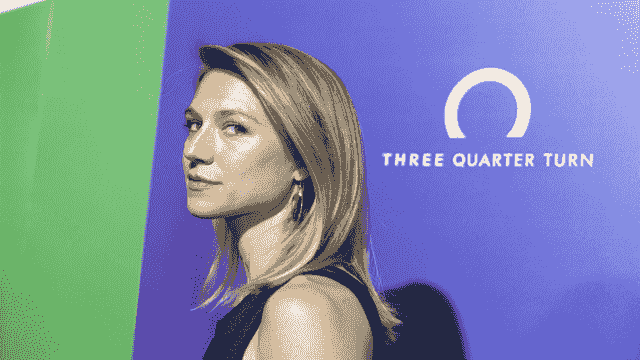
This is probably the most universally flattering pose in portrait photography. The angle creates shadows that define your jawline and cheekbones, slims your profile, and adds depth that a straight-on shot can't match. It feels professional but less rigid than the classic head-on.
Works best for: Actors, authors, speakers, entrepreneurs, consultants, anyone who wants to look polished but also personable. It's the go-to when "authoritative but approachable" is the vibe you're after.
How to nail it in a studio:
- Turn from the waist, not just the shoulders — it looks more natural
- Keep the tip of your nose from crossing the line of your far cheek (prevents face-flattening)
- Drop the far shoulder slightly — creates a better visual line and prevents hunching
- Use Rembrandt or loop lighting for beautiful facial sculpting
How to get it with AI: Upload some selfies where you're already at a slight angle. In your style selection, look for "angled portrait," "dynamic pose," or "actor headshot." Adding a request for "soft shadows" enhances the dimensional effect.
3. The over-the-shoulder look
Angle your body 45-90 degrees away from the camera, then look back over your shoulder into the lens.
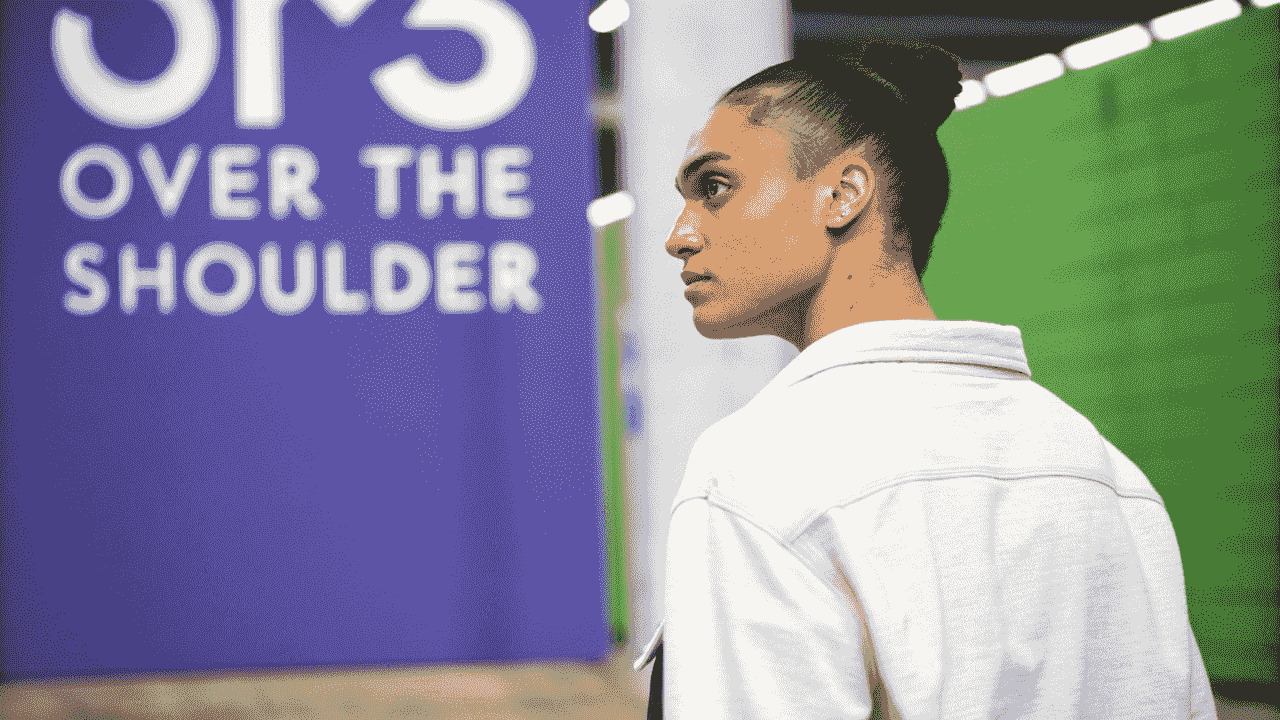
This one has that "you just caught my attention" feel — it's dynamic, slightly dramatic, and full of personality. It highlights the jawline and neck, creates interesting compositional lines, and looks both planned and spontaneous at the same time.
Works best for: Actors (it's a casting director favorite), musicians, fashion and modeling portfolios, creative professionals, anyone in a field where personality and artistic flair matter more than conservative professionalism.
Not ideal for: Law firms, financial advisors, corporate executive bios. This pose is too casual for environments where traditional credibility is the primary signal.
How to nail it in a studio:
- The turn should come from your torso, not just your neck — otherwise you'll look strained
- Keep shoulders relaxed and down. Tension in the shoulders kills the shot
- Light the side of the face that's turned toward the camera. A rim light from behind defines the jawline beautifully
- Expression is flexible here — works with a confident gaze, a knowing smile, or something more intense
How to get it with AI: Upload a few source images where you're looking over your shoulder or at a strong angle. Use keywords like "over the shoulder," "dynamic pose," or "editorial headshot."
4. The tilted head (the approachable angle)
A subtle tilt of your head — about 5-15 degrees toward one shoulder — while still facing the camera.
It's a tiny adjustment that makes a surprisingly big difference. The tilt breaks the rigidity of a perfectly straight pose and adds warmth. It reads as curious, open, and friendly — like you're genuinely interested in the person looking at your photo.
Works best for: Real estate agents, sales professionals, therapists and counselors, doctors and dentists, team leads and managers, small business owners, anyone in a role where approachability and rapport-building are key.
How to nail it:
- Keep it subtle — 10-15 degrees max. More than that looks confused or uncertain
- Most people have a "stronger" side. Try tilting toward each shoulder and see which looks better
- Maintain direct eye contact while tilting — that's what makes it engaging rather than passive
- Relax your shoulders. A tense shoulder opposite the tilt ruins the effect
How to get it with AI: Include some source photos with a natural, slight head tilt. Use prompts like "approachable," "friendly," "warm expression," or "slight head tilt."
5. The chin-down power pose
Keep your chin level or slightly lowered while maintaining direct eye contact with the camera.
This is a subtle dominance signal. The slight downward angle of the chin means the viewer is looking slightly up at you, which subconsciously registers as authoritative and commanding. Combined with a strong expression, it projects the kind of quiet confidence that says "I'm in charge and comfortable with it."
Works best for: CEOs and C-suite executives, board members, senior partners at law firms, political figures, founders pitching to investors. Roles where projecting authority isn't just nice — it's necessary.
How to nail it in a studio:
- Camera should be at or slightly above your eye level — this creates the natural chin-down angle when you look at the lens
- The biggest risk is shadows under your chin. A fill light or reflector below the face solves this
- Posture is critical — straight back, shoulders rolled back. Slouching completely undermines the authority the pose is meant to convey
- A slight lean toward the camera adds dynamism without aggression
How to get it with AI: Upload photos where you're looking straight ahead with a confident or serious expression. Avoid photos where your chin is tilted up. Use keywords like "executive," "CEO portrait," "authoritative," or "powerful."
6. The shoulder pop (dynamic and modern)
Angle your body about 45 degrees from the camera, then push the front shoulder (the one closer to the lens) slightly forward and down.
This creates a beautiful leading line that draws the eye, elongates the neck, and adds a modern, energetic feel. It's more dynamic than a squared-shoulders pose but still fully professional.
Works best for: Entrepreneurs, creative professionals, coaches, photographers, marketers, fashion and beauty industry, anyone who wants to project energy and contemporary style while staying polished.
How to nail it in a studio:
- Push the front shoulder forward and slightly down — not up. Shrugging creates tension
- Turn your head back toward the camera after positioning your body
- A slight head tilt away from the popped shoulder enhances the effect
- Keep your back straight and core engaged — the angle should look intentional, not slouchy
- Light from the popped shoulder side creates flattering definition along the jawline and collarbone
How to get it with AI: Upload some angled selfies showing your profile. Use keywords like "dynamic," "creative professional," "modern," or "fashion-inspired."
7. The contemplative look (profile or three-quarter, gaze off-camera)
Adopt a more pensive expression, looking slightly away from the camera — either in a three-quarter view or a soft profile.
This moves away from the "smile for the camera" formula into something more editorial and thoughtful. The off-camera gaze invites curiosity — the viewer wonders what you're thinking about, which makes the image more engaging. It suggests depth, intellect, and someone who's focused on substantive things.
Works best for: Authors (book jacket photos), academics, senior legal and financial strategists, thought leaders and consultants, architects, directors. Roles where intellectual gravitas and a reflective quality are assets.
How to nail it in a studio:
- Three-quarter view is most flattering for most faces. Turn 45 degrees, then direct your gaze just off-camera
- Use dramatic or Rembrandt-style lighting — one key light from the side creates depth and mood
- The expression is the hard part. You want "thoughtful," not "angry" or "checked out." Think about a problem you find genuinely interesting
- Maintain strong posture even though the gaze is softer — collapsed posture kills the gravitas
How to get it with AI: Upload some profile and three-quarter view photos. Use keywords like "editorial," "contemplative," "author headshot," "thoughtful," or "dramatic lighting."
8. The hands-in-frame pose (environmental and personal)
Include your hands in the shot — gently resting near your face, arms crossed confidently, adjusting a collar, or interacting with your clothing.
This goes beyond the standard face-and-shoulders crop to show more of your personality and body language. Hands add a human element that makes the headshot feel less like a corporate ID photo and more like a portrait of an actual person.
Works best for: Entrepreneurs and founders, personal brand builders, consultants and coaches, creatives, anyone who wants their headshot to feel more personal and less cookie-cutter.
Watch out for: AI tools historically struggle with hands — extra fingers, weird angles, impossible positioning. If you use this pose with AI, review the hands carefully before using the photo.
How to nail it in a studio:
- Natural placement is everything. Gently touching your chin or jawline looks good. A death grip on your own face does not.
- Relaxed fingers — tense, spread fingers are distracting
- Crossed arms can look defensive if your face doesn't match. Pair crossed arms with a confident, warm expression
- Make sure the hands are well-lit — hands in shadow while the face is bright looks wrong
How to get it with AI: Upload source images showing your hands in various natural positions. Use prompts like "professional headshot with crossed arms," "thoughtful pose with hand on chin," or "business portrait with relaxed hands." Check the output carefully for AI hand artifacts.
Quick comparison: all 8 poses at a glance
| Pose | Difficulty | Best for | Vibe |
|---|---|---|---|
| Classic head-on | Easy | Corporate, LinkedIn, executive bios | Confident, direct, trustworthy |
| Three-quarter turn | Medium | Actors, speakers, entrepreneurs | Polished, dynamic, versatile |
| Over-the-shoulder | Hard | Creatives, performers, fashion | Dramatic, engaging, personality-forward |
| Tilted head | Easy | Sales, real estate, healthcare, coaching | Warm, approachable, friendly |
| Chin-down power | Medium | C-suite, legal, political, founders | Authoritative, commanding, confident |
| Shoulder pop | Medium | Entrepreneurs, creatives, marketing | Modern, energetic, stylish |
| Contemplative | Medium-hard | Authors, academics, thought leaders | Intellectual, editorial, thoughtful |
| Hands-in-frame | Hard | Personal brands, consultants, coaches | Personal, human, memorable |
How do you pick the right pose?
Three questions to ask yourself:
1. What's the vibe of your industry? A finance executive and a creative director live in different visual worlds. Match the formality and energy of your industry.
2. Where will this headshot appear? LinkedIn thumbnails are tiny — simpler poses (head-on, tilted head) read better at small sizes. Full website bios and speaker pages can handle more complex poses (three-quarter, contemplative, hands-in-frame).
3. What do you want people to feel? Trust → head-on. Warmth → tilted head. Authority → chin-down. Creative energy → shoulder pop or over-the-shoulder. Intellectual depth → contemplative.
When in doubt, start with the classic head-on or three-quarter turn. They work for almost everyone in almost every context.
Can AI headshot generators handle these poses?
Yes — with a caveat. AI tools like BetterPic are excellent at the first six poses (head-on through shoulder pop). These involve standard head-and-shoulders framing that AI has been trained extensively on.
The contemplative and hands-in-frame poses are trickier. AI can produce great results, but you'll want to review more carefully for artifacts — especially around hand positioning, off-camera gaze accuracy, and profile-view facial rendering.
Tips for getting poses right with AI:
- Upload source photos that match the pose you want. If you want a three-quarter turn, give the AI reference photos at that angle. If you want a head tilt, include tilted photos.
- Use descriptive keywords in your style selection. "Executive portrait," "creative headshot," "editorial," "approachable" — these guide the AI toward the right pose and mood.
- Generate multiple variations and pick the best. With 60-120 headshots per session, you'll have plenty to choose from. The AI hits great results on most, and you just need to find the winners.
- Use human editing for the final polish. BetterPic's Expert and Team plans include human editors who catch the subtle stuff — a collar that doesn't sit right, an expression that's slightly off, a pose that looks 95% natural but needs that last 5% of human judgment.
Your headshot pose isn't a random choice — it's a branding decision. The right pose communicates exactly the right thing about you before anyone reads a word of your bio. Pick the one that matches your industry, your role, and the impression you want to make. Then execute it well — whether that's in a studio or with AI.
Ready to test these poses? BetterPic gives you 150+ styles across all of these pose categories, with 4K output and human editing. Upload a few photos and see which pose works best for you.
Sources & References
- LinkedIn Profile Photo Tips — LinkedIn
- How Your Profile Photo Impacts Your LinkedIn Presence — LinkedIn Official Blog
- AI Image Generation Market Report — Grand View Research
- How AI Is Changing Photography — Forbes
- First Impressions from Faces — Psychological Science

Written by
Apoorv SharmaHead of Performance
Apoorv leads performance and growth at BetterPic with 9+ years of experience across SEO, SEM, and growth marketing. He oversees content strategy, data-driven marketing, and hands-on testing of AI headshot platforms. Previously held senior performance marketing roles across the US, Belgium, and India.
- Google Analytics & Google Ads certified
- HubSpot Inbound & Content Marketing certified
- 9+ years in SaaS growth and performance marketing
Preferred source
Follow BetterPic on Google
Add BetterPic as a preferred source and our headshot guides are more likely to show up in your Top Stories, with a badge in AI Mode and AI Overviews.

Frequently Asked Questions
What is the most flattering pose for a professional headshot?
- The three-quarter turn (45-degree angle) is the most universally flattering pose. Turn your body 45 degrees from the camera, then bring your face back to the lens. This creates shadows that define your jawline and cheekbones while looking polished and approachable.
How should you pose for a corporate LinkedIn headshot?
- Use the classic head-on pose with direct eye contact, camera at eye level, and shoulders squared or slightly angled. Three-point lighting adds dimension. Think of something positive before the shot for natural warmth in your eyes. This signals confidence and trustworthiness.
What headshot pose makes you look more authoritative?
- The chin-down power pose, where you keep your chin level or slightly lowered while maintaining direct eye contact. The viewer looks slightly up at you, which subconsciously registers as commanding. This works best for CEOs, executives, and senior partners.
What headshot pose is best for real estate agents and salespeople?
- A subtle head tilt of 5-15 degrees toward one shoulder while facing the camera. This breaks rigidity, reads as curious and friendly, and builds immediate rapport. Maintain direct eye contact and keep the tilt subtle to avoid looking uncertain.
Can a specific pose be requested?
- Pose comes from the source photos rather than from a setting, so uploading images in the pose you want is what produces it. Direct camera contact reads as corporate; a slight turn reads warmer.
Related articles
View all articles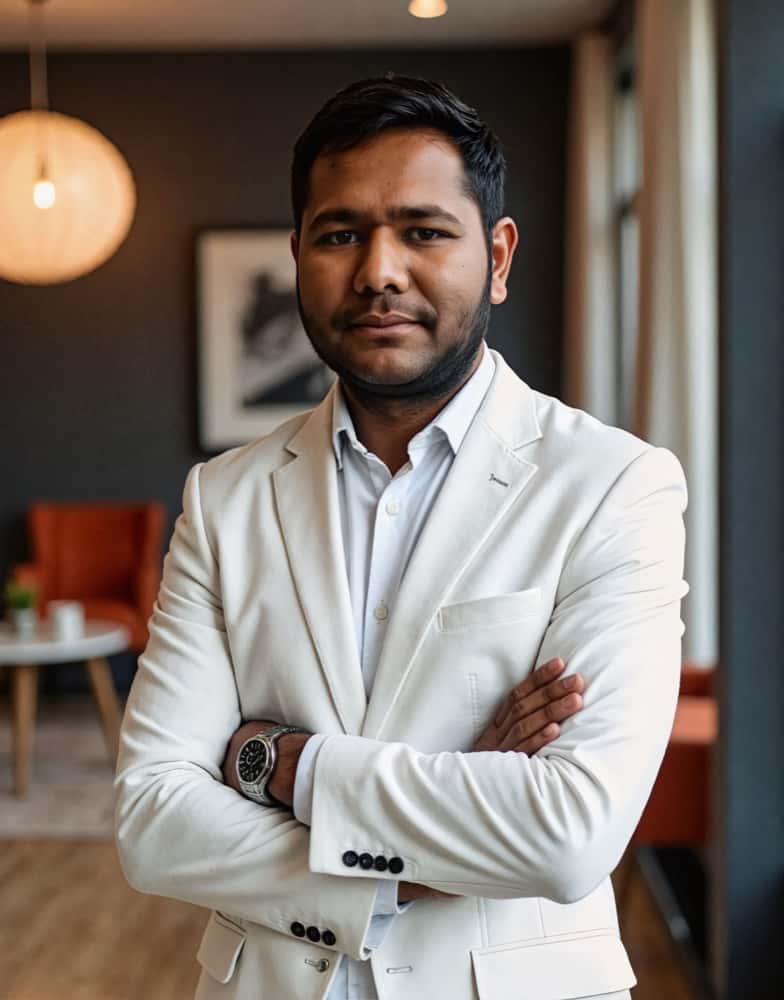
How much does a headshot cost in 2026?
What professional headshots actually cost, what drives the range, the charges that are not in the quoted price, and how to compare a session against an AI alternative.
Cheap AI Headshots: What $29 Actually Gets You vs. a $400 Photographer
A no-BS breakdown of cheap AI headshots in 2026: what they cost, how they compare to studio photography, and whether the results actually work for LinkedIn.
Professional Headshots: The Complete Guide to Getting Yours Right
Everything you need to know about professional headshots: how to get them (photographer, DIY, AI, corporate), what to wear, posing tips, lighting.
How to Get a Professional Headshot for Your Career
A complete guide to getting a professional headshot for your career—compare photographers, AI headshot generators, and DIY options by cost, quality, and speed.
How to Prepare for Professional Headshots and Make a Great Impression
Learn how to prepare for professional headshots with practical tips on wardrobe, posing, grooming, and choosing the right photographer.
How to Take Professional Photos for Your Brand
A complete guide to taking professional photos that strengthen your brand, from lighting and camera setup to posing and editing.
Save 87%on average on your professional photos.
Whenever, wherever you are.
Get studio-quality, 4K images in a variety of outfits & settings in less than an hour.
Get your headshots nowStart now