
Our $45 AI agent found a 2 ROAS ad format. We now spend $500

$45 was the number we had in our head when we gave Patricia access to BetterPic's 2 Google Ads accounts. It covered 1 workspace, every seat, and 20,000 credits per month, which sounded like plenty while we were experimenting. Our first request was small: find the campaign with the worst ROAS and disable it. By 30 July 2026, our 7-person team was spending about $500 a month and Patricia had logged 1,862 runs in 30 days.
Somewhere between those 2 numbers, she proposed a new ad format that now runs above 2 ROAS. The idea came from putting DataForSEO, Google Search Console, Google Analytics, and Google Ads data in one place.
That result is why this story matters.
We needed more shots at the target
Our actual bottleneck was time to experiment with campaign audiences, angles, and formats. We had more ideas to test than hours available, and every test came with the same little trail of setup, checks, and follow-up.
We already used a ChatGPT tab for ad variants and fixed chains for jobs with predictable conditions. Then somebody carried the draft into Google Ads, checked the settings, and launched it.
Copy. Paste. Launch. Our very advanced growth system.
That routine produced another ad while the decision about which experiment deserved the next slot stayed with us. Our backlog of audiences and angles kept growing while the same few people also handled product, website, reporting, and the rest of the business.
We wanted more shots at the target.
The first thing we asked her to do
We started with the 2 BetterPic Google Ads accounts, Google Ads BP and Google Ads BP USA. Miguel Rasero, BetterPic's CTO, and Ricardo Ghekiere sat down together and connected both through OAuth in the same few minutes. There was no code, and the account readout arrived while they were still in that session.
A technical person was in the room, to be fair.
We name the account in every request because BetterPic operates 2 Google Ads accounts in different markets. It is a standing rule, along with checking the market and budget before approving a change.
Here is the connected-accounts screen from our own workspace. It shows 4 Active cards, all with Whole team scope: Google Ads BP with 12 tools connected by Miguel, Google Ads BP USA with 12 tools connected by Ricardo, Miguel's Apify account with 28 tools, and “BetterPic USA key” on ChatGPT Ads with 3 tools connected by Ricardo Ghekiere. We blurred the account identifiers.
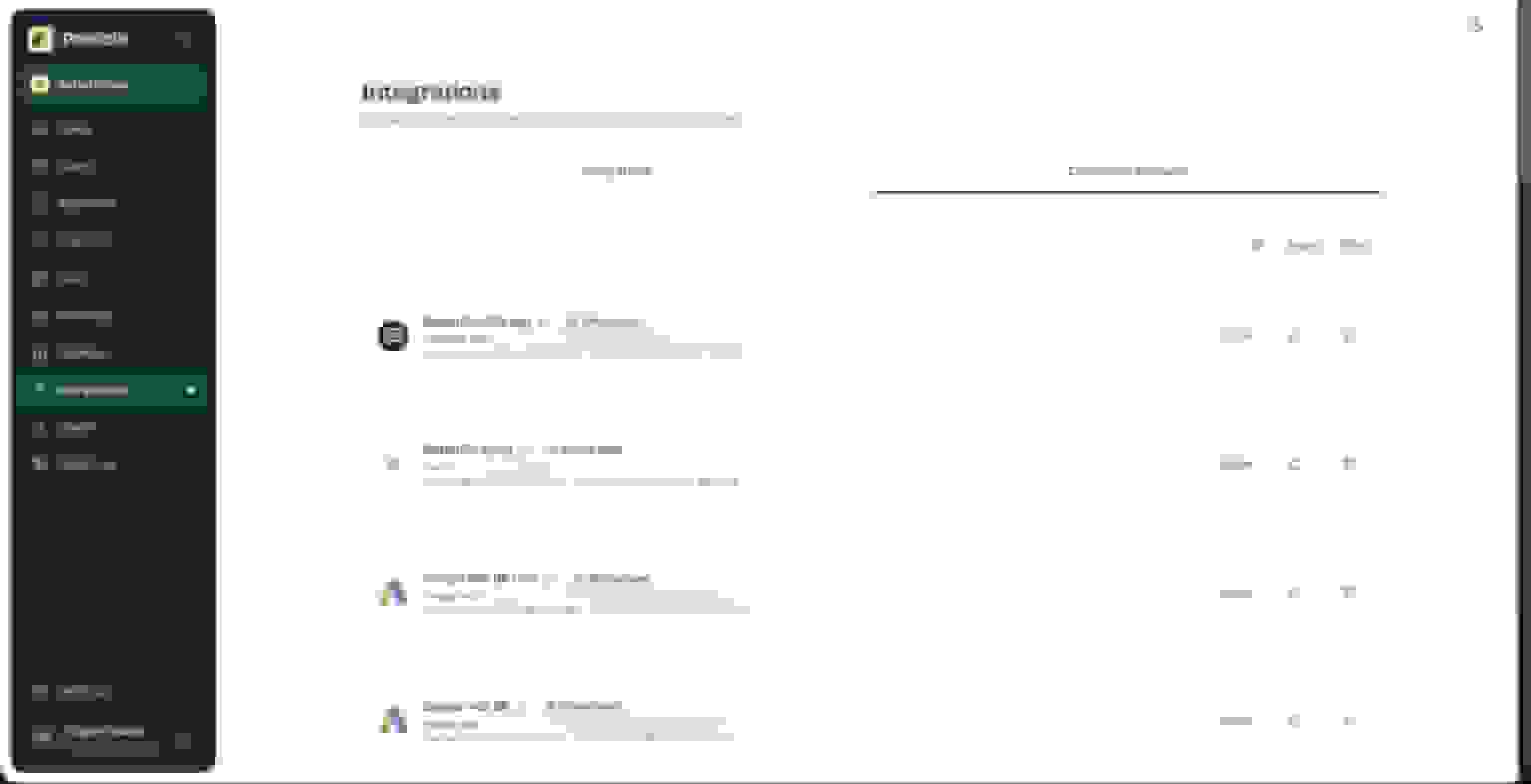
This is our real connected-accounts screen. The 4 cards are Active, scoped to the Whole team, and the identifiers are blurred by us.
Then we gave Patricia her first job: disable the worst-performing campaign by ROAS.
We cleared the approval, the campaign stopped spending, and it saved us money.
Small first win.
Then she offered to make the changes herself
After that first job, Patricia started bringing us recommendations. She pointed out campaigns to stop, campaigns where she would raise the budget, and new campaigns she thought we should start.
Then she said she could make the changes herself.
That was the moment it clicked. A scheduled check or Slack request could end with a proposed action inside the same flow. We still checked the account, market, budget, and recommendation, then approved or rejected it.
The approval gate never disappeared. Patricia's product page says publishing, sending, and spending all require approval. Someone on our team clears that queue every day.
We also moved recurring work onto a schedule. Here is Patricia's own marketing page showing how she arranges those tasks across a week.
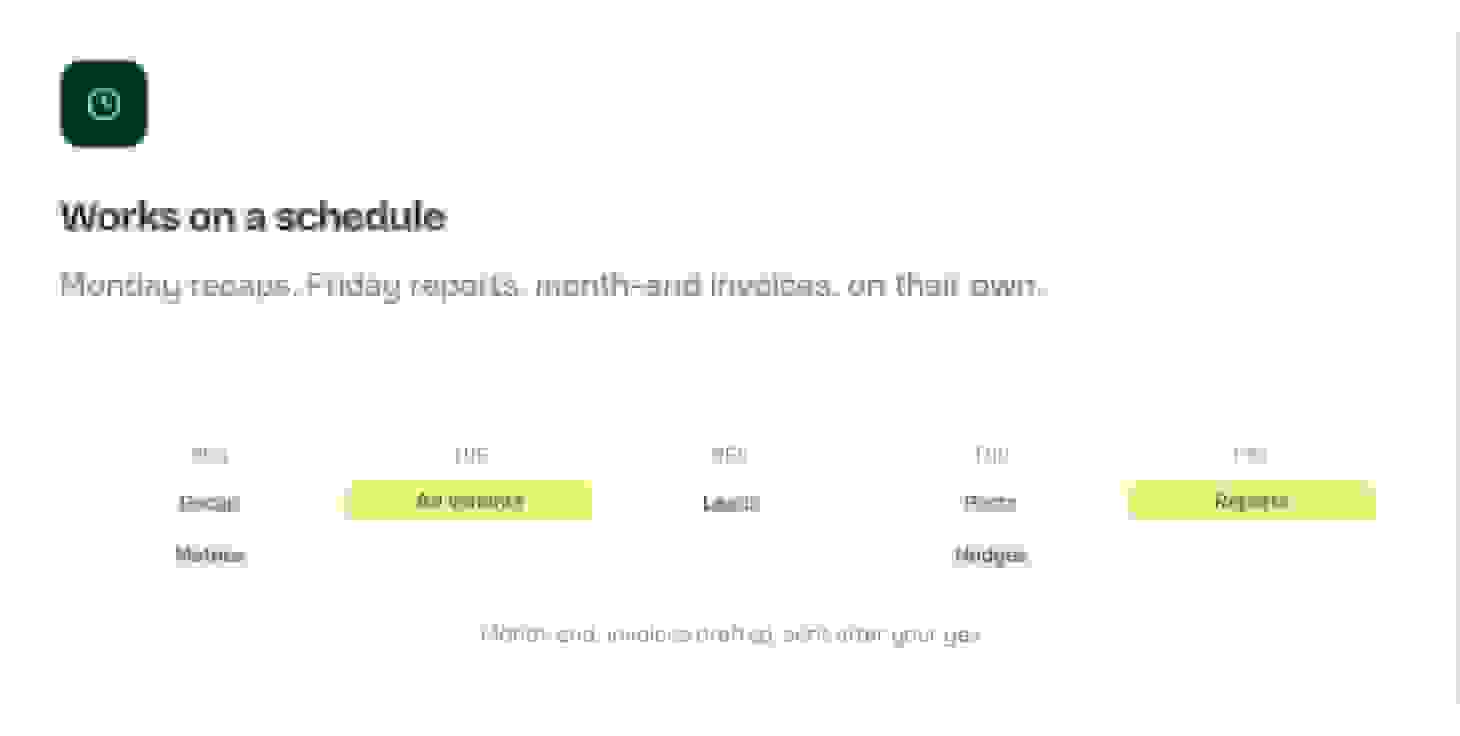
Patricia's own scheduling example. Our team uses the same idea for checks that should happen without somebody remembering to ask.
The iterate loop behind a new ad angle
We used that same flow to test a BetterPic versus traditional photoshoot ad. We asked Patricia to use bpbranding.png, our own brand kit, as the source of truth.
She returned a first draft. We gave direct feedback in Slack: use a violet gradient, then add glitter and more character. Patricia edited the image and sent back the refined version.
That iterate loop matters. First draft, human feedback, refined creative. The finished banner compares the two options and marks the model photo as AI Generated.
Here is the real Slack thread from our team workspace.
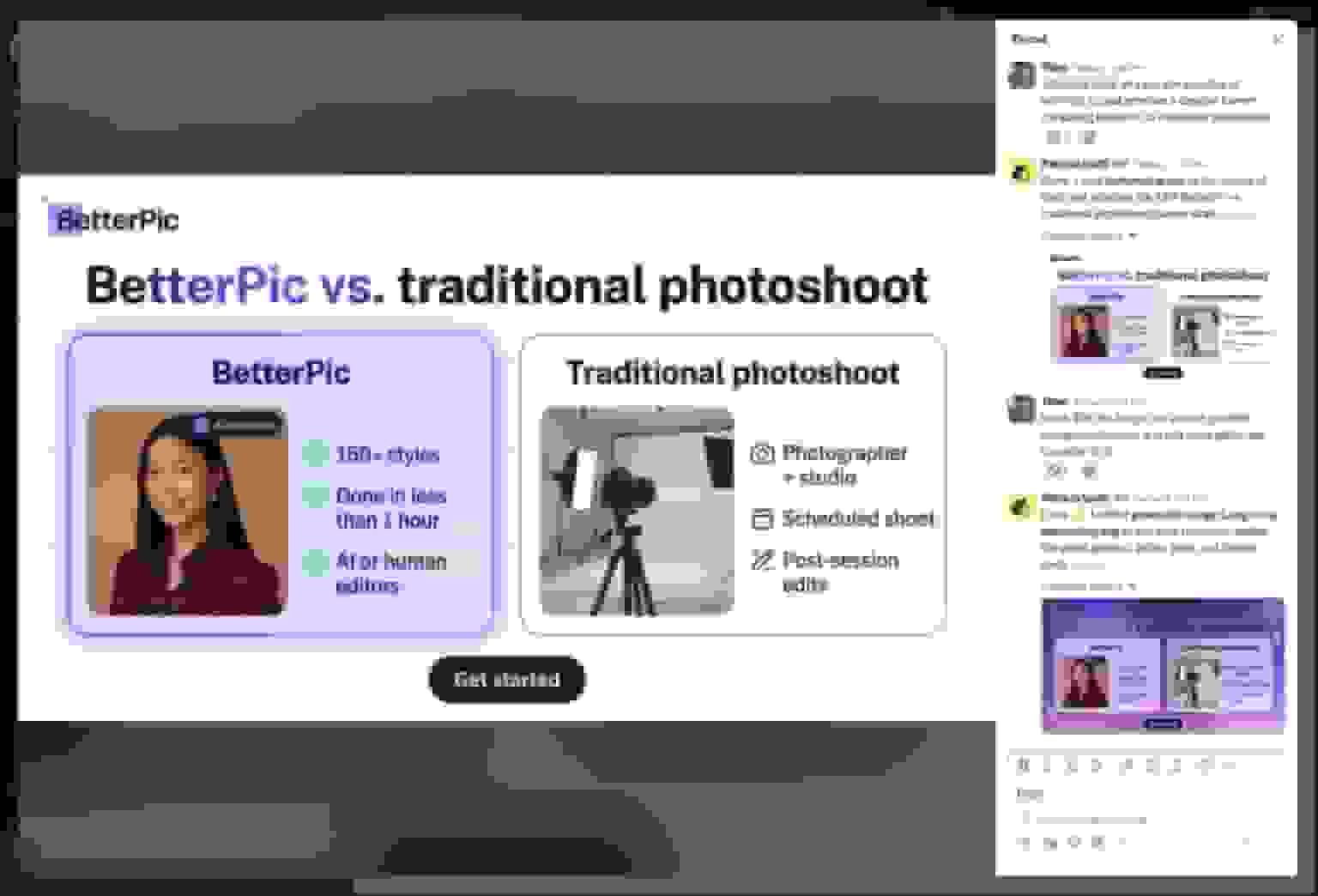
Our real Slack thread. Patricia used our brand kit for the first draft, then edited it after our feedback to produce the banner shown here.
On-brand image generation and ad creative are live today. Video generation is not live.
The ad format that cleared 2 ROAS
The best result started as one of Patricia's own recommendations. She had DataForSEO, Google Search Console, Google Analytics, and Google Ads data together in one place, and she proposed a new ad format from that combined picture.
The idea was hers. We tested it.
Above 2 ROAS.
That format is still running above 2 ROAS. The value came from giving all 4 data sources the same context. Faster copy was a side benefit.
Here is the report Patricia posted in our #betterpic-marketing Slack channel for 3 to 30 July.
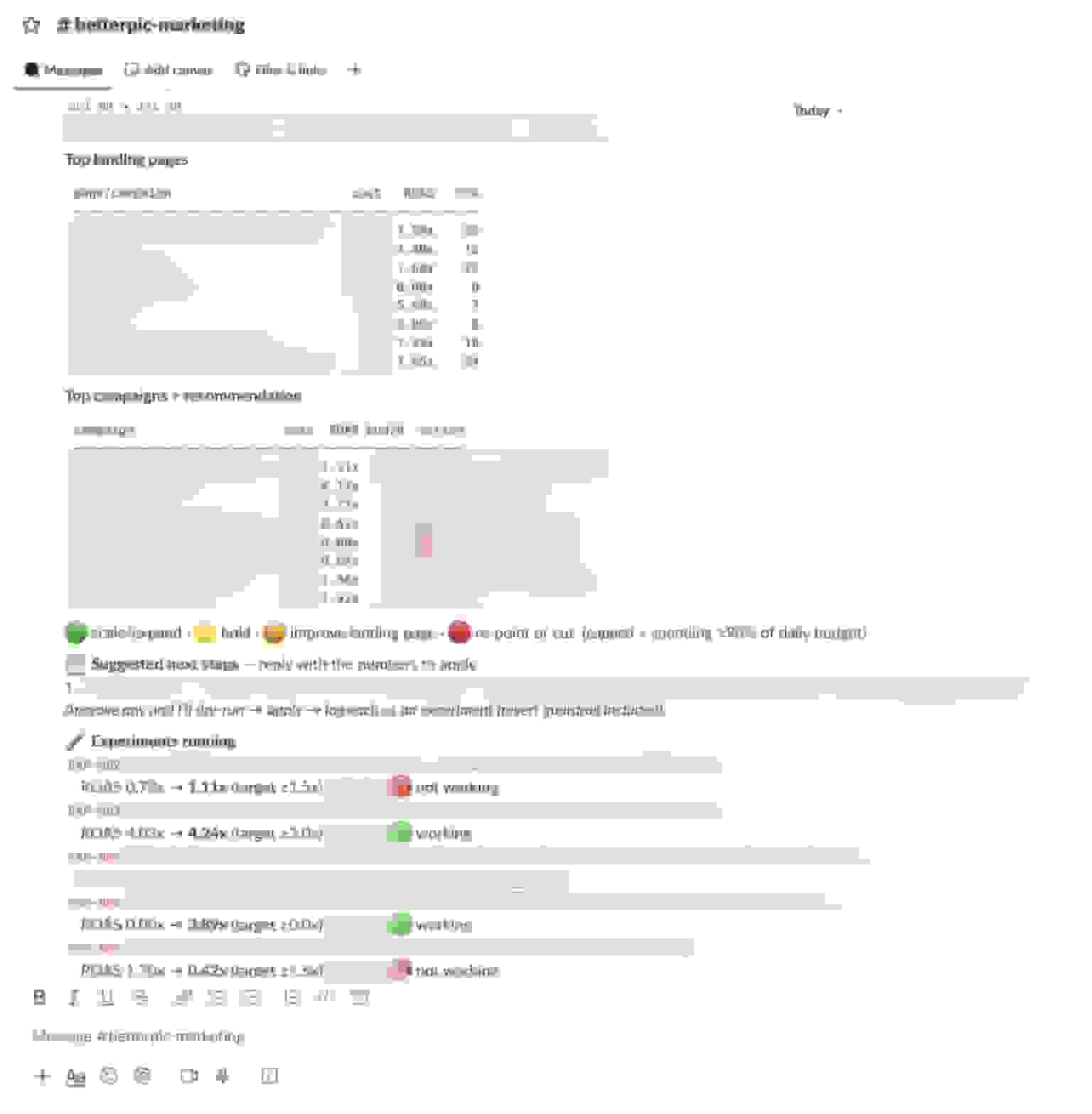
Our real Patricia ads report for 3 to 30 July. Patricia proposes changes, we approve them, and she logs each applied change as an experiment. We deliberately blurred sensitive commercial figures in this screenshot before publishing.
For the exact source support, we checked Patricia's published guide, including its entries for GA4 and Search Console.
Then 20,000 credits disappeared
We expected to pay $45 a month, and while we were experimenting, we did pay $45. Then we moved into real production and the 20,000 credits included each month turned out to be basically nothing for the way our team worked. People started using Patricia for product planning, drafting emails, scheduled tasks, and more. Today we spend about $500 a month total for 7 people, roughly $70 per person, and I consider that fair for the level of automation we get.
That is the full cost arc. Our original forecast lasted right up until people found the useful button.
The published Founding plan costs $45/month per workspace. Every seat is included, along with 20,000 credits each month.
For top-ups, the public ladder charges per 1,000 credits: $2.25 with a 10,000-credit top-up, $2.03 at 100,000, $1.80 at 750,000, and $1.69 at 2,000,000. The same page lists published task averages of 150 credits for ad variants and quick drafts, 400 for posts and content briefs, 800 for client reports and research, and 3,150 for campaign builds.
Here is that task-cost screen from Patricia's own pricing page.
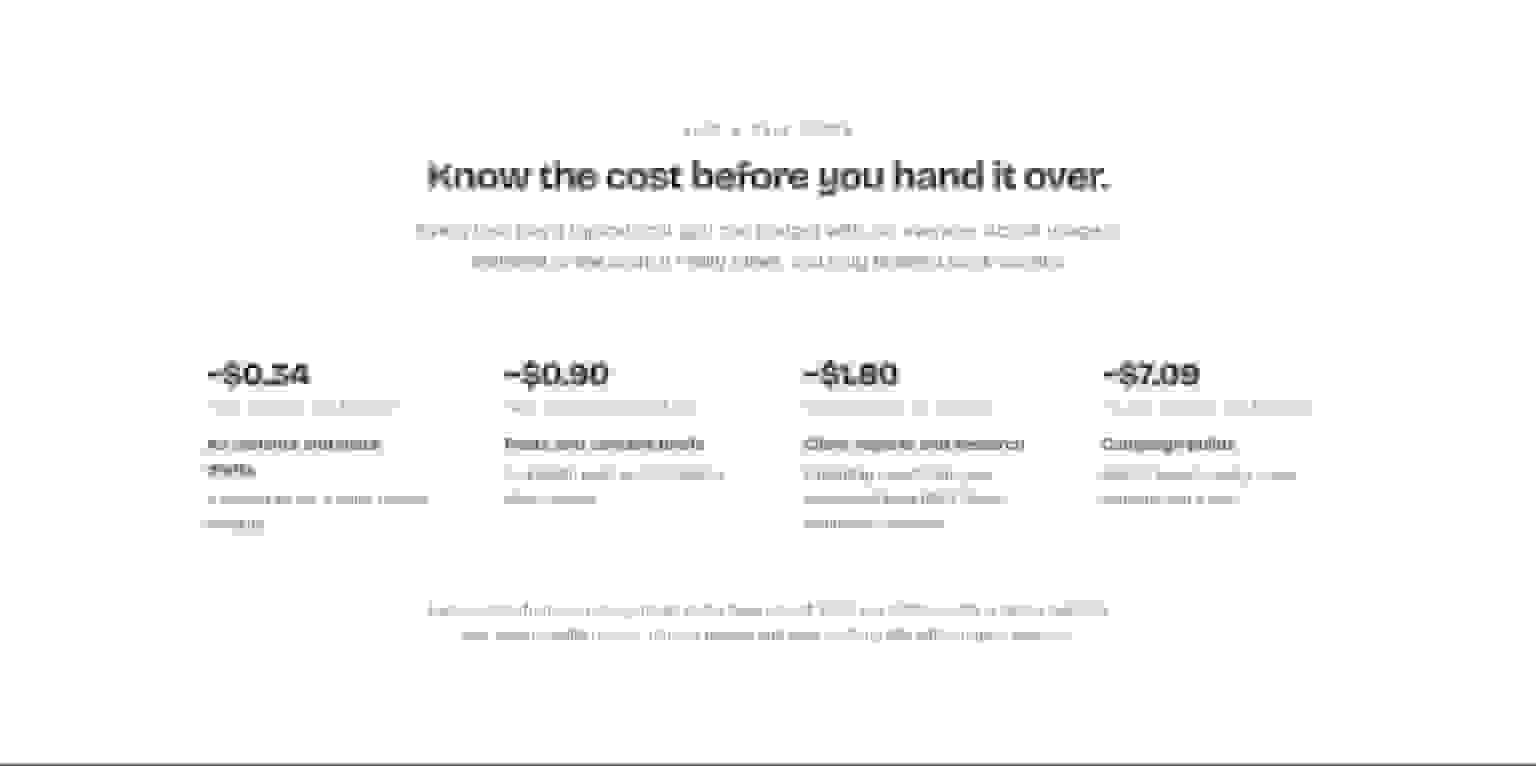
Patricia's own pricing page. Its 4 examples use 150, 400, 800, and 3,150 credits.
Top-ups are optional. Credits roll over without expiring, retries are free, and only finished work counts. The spend cap is on by default, so Patricia pauses and asks before billing more.
Then our estimates became a customer-story card
As use grew, Patricia published a BetterPic card on her own customer-story page. Here it is.
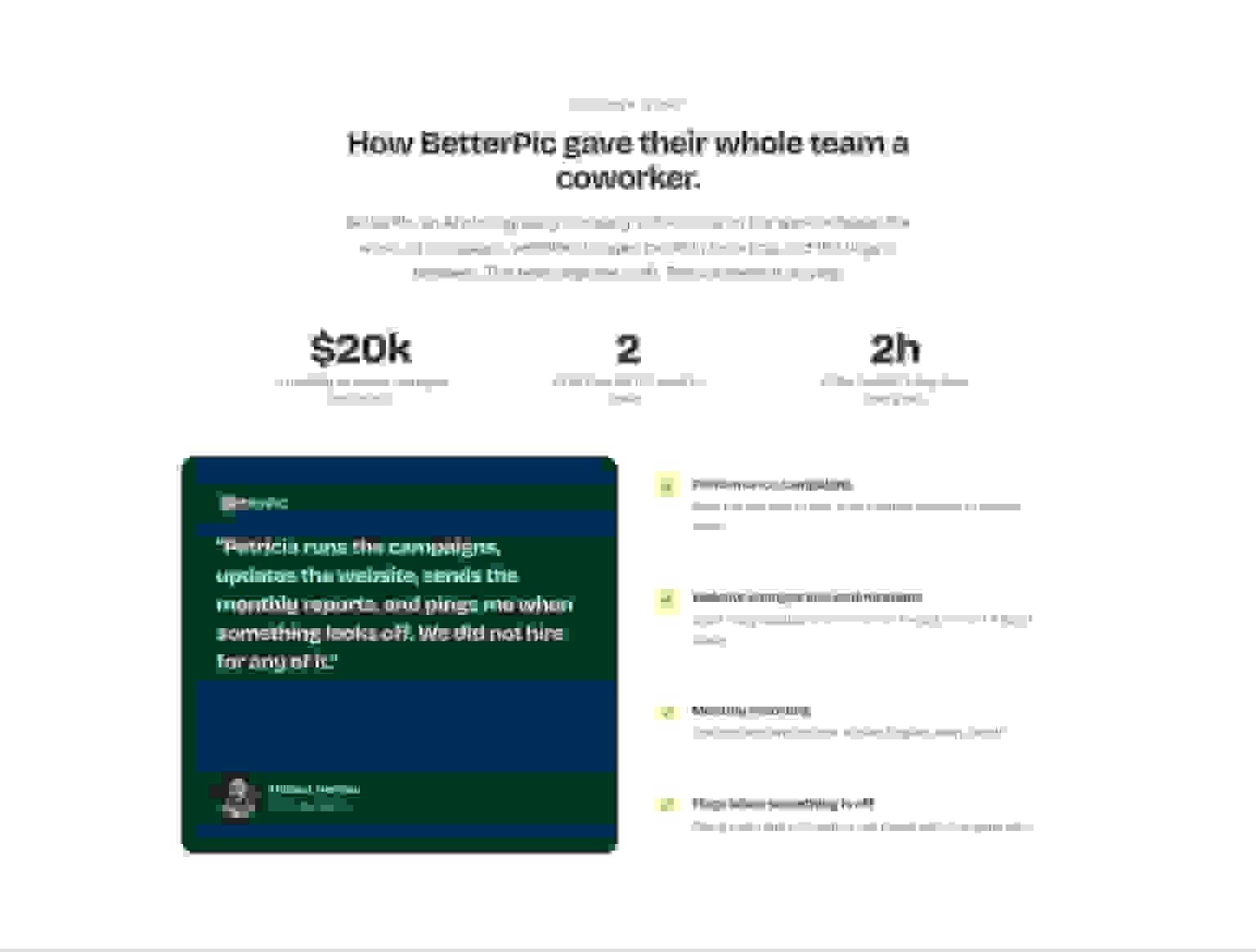
Patricia's own marketing about BetterPic. The card combines media spend with 2 estimates that came from us.
Patricia's $20k figure is media spend through the ad accounts, separate from Patricia's fee. The 2-hire figure and 2 hours a day are our own estimates. We never measured either one, and neither is a forecast for another team.
The operational details matter too. We approve Patricia's campaign proposals and handle publication for website work. She supplies the Google Ads part of the monthly report, and we build and check the rest.
By 30 July, she had become the company brain
The shift from one ad account job to company-wide use happened quickly. Meetings, public conversations, and the other material we share persist in memory, so anyone on the team can ask a question and Patricia has the context to operate.
That shared memory is a big part of why we keep paying. A product-planning question can pick up context from a meeting. An email draft can use the decisions already made in public conversations. A scheduled task can run with the same company context instead of asking us to explain BetterPic again.
Here is the home screen from our own workspace on 30 July 2026. It greets “Thibaut” and shows whole-organization totals: 46 connected integrations, 13 scheduled tasks, 415 runs in the last 7 days, and the latest completed activity.
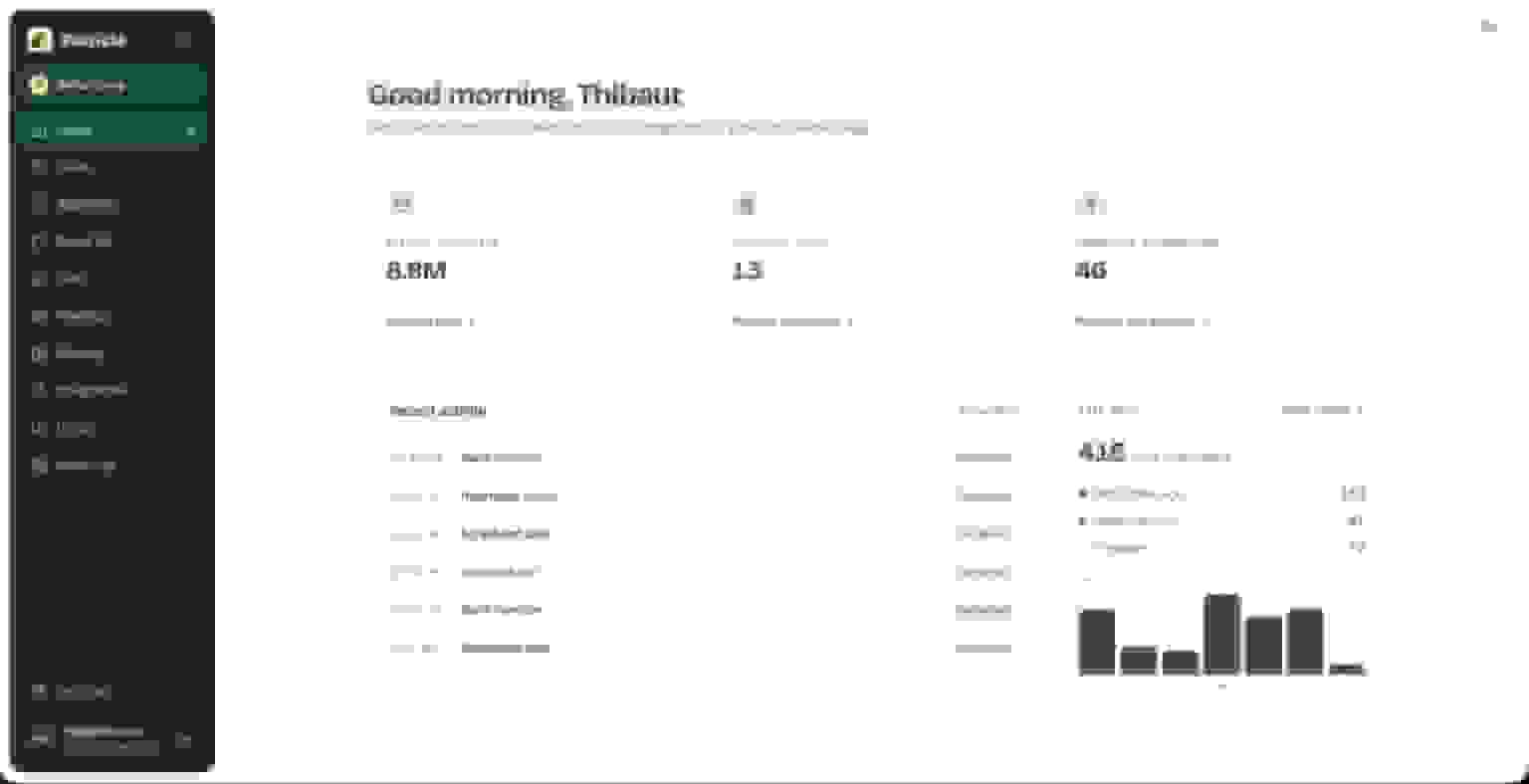
Our real home screen. Those are the whole organization's totals, with completed work sitting right beside them.
The 30-day usage screen from our own workspace shows where that activity landed: 1,862 runs and 1.6M credits used. It also reports a 95% success rate among terminal runs.
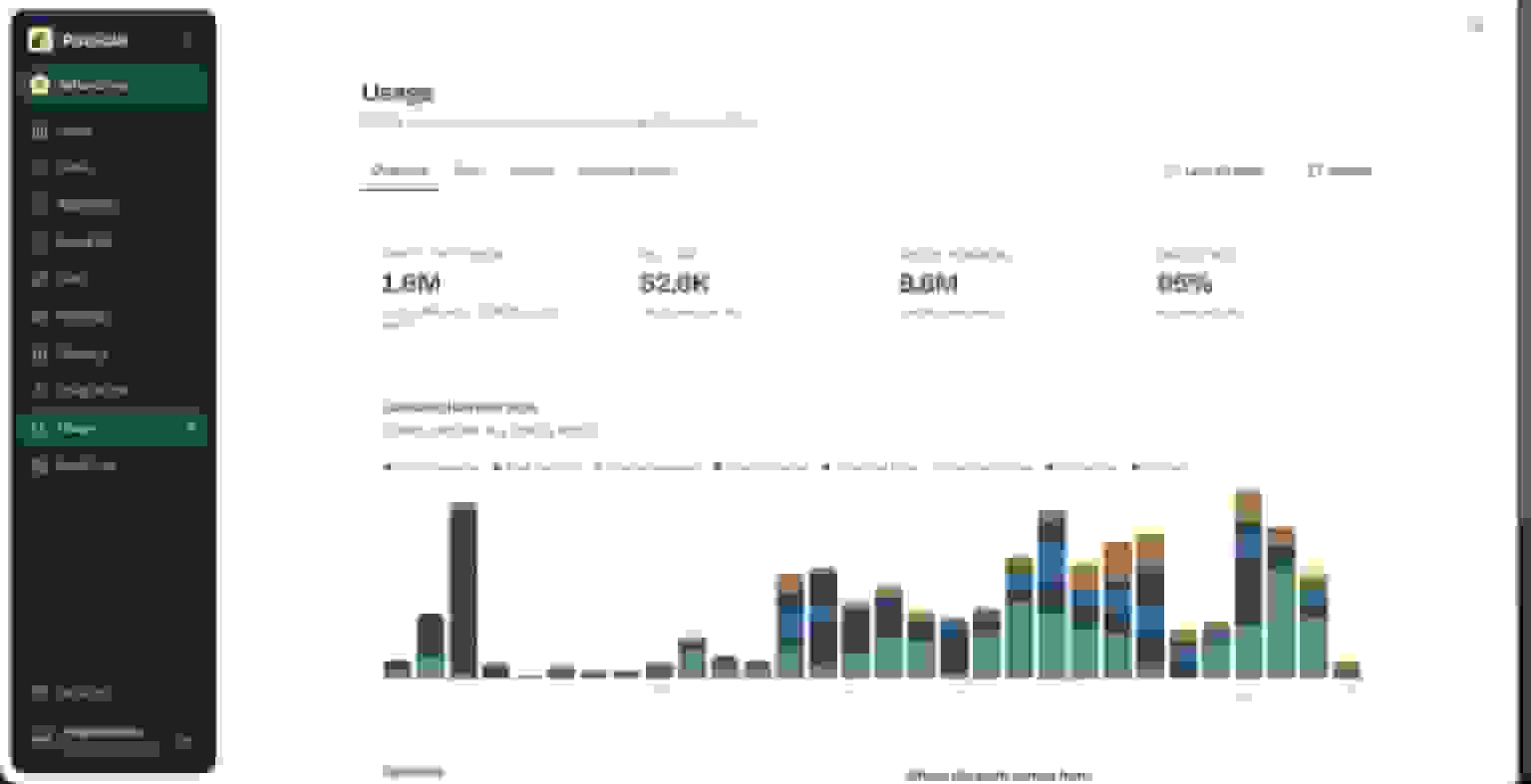
Our real usage screen. Activity spikes at the 3 July tick, stays low until about 11 July, rises in taller uneven bars, dips around 25 and 26 July, and ends with a short final day.
That 95% comes with a real caveat. The dashboard does not split reruns, cancellations, and reviewer rejections out of the remaining 5%, so that 5% cannot be read as pure technical failure.
We also did not measure hours saved, reviewer acceptance, or total revenue impact across those runs. The 1,862 figure tells you how much the team used Patricia. Those buyer metrics remain unmeasured.
We gave the memory a 1-year limit
Once Patricia held useful company context, the data settings stopped feeling theoretical. Our own Data & privacy screen offers 90 days, 1 year (Recommended), and Unlimited retention. We selected 1 year.
Per-client data isolation is Always on, so each client's brand brain, files, and channels stay separate. The same screen includes a subprocessor notice and a Download DPA button.
Here is that screen from our own workspace.
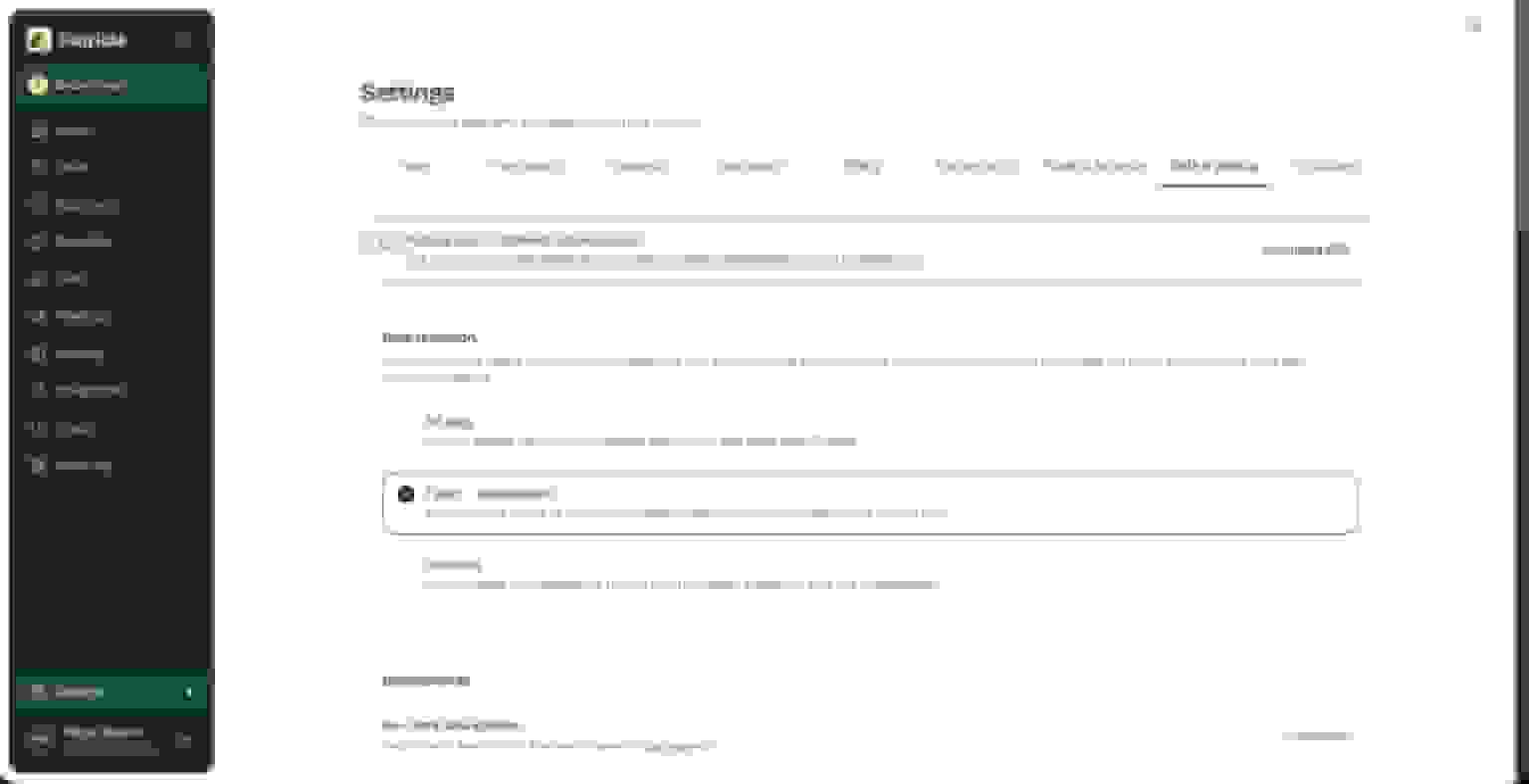
Our real Data & privacy settings: 1 year selected, per-client isolation Always on, plus the DPA download and subprocessor notice.
Patricia's security page states that Patricia has an audited SOC 2 Type II report, ISO 27001 certification, and GDPR compliance. It says customer data is hosted in US East, EU transfers use Standard Contractual Clauses, customer data never trains anyone else's model, and cancellation triggers deletion.
The same page says Patricia sees only invited channels and connected tools, and every action goes into an audit log. The SOC 2 Type II report and other audit documents are available through the BetterGroup Trust Center. We read the published pages. We did not review the report ourselves.
We kept 4 hard boundaries
The company brain still has a fence around it:
- Customer data and anything personally identifying about our users. Both stay out.
- Work that needs centralized sign-in controls. SSO, SAML, and SCIM are planned rather than shipped. Authentication runs through the Slack workspace, while owner, admin, member, and viewer roles are managed in Patricia's own dashboard.
- The production image pipeline that renders BetterPic headshots. It runs on Runflow and stays outside Patricia's scope.
- Unsupervised spend. The approval gate stays on, and a person clears it.
That last one creates daily work. Someone still reviews the queue, checks the named account and market, and approves or rejects the proposed action. The gate is part of the product we chose.
Where it works now
So, would the same setup fit your team?
The published fit is a Slack team from 1 founder to about 50 people. Slack works today. Microsoft Teams is rolling out, which extends the fit to larger organizations. A team using neither chat system has no route in.
Agencies can keep every client, seat, and channel inside 1 workspace under the Founding plan. Per-client isolation keeps the brand brains, files, and channels apart.
There is no public API, no MCP server, and no programmatic access. Teams that require SSO, SAML, or SCIM will need to wait. The same goes for teams that need video generation today.
You can start free with a one-time grant of 10,000 credits when you log in, with no credit card or book the onboarding call. Bring one recurring workflow and choose the person who will review it.
My takeaway: put the data sources together, then keep a person at the approval gate.
If you are still comparing AI agents for small business, our buyer's guide to AI agents for business covers the wider field.
Sources & References
- Patricia: your company's AI coworker — Patricia (BetterGroup)
- Patricia pricing page — Patricia (BetterGroup)
- Patricia security — Patricia (BetterGroup)

Written by
Thibaut HennauCEO
Thibaut Hennau is CEO of BetterPic, an AI photography company that generates professional headshots. He is the named customer in Patricia's published BetterPic customer story. He runs paid media, reporting, website, and operations work through an AI coworker in Slack across 2 regional Google Ads accounts.
- CEO of BetterPic
- Named customer in Patricia's published BetterPic customer story
- Runs paid media, reporting, web, and operations work through an AI coworker in Slack
Preferred source
Follow BetterPic on Google
Add BetterPic as a preferred source and our headshot guides are more likely to show up in your Top Stories, with a badge in AI Mode and AI Overviews.

Frequently Asked Questions
Did Patricia stay at $45 a month for you?
- The published Founding plan is $45 per month per workspace, with every seat and 20,000 credits included each month. We expected to pay $45, and while we were experimenting, we did pay $45. Production use burned through those credits once 7 of us started using Patricia for product planning, email drafts, scheduled tasks, and more. We now spend about $500 a month total, roughly $70 per person, which I consider fair for the level of automation. Use Patricia's published pricing ladder: per 1,000 credits, the rates are $2.25 at a 10,000-credit top-up, $2.03 at 100,000, $1.80 at 750,000, and $1.69 at 2,000,000.
What does the 95% success rate measure?
- It is the rate reported among terminal runs on the dashboard. The remaining 5% covers reruns, cancellations and reviewer rejections, so it is a completion figure rather than a quality one.
How long does the setup take?
- Two Google Ads accounts were connected through OAuth in the same few minutes, with no code written. Miguel Rasero, BetterPic's CTO, and Ricardo Ghekiere did it between them.
What can Patricia see, and where is the data kept?
- Patricia's security page says she sees only invited channels and connected tools, with every action written to an audit log. It states that SOC 2 Type II is audited, Patricia is ISO 27001 certified and GDPR compliant, customer data is hosted in US East, EU transfers use Standard Contractual Clauses, customer data never trains anyone else's model, and cancellation triggers deletion. In our workspace, we selected 1-year retention and per-client isolation is Always on. Audit documents are available at https://trust.bettergroup.io/. We read the published pages and did not review the report ourselves.
Is there a free tier without a sales call?
- The free start gives 10,000 credits once at login, with no credit card and no call required. You can bring one recurring workflow and choose who reviews it.
Did Patricia replace anyone on the BetterPic team?
- Our 7-person team uses Patricia for campaign work, product planning, email drafts, scheduled tasks, website work, and reporting. A person still clears approvals every day and handles the work outside her scope. The 2-hire figure and 2 hours a day on Patricia's customer-story card are our own estimates. We never measured either one, and neither is a staffing forecast for another team.
Can an agency run several clients in one workspace?
- The Founding plan covers every client, seat and channel in one workspace, with per-client data isolation always on so each client's brand brain and files stay separate.
Related articles
View all articles
How Runflow Is Powering Every Headshot We Deliver — and What It's Saving Us
We went from 40% gross margins and 24-hour wait times to 87% margins and reliable, fast delivery — without hiring a single ML or DevOps engineer..
AI Headshots Market Update The 2026 Revolution That's Changing Everything
AI headshots are transforming professional imagery with 441 percent growth and a projected market value of 60.8 billion dollars by 2030
AI Headshots vs Studio Photography for Teams — The Real Cost Breakdown
A detailed, data-backed cost comparison of AI headshots vs studio photography for teams — covering per-person pricing, hidden fees, time costs, and.

We Just Raised $2.5M and Bootstrapped BetterPic to $3M Revenue
BetterPic bootstrapped to $3M revenue and raised $2.5M seed funding to scale AI photography with real humans at the center of everything.
How This Writer Found Affiliate Success with BetterPic (And You Can Too)
BetterPic Affiliate Program helped this writer turn her content into a steady income stream with a high-converting offer her audience loves.

BetterPic Acquires AiModelAgency.com, Launches Canva for AI Fashion Photography
BetterPic, a leader in AI headshot generation, today announced the acquisition of AiModelAgency.com, a platform specializing in AI-generated fashion.
Save 87%on average on your professional photos.
Whenever, wherever you are.
Get studio-quality, 4K images in a variety of outfits & settings in less than an hour.
Get your headshots nowStart now