
How Runflow Is Powering Every Headshot We Deliver — and What It's Saving Us
This article is part of our AI Photography Insights collection.
Running an AI headshot product at scale is not a model problem. We had good models. It's an infrastructure problem — and for a long time, that infrastructure was quietly killing us.
GPU jobs failing silently. Customers paying for professional headshots and waiting a full day. Our engineering team spending entire sprints debugging providers instead of improving the product. Gross margins sitting at around 40% with no clear path up.
That changed when we started working with Runflow.
The Problem We Were Really Solving
BetterPic processes hundreds of thousands of AI inference jobs every month — portrait generation, background removal, quality scoring, clothing swap, and more. Each job touches multiple models, requires specific GPU memory, and needs to return a result fast enough that the customer doesn't notice it happened.
The reality before Runflow: we had no retry logic. If a GPU job failed — which happened constantly due to quota limits, provider outages, or memory errors — it simply didn't complete. Customers opened support tickets. We opened dashboards. Time passed.
"Customers were paying for AI headshots and waiting a full day. That's not a cost problem, that's a product crisis."
— Thibaut Hennau, CEO, BetterPic
We faced an uncomfortable choice: hire a dedicated ML infrastructure and DevOps team — expensive, slow, and a distraction from our core product — or find a platform that had already solved this problem from the inside out.
What Runflow Actually Does For Us
Runflow is a ComfyUI deployment and orchestration platform built specifically for production AI workloads. The short version: we call an endpoint, and everything underneath — GPU routing, retry logic, quality checks, failover across datacenters — happens automatically.
Today, BetterPic runs more than 10 distinct AI inference pipelines through Runflow. Here's what that looks like in practice:
- AI Headshot Generation — Upload selfies, receive 4K professional headshots in multiple styles. The core of our product, running reliably at scale.
- Automated Quality Scoring (Sentinel) — Every generated headshot is scored across eight quality dimensions — identity preservation, skin realism, background consistency — before it ever reaches a customer. Bad outputs get retried automatically.
- Clothing Swap — One-click outfit changes, four variations generated per edit. Previously a manual, brittle pipeline — now a single API call.
- Background Change & Removal — Swap scenes to professional, outdoor, or minimalist settings. Remove backgrounds entirely for compositing.
- Magic Fix — Brush-based targeted editing with AI prompt guidance. Lets customers correct specific areas of a headshot without regenerating from scratch.
The Infrastructure Layer We Stopped Building Ourselves
The part that changed our engineering velocity most wasn't any single feature — it was the things we stopped having to think about.
Automatic Retry & Failover
When a GPU job fails, Runflow retries automatically and routes across providers and datacenters. GPU quota limits and availability issues that used to cause outages are now invisible to us. Customer wait times collapsed. Support tickets dropped.
Sentinel Quality Evaluation
Runflow's Sentinel layer evaluates every output before delivery. It's not checking whether the job completed — it's checking whether the result is actually good. Eight specialized evaluation passes run per generation: face similarity, segmentation, pose analysis, and LLM-based judges for identity, garment fit, skin realism, and more. If an output fails, it's retried. If the retry passes, it ships. If it doesn't, we know about it before the customer does.
This is the only quality evaluation system of its kind outside of Google's Vertex AI enterprise platform — and it's available to us through a single configuration toggle.
ComfyUI → Production API in One Click
Our team builds and iterates workflows in ComfyUI. When a workflow is ready, it deploys to Runflow's infrastructure directly from inside ComfyUI — no file uploads, no manual configuration, no DevOps ceremony. The endpoint is live with typed inputs, auto-generated API docs, and auto-scaling GPU already configured.
# One endpoint call from our application layer
curl -X POST https://api.runflow.io/v1/flows/headshot/run \
  -H "Authorization: Bearer rf_..." \
  -H "Content-Type: application/json" \
  -d '{"images": ["selfie_1.jpg", "selfie_2.jpg"],
       "style": "professional",
       "quality": "premium"}'
Our developers don't need to understand GPU infrastructure, model quantization, or provider-level scheduling. They call an endpoint. Runflow handles the rest.
The Cost and Margin Impact
Runflow runs on L40S GPUs at $1.95 per hour — 44% cheaper than the market rate of $3.51/hr, billed by the second with zero idle cost. Workers scale to zero when not processing requests, which means we pay only for actual compute consumed.
But the pricing model is only part of the story. The bigger driver of margin improvement was the orchestration layer: intelligent GPU scheduling across providers, model quantization, and multi-step workflows combining open-source and closed-source models efficiently.
87% — Current Gross Margin | 40% → 87% — In 12 Months | 30%+ — Savings vs In-House
The steepest gains came in the first three to four months — primarily from eliminating silent job failures and their downstream costs in support, refunds, and churn. The curve has continued upward since, as optimization compounds over time.
Before Runflow: ~40% gross margin · 24-hour customer wait times · silent job failures · zero retry mechanisms.
After Runflow: 87% gross margin · reliable delivery · 10+ AI workflows running autonomously.
What This Means For How We Build
The organizational change is as significant as the financial one. BetterPic has no dedicated ML infrastructure team. No DevOps headcount focused on GPU management. Our engineers build product features — and when a new AI capability is ready, they ship it by calling an endpoint.
"Our developers can integrate a new AI feature by calling an endpoint. They don't need machine learning expertise, infrastructure knowledge, or DevOps skills. We just focus on making the best headshot product, and Runflow handles everything underneath."
— Thibaut Hennau, CEO, BetterPic
This is not a small thing. Every hour not spent debugging infrastructure is an hour spent improving the headshot product, expanding to new markets, or onboarding the next team customer. The leverage compounds.
If You're Running AI Workflows at Scale
We're sharing this because the problem we had — reliable, cost-efficient GPU orchestration for production AI workflows — is not unique to us. If you're running an AI product and your team spends meaningful time on infrastructure, retry logic, or quality control, the math on a managed orchestration layer is worth running.
Runflow's platform is now open to other teams. You can deploy any ComfyUI workflow as a production API, enable Sentinel quality evaluation, and get GPU pricing that undercuts the market — without building any of the supporting infrastructure yourself.
Every BetterPic headshot, background edit, and clothing swap runs through Runflow's infrastructure. If you're building with AI at scale, it's worth a look.
An affiliated first-party account of AI agents for small business discloses that BetterPic and Patricia share owners through Better Group and covers Patricia's work on 2 Google Ads accounts; BetterPic builds the non-ads reporting sections.
Key Metrics: Before and After Runflow
The numbers below reflect BetterPic's own operational data measured before and after migrating production AI workflows to Runflow. Margin improvement compounded over 12 months; delivery and reliability gains were visible within the first 30 days.
| Metric | Before Runflow | After Runflow |
|---|---|---|
| Gross Margin | ~40% | 87% |
| Customer Wait Time | Up to 24 hours | Reliable, fast delivery |
| Silent Job Failures | Frequent, undetected | Eliminated via automatic retry |
| Retry Mechanism | None | Automatic, cross-datacenter failover |
| AI Workflows Running | Limited, brittle pipelines | 10+ autonomous workflows |
| ML/DevOps Headcount | Required (or a product bottleneck) | Zero dedicated headcount needed |
| GPU Cost per Hour | ~$3.51/hr (market rate) | $1.95/hr on L40S, billed by the second |
The margin jump from 40% to 87% is not attributable to a single change. It reflects the cumulative effect of eliminating silent failures (and their downstream costs in refunds and churn), replacing idle GPU provisioning with per-second billing scaled to zero, and removing the operational overhead of managing infrastructure in-house.
Frequently Asked Questions
What is Runflow and how does BetterPic use it?
Runflow is a ComfyUI deployment and orchestration platform built for production AI workloads. BetterPic uses it to run every AI inference job in the product — portrait generation, quality scoring, clothing swap, background removal, and targeted editing. Rather than managing GPU infrastructure directly, BetterPic calls a single API endpoint per workflow and Runflow handles routing, retry, failover, and quality evaluation automatically. The integration means BetterPic's engineers focus on product, not infrastructure.
How did Runflow improve BetterPic's gross margins?
The improvement came from three directions simultaneously. First, Runflow's L40S GPU pricing at $1.95 per hour — compared to a market rate of roughly $3.51 per hour — reduced raw compute cost by 44%. Second, per-second billing with automatic scale-to-zero means BetterPic pays only for actual compute consumed, not idle capacity. Third, eliminating silent job failures removed a significant hidden cost: support overhead, refunds, and customer churn caused by deliveries that simply never arrived. Combined, these factors drove gross margin from roughly 40% to 87% over 12 months.
Does BetterPic have an in-house ML infrastructure team?
No. BetterPic has no dedicated ML infrastructure or DevOps team focused on GPU management. This is a deliberate consequence of using Runflow. Because Runflow handles GPU routing, retry logic, model deployment, and quality evaluation, there is no operational need for engineers who specialize in those areas. BetterPic's engineers build product features. When a new AI workflow is ready, they ship it by calling an endpoint. The platform removes the organizational pressure to hire infrastructure specialists that typically accompanies AI product growth.
What AI workflows does BetterPic run through Runflow?
BetterPic currently runs more than 10 distinct AI inference pipelines through Runflow. The core workflow is AI headshot generation — taking customer selfies and producing 4K professional portraits in multiple styles. Supporting that are automated quality scoring via the Sentinel evaluation layer, clothing swap with four variations per edit, background change and removal for scene and compositing work, and Magic Fix for brush-based targeted editing. Each workflow is deployed from ComfyUI directly to Runflow's infrastructure and exposed as a typed API endpoint with auto-generated documentation and auto-scaling GPU.
How does Runflow's quality evaluation system work?
Runflow's Sentinel layer runs after every inference job, before the output reaches the customer. It does not simply confirm that a job completed — it evaluates whether the result is actually acceptable. Eight specialized evaluation passes run per generation: face similarity scoring, segmentation analysis, pose analysis, and a set of LLM-based judges covering identity preservation, garment fit, skin realism, and background consistency. If an output fails any of these checks, Runflow retries the job automatically. If the retry passes, it ships. If it does not, the failure is surfaced to the BetterPic team before the customer sees anything. This is the only quality evaluation system of this type outside Google's Vertex AI enterprise platform.
Sources & References
- AI Image Generation Market Report — Grand View Research
- How AI Is Changing Photography — Forbes
- Professional Headshot Photography Pricing — Thumbtack
- How Much Do Headshots Cost? — Professional Photographers of America
- The Power of Team Photos on Company Websites — Nielsen Norman Group

Written by
Apoorv SharmaHead of Performance
Apoorv leads performance and growth at BetterPic with 9+ years of experience across SEO, SEM, and growth marketing. He oversees content strategy, data-driven marketing, and hands-on testing of AI headshot platforms. Previously held senior performance marketing roles across the US, Belgium, and India.
- Google Analytics & Google Ads certified
- HubSpot Inbound & Content Marketing certified
- 9+ years in SaaS growth and performance marketing
Preferred source
Follow BetterPic on Google
Add BetterPic as a preferred source and our headshot guides are more likely to show up in your Top Stories, with a badge in AI Mode and AI Overviews.

Frequently Asked Questions
What infrastructure does BetterPic use for AI headshot generation?
- BetterPic runs on Runflow, a ComfyUI deployment and orchestration platform built for production AI workloads. Runflow handles GPU routing, retry logic, quality checks, and failover across datacenters automatically. BetterPic runs more than 10 distinct AI inference pipelines through the platform.
How did BetterPic improve its gross margins?
- BetterPic's gross margins went from 40% to 87% in 12 months after switching to Runflow. The improvement came from eliminating silent GPU job failures, intelligent GPU scheduling across providers, model quantization, and efficient multi-step workflow orchestration. GPU costs dropped 44% below market rate.
How does BetterPic ensure AI headshot quality?
- Every generated headshot passes through Runflow's Sentinel quality evaluation system, which scores images across eight dimensions including face similarity, skin realism, and background consistency. Bad outputs are automatically retried. This is the only such quality system outside Google's Vertex AI enterprise platform.
How fast does BetterPic deliver AI headshots?
- BetterPic eliminated its previous 24-hour wait times after implementing Runflow's infrastructure with automatic retry and failover. Jobs that previously failed silently now complete reliably, with customer-facing delivery times dropping to under an hour for most plans.
Does BetterPic have a dedicated ML engineering team?
- No. BetterPic has no dedicated ML infrastructure or DevOps team for GPU management. Engineers build product features and deploy AI workflows through Runflow endpoints without needing machine learning expertise or infrastructure knowledge. This lets the team focus entirely on improving the headshot product.
Related articles
View all articles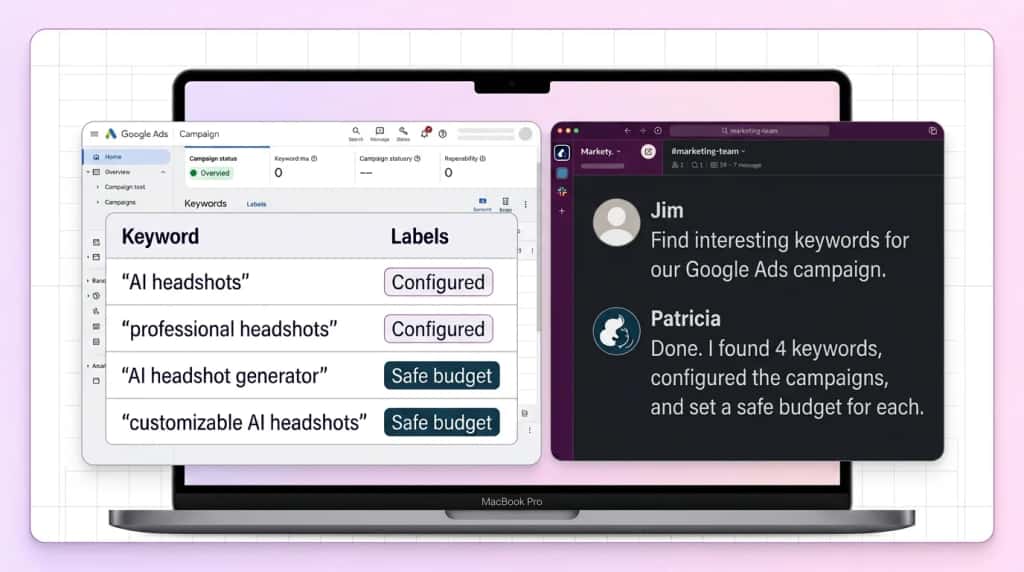
Our $45 AI agent found a 2 ROAS ad format. We now spend $500
We gave Patricia our 2 Google Ads accounts, found a new format above 2 ROAS, and watched a $45 experiment become a $500 monthly tool for 7 people.
AI Headshots Market Update The 2026 Revolution That's Changing Everything
AI headshots are transforming professional imagery with 441 percent growth and a projected market value of 60.8 billion dollars by 2030
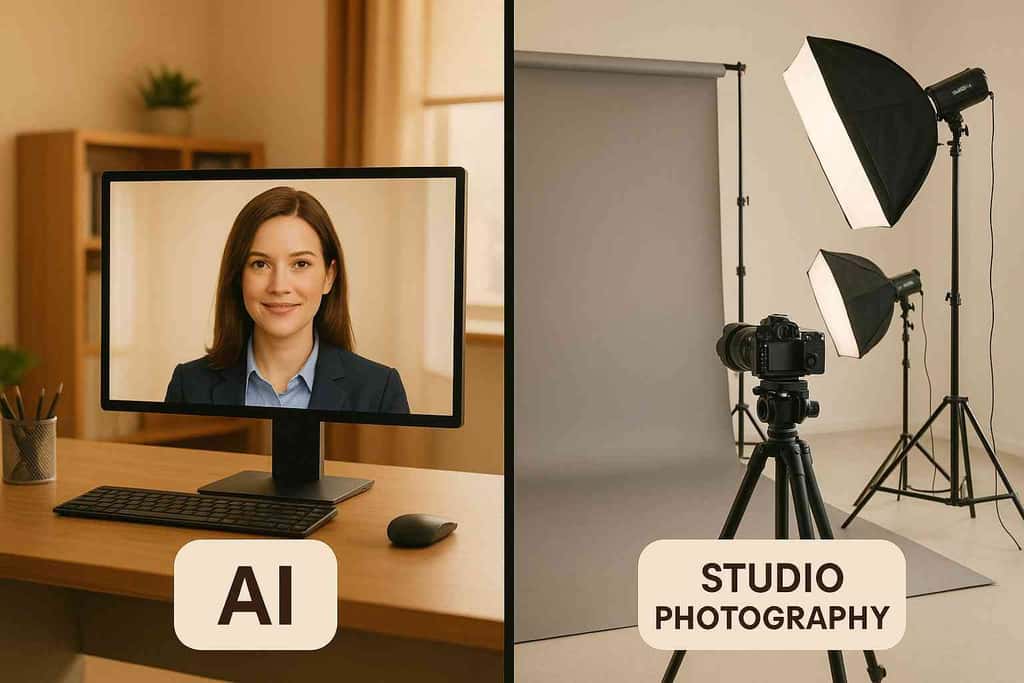
AI Headshots vs Studio Photography for Teams — The Real Cost Breakdown
A detailed, data-backed cost comparison of AI headshots vs studio photography for teams — covering per-person pricing, hidden fees, time costs, and.
We Just Raised $2.5M and Bootstrapped BetterPic to $3M Revenue
BetterPic bootstrapped to $3M revenue and raised $2.5M seed funding to scale AI photography with real humans at the center of everything.
How This Writer Found Affiliate Success with BetterPic (And You Can Too)
BetterPic Affiliate Program helped this writer turn her content into a steady income stream with a high-converting offer her audience loves.

BetterPic Acquires AiModelAgency.com, Launches Canva for AI Fashion Photography
BetterPic, a leader in AI headshot generation, today announced the acquisition of AiModelAgency.com, a platform specializing in AI-generated fashion.
Save 87%on average on your professional photos.
Whenever, wherever you are.
Get studio-quality, 4K images in a variety of outfits & settings in less than an hour.
Get your headshots nowStart now